

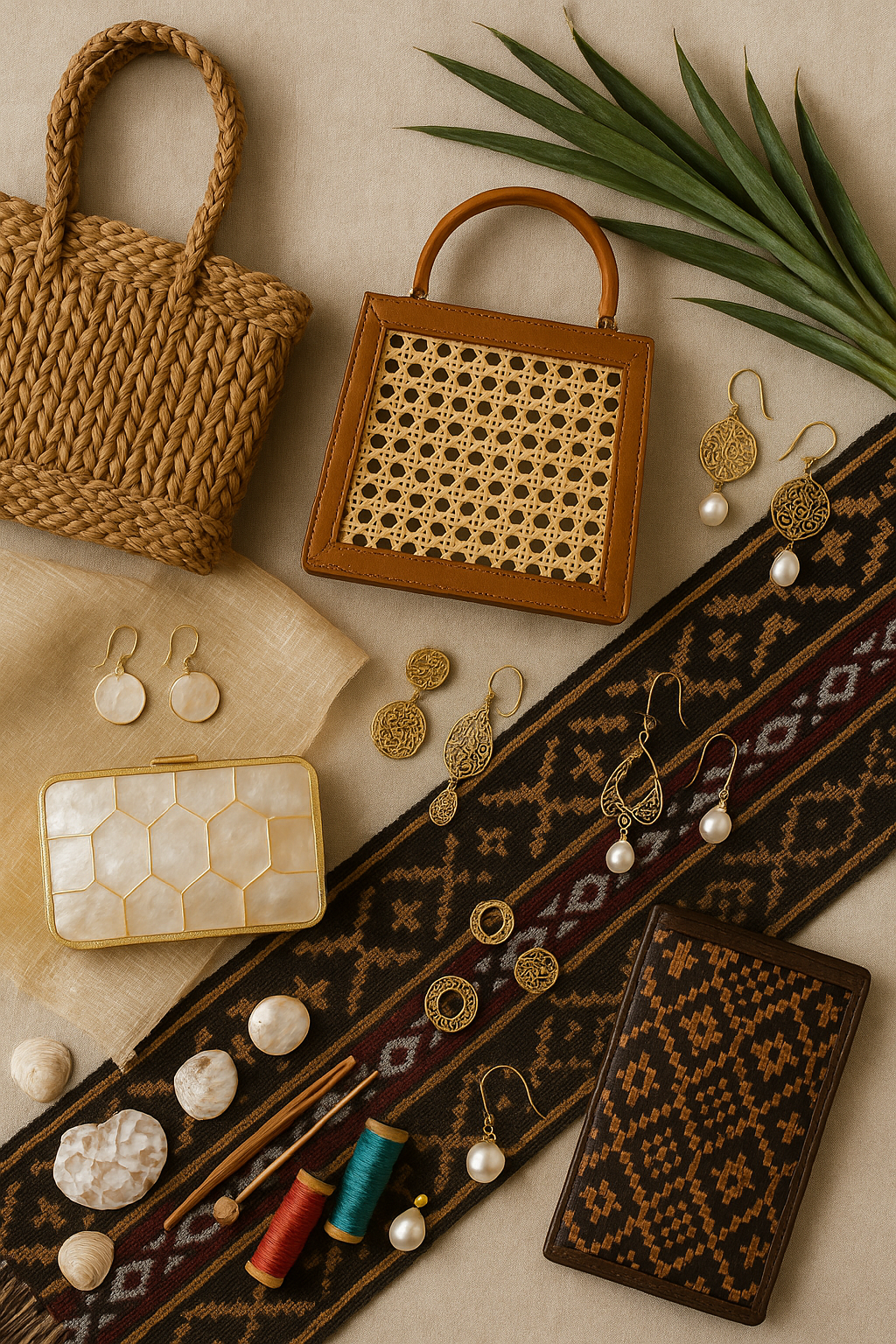
If “glamour” once meant excess, Filipino accessories are rewriting the script with materials that are renewable, traceable, and undeniably chic. It’s a design culture that treats ecology and elegance as partners.
Start with the fibers. Abaca is a sustainability star: a fast-growing plant whose fibers are strong, biodegradable, and harvested with minimal impact. Artisans braid, crochet, and weave abaca into totes and crossbodies that can handle daily weight. Rattan, another renewable resource, becomes rigid frames and basket bodies; the classic solihiya cane pattern keeps bags light and resilient. Piña fiber—extracted from pineapple leaves, a by-product of agriculture—adds a sheer, luminous layer to evening pieces without introducing plastic-based synthetics.
Shells bring ocean sparkle while encouraging thoughtful sourcing. Capiz, traditionally used in windows in Panay, is now fashioned into clutch faces and earrings; when responsibly collected and set in sturdy frames, it offers long wear with a delicate look. Mother-of-pearl inlays from coastal workshops are hand-sanded and sealed, transforming offcut shells into luminous surfaces rather than waste.
Jewelry follows a similar ethos. South Sea pearls grown in Philippine waters are often farmed in systems that prioritize marine health; their natural luster means minimal metalwork can carry a design. Filigree techniques use small amounts of metal, creating volume and presence without heavy casting. Designers frequently rework vintage beads and clasps, proving “new” and “renewed” can coexist.
Textiles round out the picture. Inabel and other handwoven fabrics rely on human energy more than electricity; natural dyeing revives botanical palettes. T’nalak, created by T’boli artisans, tells a sustainability story rooted in cultural continuity—supporting dreamweavers sustains both livelihoods and living traditions. These textiles migrate onto bag panels, straps, and wallets, offering pattern without print pollution.
Why it’s trending: transparency. Many makers share process photos, artisan names, and region-of-origin tags, so buyers understand the impact of their purchase. Slow production schedules keep pieces limited, which heightens desirability and reduces waste. Repairs are encouraged; some brands offer reweaving or re-braiding services.
Wear it your way. A structured rattan mini bag complements tailored suits; an abaca market tote handles produce and beach days; capiz earrings punctuate a minimalist wardrobe; pearl pendants soften utility jackets. Color tends to be earthy—sands, coffees, seas—but brights appear via hand-dyed threads in straps and tassels.
Care extends the sustainability loop. Wipe pearls and shell surfaces after wear; air out rattan and abaca if they get damp; store cane-weave bags stuffed with tissue to maintain shape; keep textiles out of direct sunlight to preserve dye vibrancy.
This is glamour anchored in responsibility: tactile, radiant, and crafted for years of use rather than a single season.