
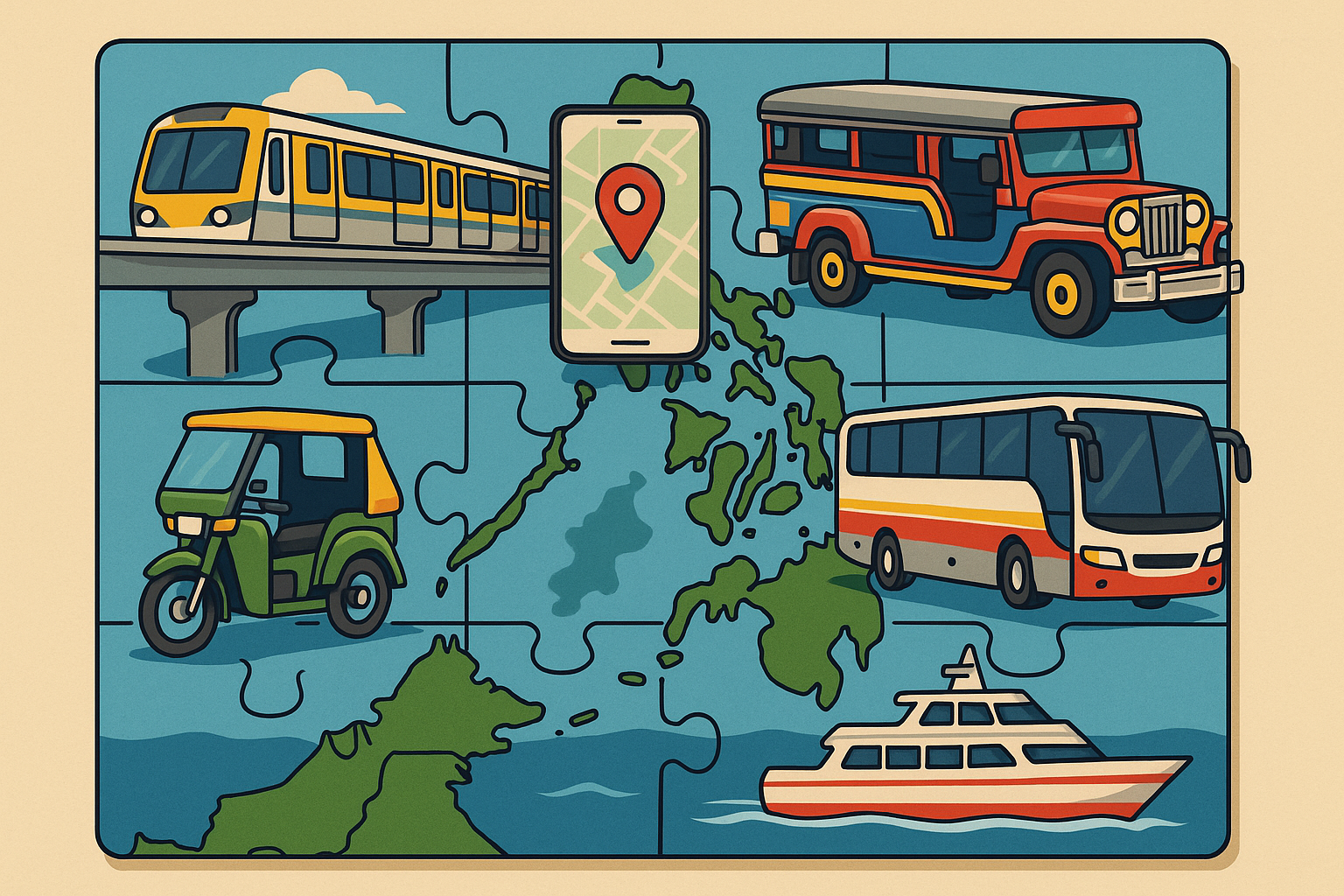
Think of your Philippines itinerary as a puzzle of islands, cities, and beaches—the solution is choosing the right transport for each segment. In Metro Manila, Cebu, and Davao, pair rail/bus corridors with app-based rides for first- and last-mile convenience. Manila’s LRT/MRT is the fastest way to cross long distances in the city; load a Beep card once and breeze through gates. For cross-town trips with bags, Grab offers door-to-door comfort.
Jeepneys are the country’s character on wheels—cheap, frequent, and communal. They’re best when you’re traveling light and want a hyper-local experience. Learn route codes or ask the barkers (dispatchers) at terminals. Tap the bar, say “para,” and hop off. In provincial towns, tricycles will take you to resorts, waterfalls, and markets off main roads; negotiate politely and confirm it’s a private ride if you don’t want to share.
Intercity buses are dependable workhorses. For Luzon highlands (Baguio, Banaue), coastal escapes (La Union, Zambales), and southern routes (Batangas ports), buses offer multiple classes, onboard comfort, and predictable pricing. For island-to-island moves, weigh flights against ferries: fast crafts shine on short routes (Tagbilaran–Cebu), while overnight ferries link major ports with sleeper options. Typhoon months can disrupt both—maintain flexible dates and track advisories.
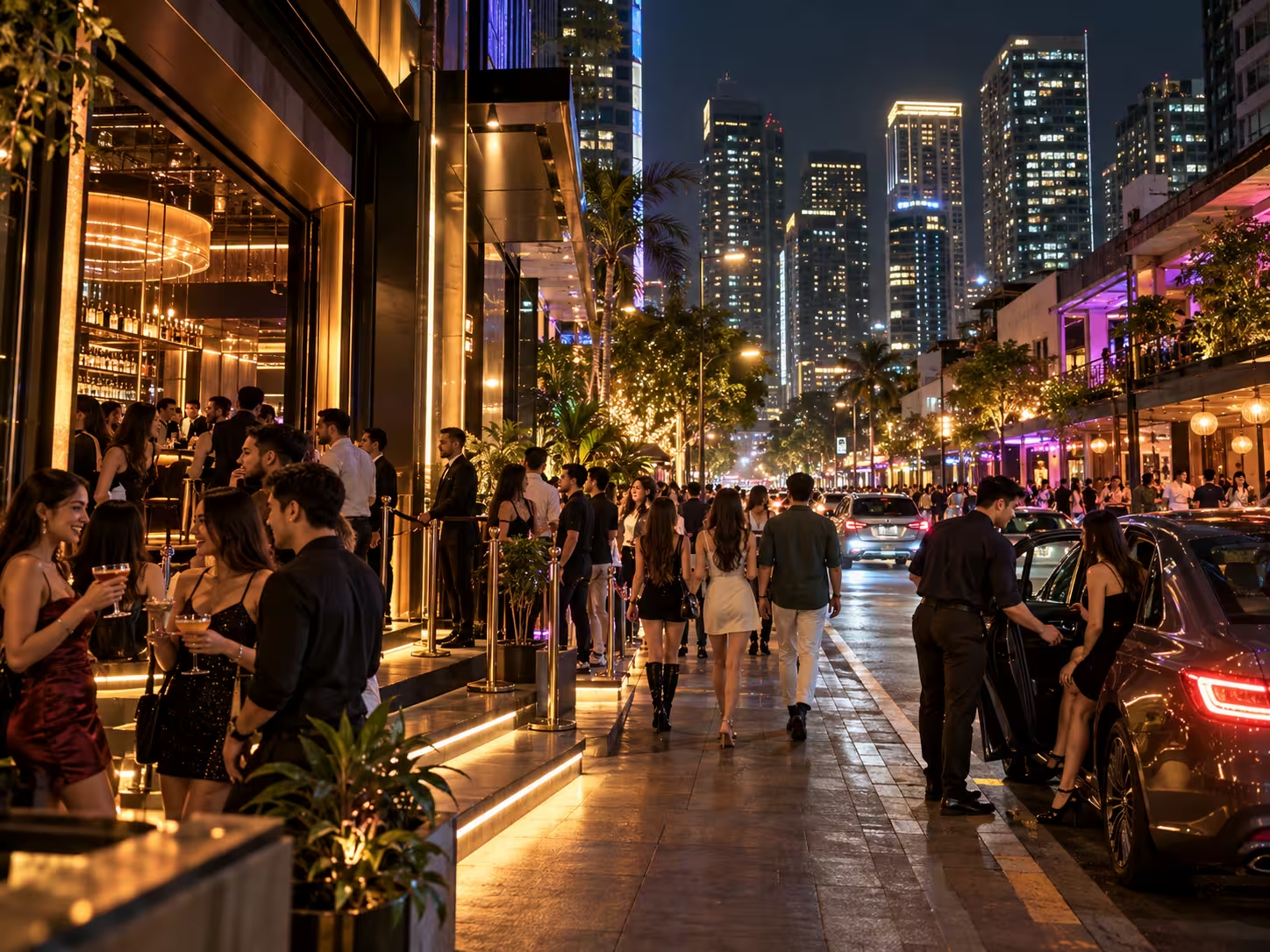
Airport tactics simplify everything. Ninoy Aquino International Airport (NAIA) has several terminals; verify yours before departure to avoid cross-terminal scrambles. Use official taxi queues, ride-hailing pickup zones, or coupon taxis to dodge touts. Add generous buffers for Metro traffic, especially during weekday evenings and rainy days.
Money and tickets: carry small bills for jeepneys, trikes, and market stops. E-wallets like GCash/Maya are convenient in cities but unreliable in remote areas. For trains and some buses, a Beep card speeds things up. Long-distance bus and ferry bookings sell out on weekends—reserve ahead, and screenshot e-tickets in case data is spotty.
Safety is mostly about awareness. Keep bags zipped and in front of you; avoid flashing jewelry or phones near open vehicle windows. At night, prefer ride-hailing or reputable taxis, and share your ride details with a friend. On ferries, choose recognized operators, heed announcements, and bring a light jacket for air-conditioned cabins. If seas or skies look unfriendly, it’s better to delay than push through.
Packing and comfort tips: soft-sided luggage fits better in vans and jeepneys. A lightweight rain jacket helps in sudden downpours. If you’re prone to motion sickness, bring medication for ferries and curvy mountain roads. Download offline maps for islands with weak signal; pin ferry terminals and bus stations in advance. Basic Tagalog phrases (“Magkano po?” “Saan ang sakayan?”) unlock smiles and directions, while English carries you through most interactions.
Use this playbook as a flexible framework: rail for speed, jeepneys and tricycles for local color, buses for comfort, ferries for island links, and apps for ease. With a little planning and patience, getting around becomes part of the adventure.