
Achieving equitable healthcare in the Philippines requires designing for distance, diversity, and disaster risk. Digital health offers a toolkit to re-architect care pathways so that geography no longer dictates outcomes.
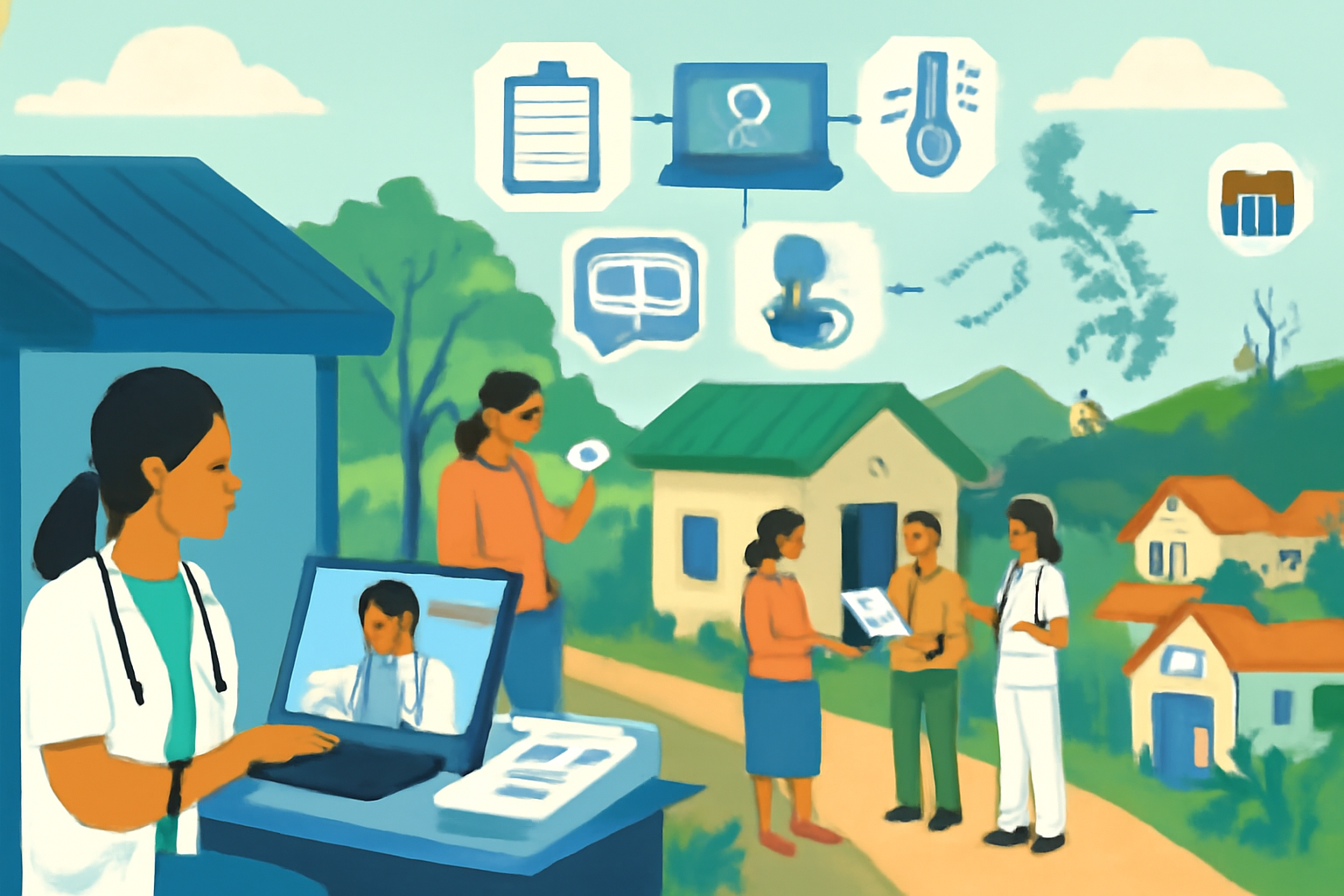
First, redesign access points. Community-based telehealth kiosks placed in barangay halls or rural health units can host scheduled video visits, upload basic vitals, and print care instructions. These shared facilities lower the barrier for households without smartphones or reliable data plans. Nurse navigators can coordinate referrals, book labs, and follow up via SMS, ensuring patients don’t get lost between steps.
Second, make data travel, not people. Interoperable EMRs and e-referrals let specialists review a case before the patient moves, confirming that travel is necessary and pre-ordering tests to compress timelines. For chronic conditions like diabetes or COPD, remote monitoring devices transmit metrics to care teams that can adjust medications early, preventing admissions that strain provincial hospitals.
Third, embed intelligence into routine work. Rule-based alerts in EMRs prompt screening for hypertension or gestational diabetes at the appropriate ages and trimesters. Machine learning risk scores help prioritize scarce home visits for mothers or elderly patients living alone. Natural language dictation speeds up documentation in busy clinics, improving note quality without increasing clinician workload.
Fourth, secure the supply line. Digitized logistics enable last-mile delivery of medicines to island pharmacies with accurate forecasting and demand smoothing. Temperature loggers traveling with vaccines provide auditable proof of cold-chain integrity. In emergencies, satellite connectivity can maintain inventory visibility even when terrestrial networks fail.
Fifth, govern for trust. Clear consent flows, breach notification policies, and role-based access control reassure the public that their data are protected under the Data Privacy Act. Independent security testing and standardized audit trails should be required for vendors connecting to national systems. Transparent performance metrics—teleconsult turnaround, stockout rates, referral completion—create accountability.
Barriers remain real. Some sitios have intermittent electricity and limited cellular coverage. Health workers face competing priorities and may resist new workflows if tools are slow or unintuitive. Patients may prefer physical exams for certain complaints, and cultural norms influence comfort with mental health or sexual health services online. Addressing these requires investment in infrastructure, device procurement, and design that prioritizes speed, simplicity, and local language support.
Financing models can accelerate equity. Bundled payments that include virtual and in-person care, device subsidies for remote monitoring, and incentives for facilities that demonstrate improved access metrics help the digital shift stick. Public–private partnerships can expand network coverage and bring innovation into government programs while maintaining safeguards.
Equity by design means meeting people where they are—on distant islands, in urban informal settlements, and everywhere in between. By orchestrating telehealth, interoperable records, intelligent triage, and resilient logistics, the Philippines can build care pathways that are timely, respectful, and reachable, regardless of a patient’s postcode.