The most influential force in shaping the perception of Philippine fashion is not a government policy or a single designer, but a media platform with a global mandate: Vogue Philippines. Throughout 2025 and into 2026, the publication has consistently used its pages to advance a sophisticated, nuanced vision of tropical luxury—one that is light-years away from the tired, beach-resort clichés that have long defined the “tropical” aesthetic in Western eyes. Its editorial strategy is effectively building the cultural context in which Philippine Tropical Fabrics can be seen, and valued, as premium.
The Strategy of Hyper-Local Luxury
A key example of this editorial pivot is the December 2025/January 2026 issue, which anchored its flagship editorial on Basilan Island. Rather than leaning on standard tropical tropes, the campaign presented a vision of “hyper-local luxury,” a concept that bypasses generic island imagery in favor of deep, place-specific storytelling. This approach is critical. It signals that the future of premium Filipino fashion is not about being a “tropical” version of something else, but about being authentically, specifically Filipino. By framing a remote province not as a backdrop for escapism, but as a source of genuine luxury and narrative depth, Vogue Philippines is elevating the very idea of what Philippine materials and locations can signify. This is a form of narrative nation-building through fashion media.
Curating the Aesthetic of the New Filipino Premium
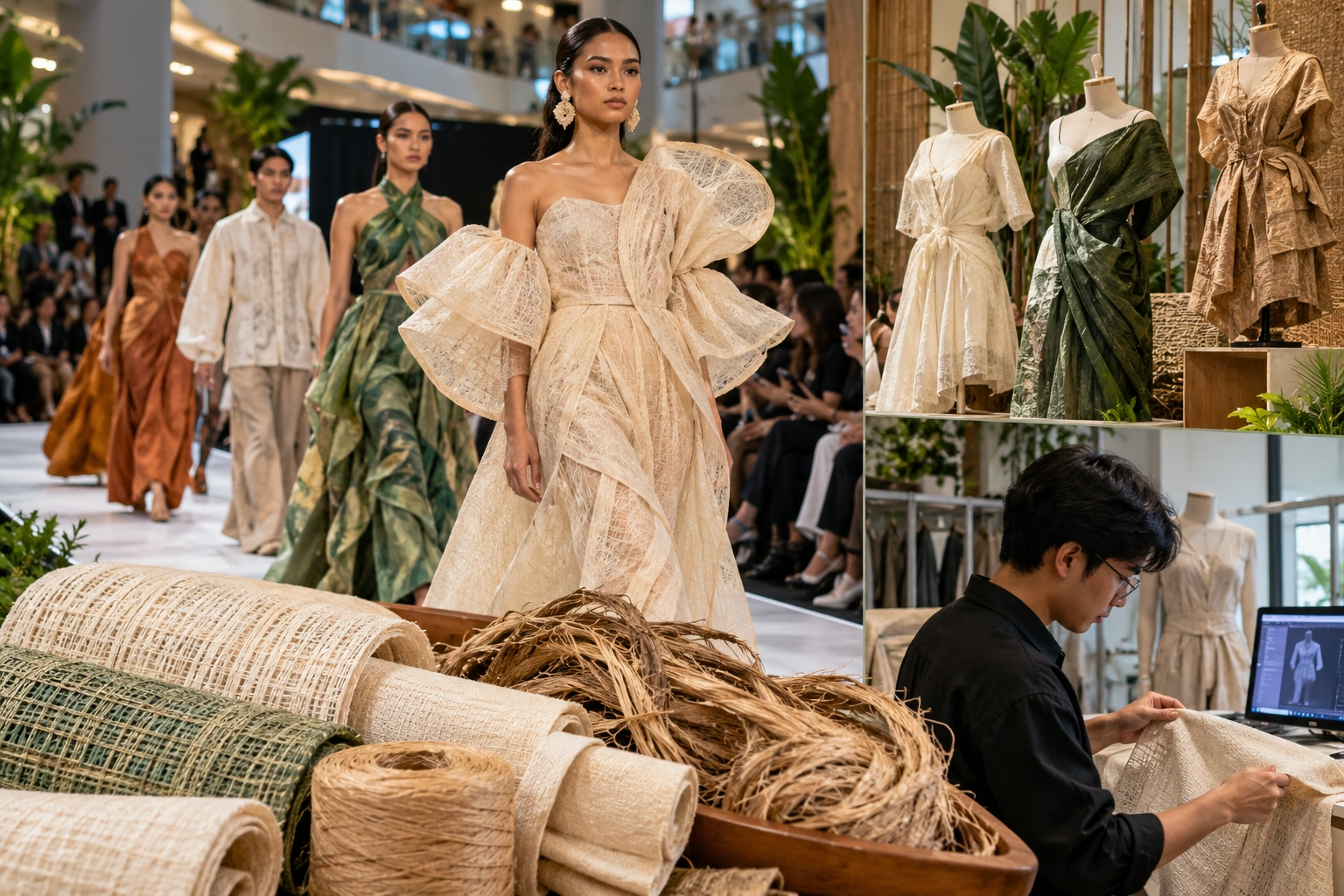
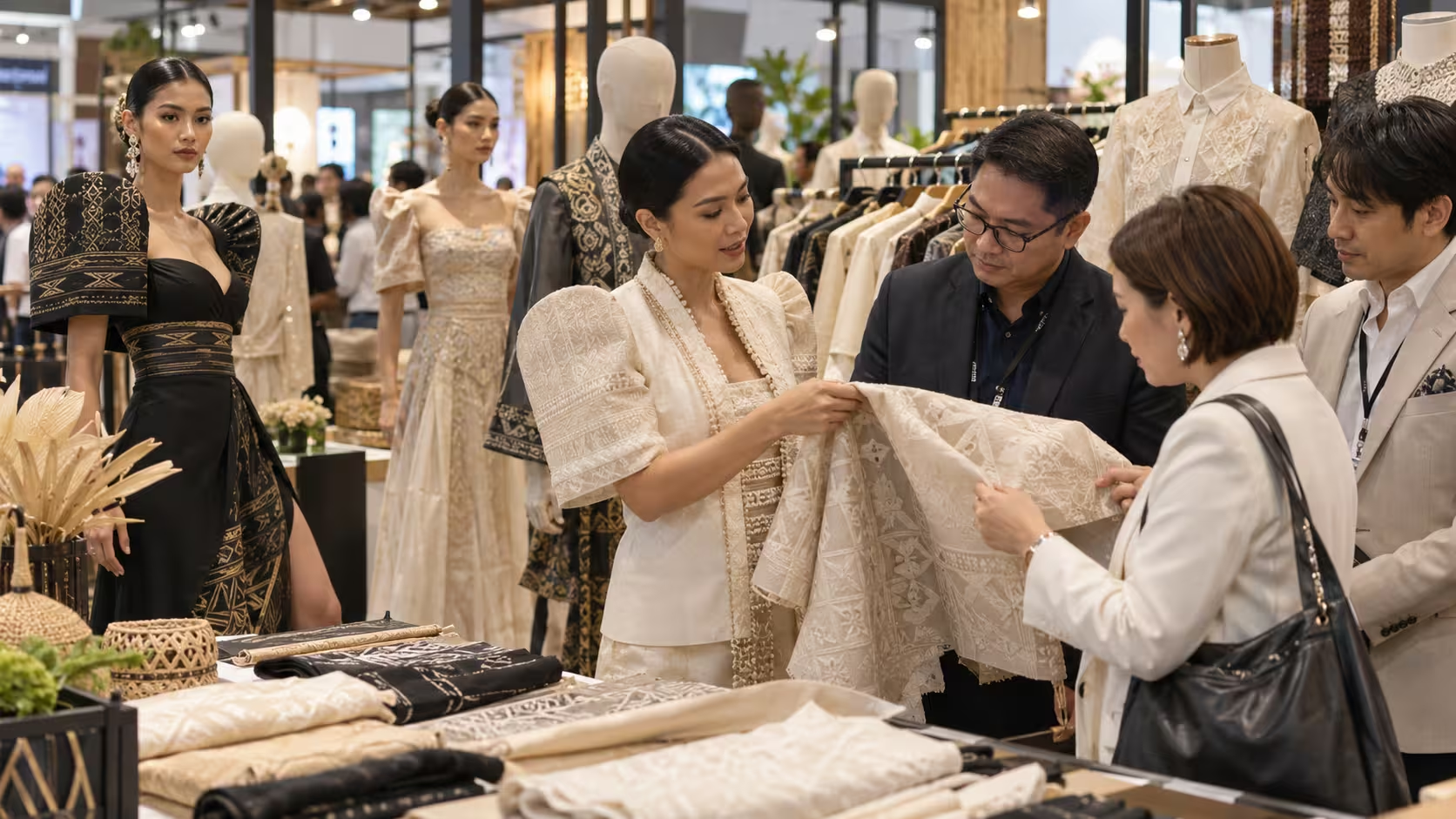
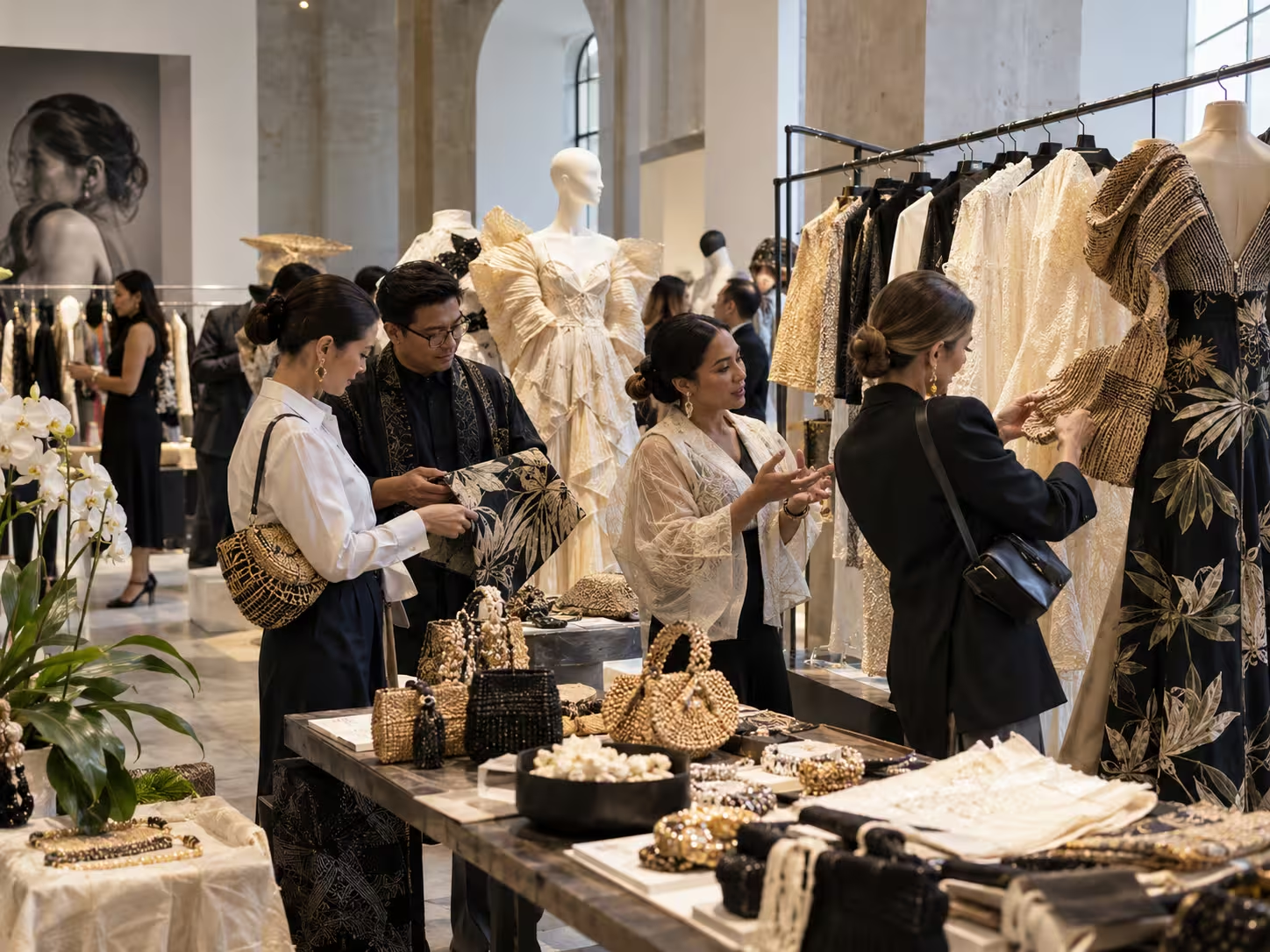
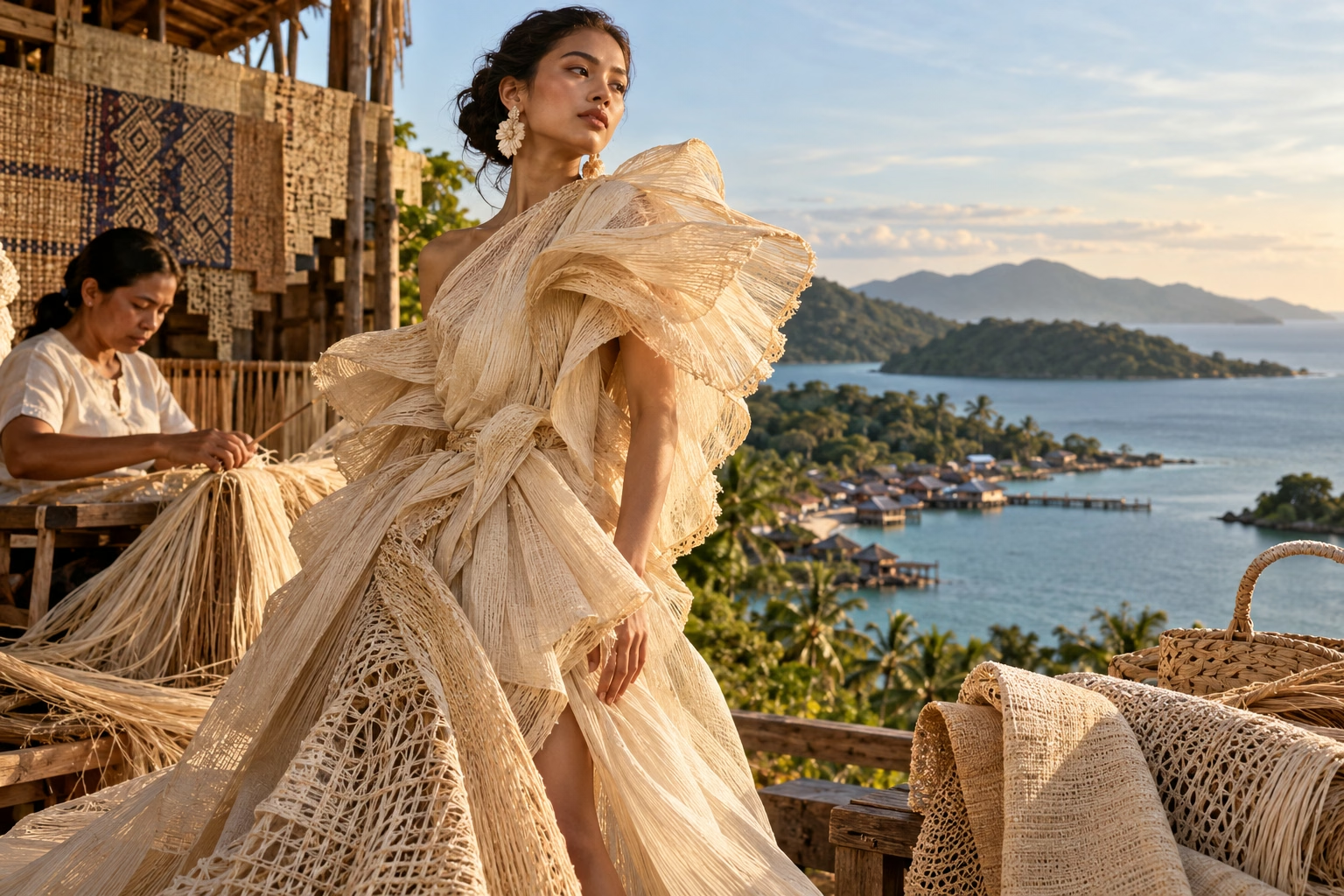
This editorial vision is not created in a vacuum; it is supported by the content of the magazine’s fashion pages. The April 2026 issue, for instance, featured editorials showcasing raffia, piña, and abaca transformed into draped layers and sculptural forms by designers like King Morden. By placing these materials in the same high-fashion context as any global luxury brand, Vogue Philippines performs a crucial act of legitimization. It tells its readership—both local and international—that these fabrics belong in the realm of aspiration and artistry. This is a symbiotic relationship. The magazine provides the platform and the narrative prestige, while the designers and their innovative use of Philippine Tropical Fabrics provide the compelling, visual evidence for that narrative. Together, they are constructing a new visual and intellectual vocabulary for Filipino fashion, one where a piña gown is not a folkloric costume, but a contemporary, covetable piece of high design. This is how a new identity is forged—not through decree, but through consistent, high-quality, and intentional storytelling. Vogue Philippines’ official site at https://www.vogue.ph/ remains an active reference for these editorial directions.