The Philippines, with its lush islands, tropical climate, and vibrant culture, is a country where fashion is ever-evolving. Fashion in this archipelago has deep roots in both its natural beauty and cultural diversity. Whether strolling along its pristine beaches or navigating the bustling streets of Manila, Filipinos have managed to incorporate their local heritage and modern trends into their wardrobes.
Beach Fashion: Embracing Comfort and Style
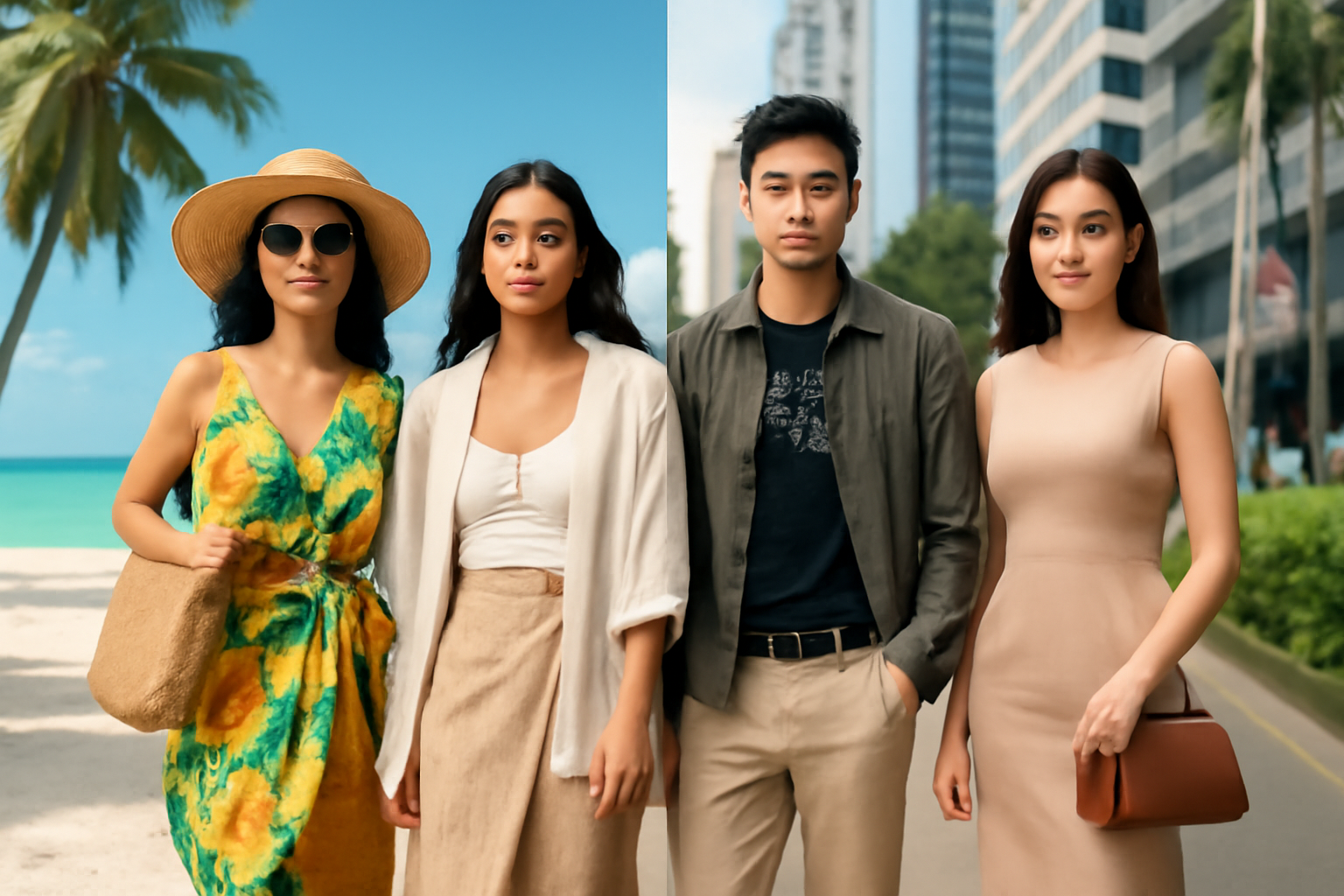
When it comes to fashion, the Philippines’ coastal lifestyle influences beachwear heavily. The beaches here, with their white sand and clear waters, are popular vacation spots, and the fashion choices reflect the tropical environment. Casual, lightweight, and breathable fabrics like cotton, linen, and bamboo are staples of beachwear. For both men and women, beachwear is centered on comfort while still offering stylish options. Swimsuits, bikinis, and board shorts are popular for a day on the beach, often paired with colorful cover-ups or sarongs.
Accessories play a key role in beach fashion too. Sunglasses, sun hats, and flip-flops are commonly seen, adding practicality and a fashionable edge to the laid-back, sun-kissed look. The vibrant colors and prints often feature tropical flowers, ocean motifs, or geometric patterns, reflecting the playful and carefree lifestyle that the beach environment promotes.
Urban Fashion: From Casual to Contemporary
In stark contrast to the relaxed vibe of the beach, urban fashion in the Philippines takes a more polished and diverse approach. In the cities, such as Metro Manila, Cebu, and Davao, the fashion scene has grown exponentially over the years, with global fashion trends being adapted to the Filipino context. Filipinos often blend local style with international influences, resulting in a hybrid aesthetic that is as dynamic as the cities themselves.
The tropical climate still plays a huge role in city fashion, with breathable fabrics like cotton, linen, and denim being preferred for daily wear. However, urban outfits often involve more structured and tailored pieces, such as button-down shirts, blazers, skirts, and dresses. Layering is a common technique, allowing people to adjust to the ever-changing weather. For example, wearing a light jacket in the morning that can be easily removed by midday when the heat intensifies.
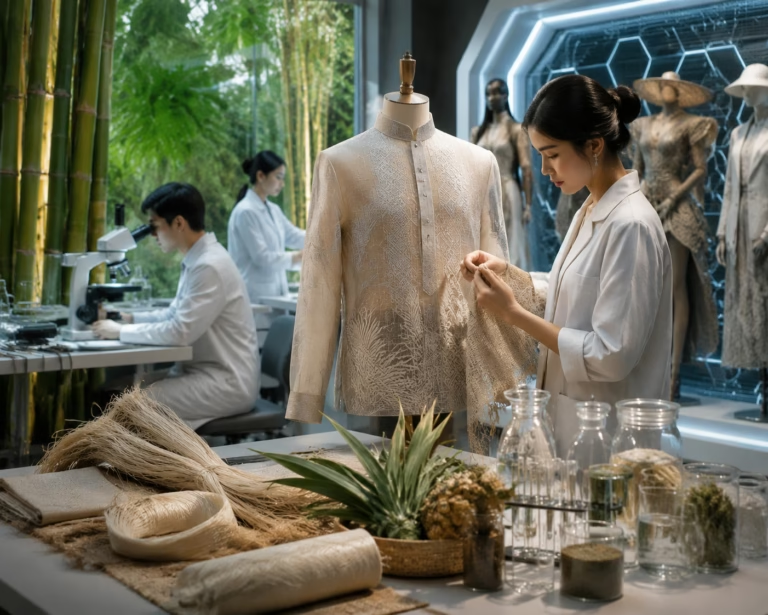
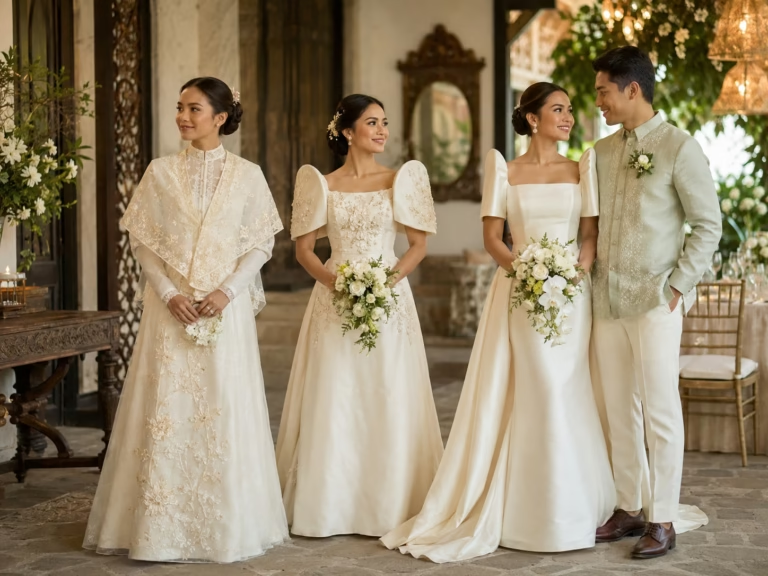
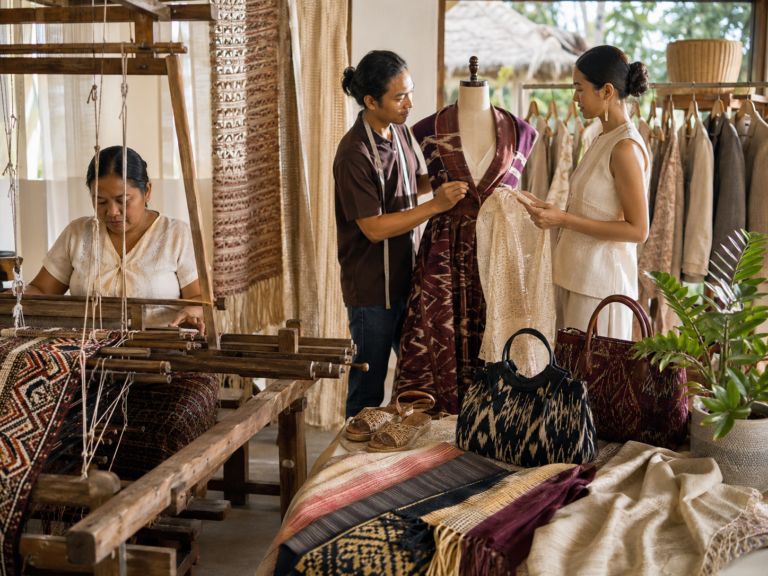
Streetwear is also a popular trend among the younger generation, with graphic t-shirts, sneakers, and oversized jackets making a significant statement. In recent years, local Filipino designers have contributed to this urban fashion landscape, merging indigenous textiles like piña (pineapple fiber) and abaca with contemporary street styles, creating a fusion of culture and modernity that is distinctly Filipino.
Local Designers and Filipino Fashion
A key driver of fashion innovation in the Philippines is the growing recognition of local designers. Filipino fashion designers are gaining international acclaim for their unique ability to blend the nation’s heritage with global trends. Notable names like Rajo Laurel, Vania Romoff, and Joey Samson are examples of individuals who are making waves both locally and internationally. Their collections often highlight indigenous fabrics, showcasing the Philippines’ rich textile traditions while giving them a modern twist that appeals to fashion-forward urbanites.
Conclusion: Fashion as a Reflection of Filipino Identity
From the serene, easy-going beach life to the high-energy, fast-paced city lifestyle, fashion in the Philippines has found a balance between comfort and sophistication. The adaptability of Filipino fashion, blending practicality with creativity, reflects the resilience and resourcefulness of the people. Whether you’re soaking up the sun on an island or navigating the urban jungle, Filipino fashion is a beautiful representation of both cultural pride and global influences.