










Designing an itinerary in the Philippines that combines ocean excitement with mountain exploration is like assembling a vibrant mosaic. Each island and region adds a different piece: a surf break here, a rice terrace there, a hidden lagoon or a misty summit somewhere in between. With a bit of planning, you can enjoy a journey that flows naturally from coast to highlands and back again.
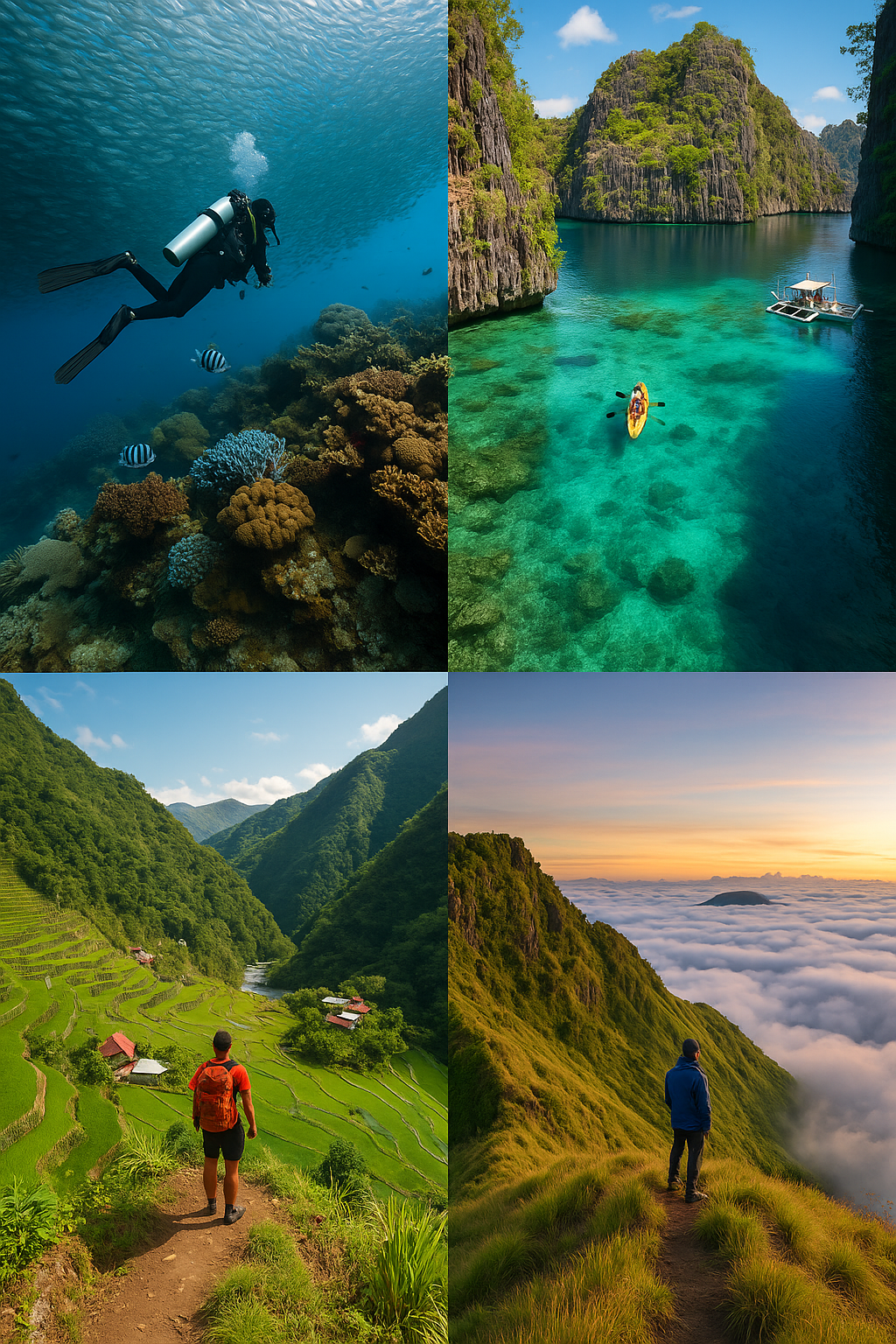
For many visitors, the adventure begins on the shore. Cebu, Bohol, and Negros in the Visayas region offer a dense cluster of activities that are easy to link together. Off Cebu, you can experience the dazzling sardine run in Moalboal, where huge schools of fish move in synchronized formations just offshore. Down the coast, canyoneering routes challenge you to jump from cliffs, slide down rocks, and swim through cool freshwater pools as you make your way to multi-tiered waterfalls.
Bohol adds another layer to a sea-focused adventure. While it’s famous for the Chocolate Hills and tarsiers, it also has excellent diving and snorkeling around Panglao Island. Coral gardens, shallow reefs, and drop-offs host turtles and vibrant fish life, and day trips by boat can whisk you away to quieter islets with powdery sand and clear water. Sea kayaks and stand-up paddleboards provide slower, more contemplative ways to explore mangrove forests and coastal lagoons.
Further west, Palawan has become nearly synonymous with paradise. El Nido’s towering limestone cliffs and sheltered coves create perfect conditions for sea kayaking, cliff jumping, and snorkeling. In Coron, island-hopping routes take you to lakes accessed via wooden staircases carved into cliffs, and to shallow wrecks where even snorkelers can see the outlines of sunken ships. Many travelers choose simple beach camps or eco-lodges to stay close to nature, falling asleep to the sound of waves.
Once you’ve had your fill of salt and sun, the mountains offer a refreshing contrast. A flight or bus ride north to Luzon’s highlands introduces you to a cooler climate and a different pace of life. Trekking along the terraces of Banaue and Batad, you’ll see how local communities have shaped steep hillsides into productive fields over centuries. Trails wind through these landscapes, crossing streams, climbing stone steps, and passing traditional houses perched on ridges.
Beyond terrace hikes, there are classic summit treks. Mt. Pulag is particularly popular due to its relatively accessible trails and iconic “sea of clouds” views on clear mornings. Climbers usually start before dawn to reach the viewpoint in time for sunrise, layering up against the chill that surprises many who associate the Philippines only with tropical heat. Organized climbs often include transport, guides, porters, and permits, making logistics easier for visitors.
Mindanao adds another dimension for those willing to venture further afield. Mt. Apo combines dense forest, hot springs, and volcanic rock fields into a challenging but rewarding climb. As with many Philippine mountains, local knowledge is indispensable: guides help navigate changing routes, advise on camping spots, and share insights into the area’s ecology and culture.
When creating your own sea-and-mountain journey, think in terms of energy flow. Schedule intense activities, such as long hikes or full days of diving, with rest days in between. Use those pauses to visit local markets, try regional food specialties, or simply sit by the water and watch fishermen bring in their catch. This pacing not only prevents burnout but also allows you to absorb more of the places you’re visiting.
Sustainability is another key element of a well-designed trip. Choose dive shops and tour operators that avoid feeding wildlife, anchor carefully, and educate guests about marine conservation. In the mountains, stay on established paths and avoid picking plants or disturbing wildlife. Small actions, multiplied by many visitors, have a big impact on the health of reefs, forests, and communities.
By weaving together coastal thrills and highland trails, the Philippines becomes more than a backdrop for photos. It turns into a living, breathing environment that invites you to participate—paddling, climbing, swimming, and walking through landscapes that are as diverse as they are unforgettable.