








Maternal and child health (MCH) in the Philippines is anchored in a web of policies, frontline workers, and service delivery networks designed to reduce mortality and improve early life outcomes. The Department of Health (DOH) sets national standards, while local government units (LGUs) run day-to-day services. This devolution allows programs to be adapted to local needs—from dense urban communities to small island barangays—while national laws like the Universal Health Care Act, the Responsible Parenthood and Reproductive Health (RPRH) Law, and the First 1,000 Days policy framework define the essential package of care.
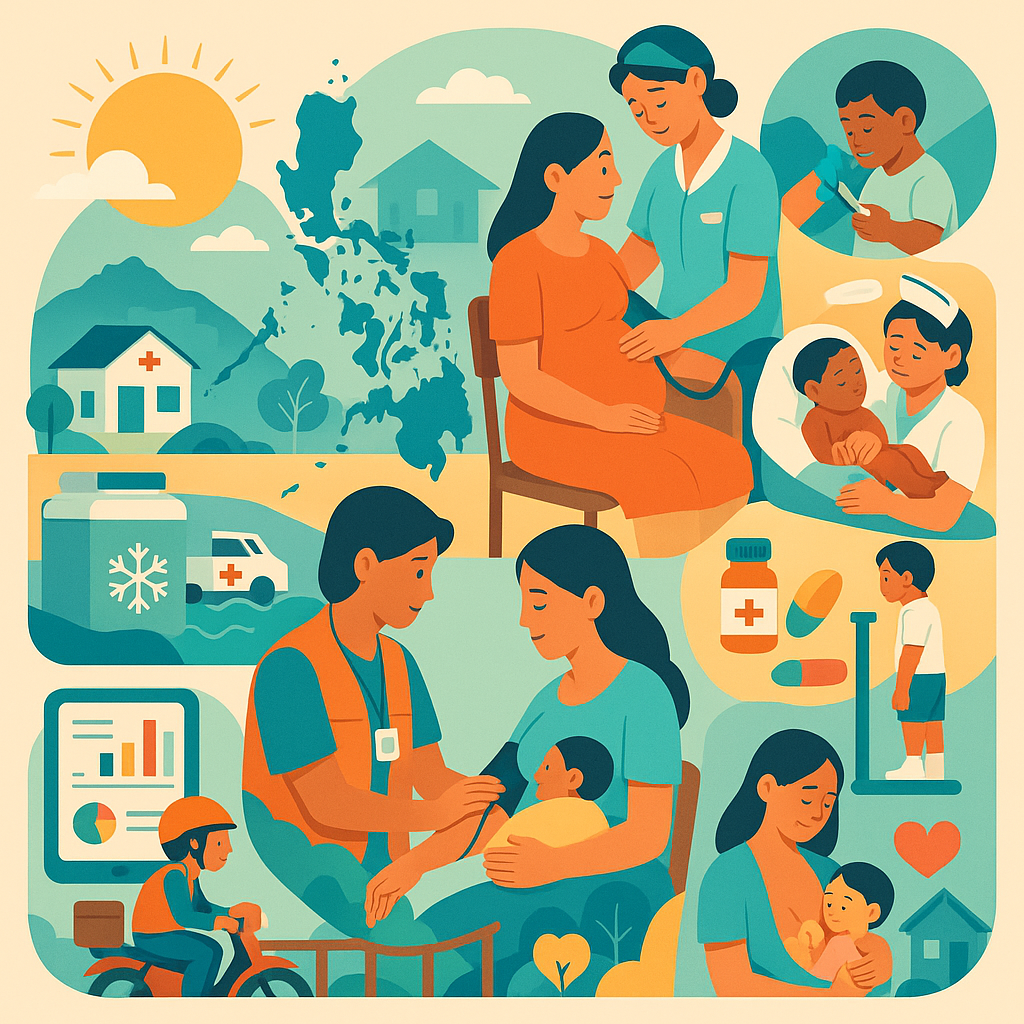
The continuum begins with family planning counseling and access to a range of contraceptives, aiming to prevent high-risk and unintended pregnancies. During pregnancy, women are encouraged to complete multiple antenatal care (ANC) visits that include blood pressure monitoring, anemia screening, tetanus-diphtheria vaccination, and counseling on birth preparedness and danger signs. PhilHealth, the national health insurance program, helps reduce out-of-pocket costs for facility-based deliveries and newborn care.
Skilled birth attendance is prioritized through a tiered network: Barangay Health Stations and Rural Health Units manage routine care and Basic Emergency Obstetric and Newborn Care (BEmONC), while provincial and regional hospitals offer Comprehensive Emergency Obstetric and Newborn Care (CEmONC), including surgical and blood transfusion services. Referral systems—ideally with transport arrangements—aim to move patients quickly when complications arise.
For newborns and children, the Expanded Program on Immunization (EPI) provides protection against vaccine-preventable diseases. Newborn screening identifies metabolic and genetic conditions early, and initiatives such as rooming-in, Baby-Friendly Hospital practices, and human milk banks promote breastfeeding. Kangaroo Mother Care for preterm and low-birth-weight infants supports thermal regulation and bonding when incubators are limited. Nutrition interventions include iron-folic acid for pregnant women, vitamin A supplementation, deworming in school-age children, and the promotion of appropriate complementary feeding.
The Philippines also leverages social protection to encourage care-seeking. The Pantawid Pamilyang Pilipino Program (4Ps) ties cash grants to behaviors like regular prenatal checkups and child immunizations, making preventive practices more feasible for low-income families. Community-based workers—Barangay Health Workers and Barangay Nutrition Scholars—play pivotal roles in tracking pregnancies, conducting home visits, and bridging gaps in hard-to-reach areas.
Persistent challenges remain. Adolescent pregnancy strains health and social systems, while malnutrition—stunting and wasting—affects cognitive development and school readiness. Geographic isolation, frequent typhoons, and intermittent conflict disrupt services and supply chains. Addressing these requires resilient cold-chain systems for vaccines, prepositioned emergency obstetric kits, and adaptable service delivery such as mobile clinics and outreach to geographically isolated and disadvantaged areas.
Data systems underpin improvements. Routine reporting through the Field Health Services Information System and targeted surveys guide resource allocation and program tweaks. Partnerships with professional societies, faith-based organizations, and international agencies add technical support and surge capacity, especially after disasters.
Overall, the country’s MCH landscape blends legal guarantees, insurance coverage, community outreach, and hospital-based readiness. Continued investment in quality of care, adolescent-friendly services, equitable financing, and climate-resilient health infrastructure is essential to ensure that mothers and children—wherever they live—receive timely, respectful, and lifesaving care.