
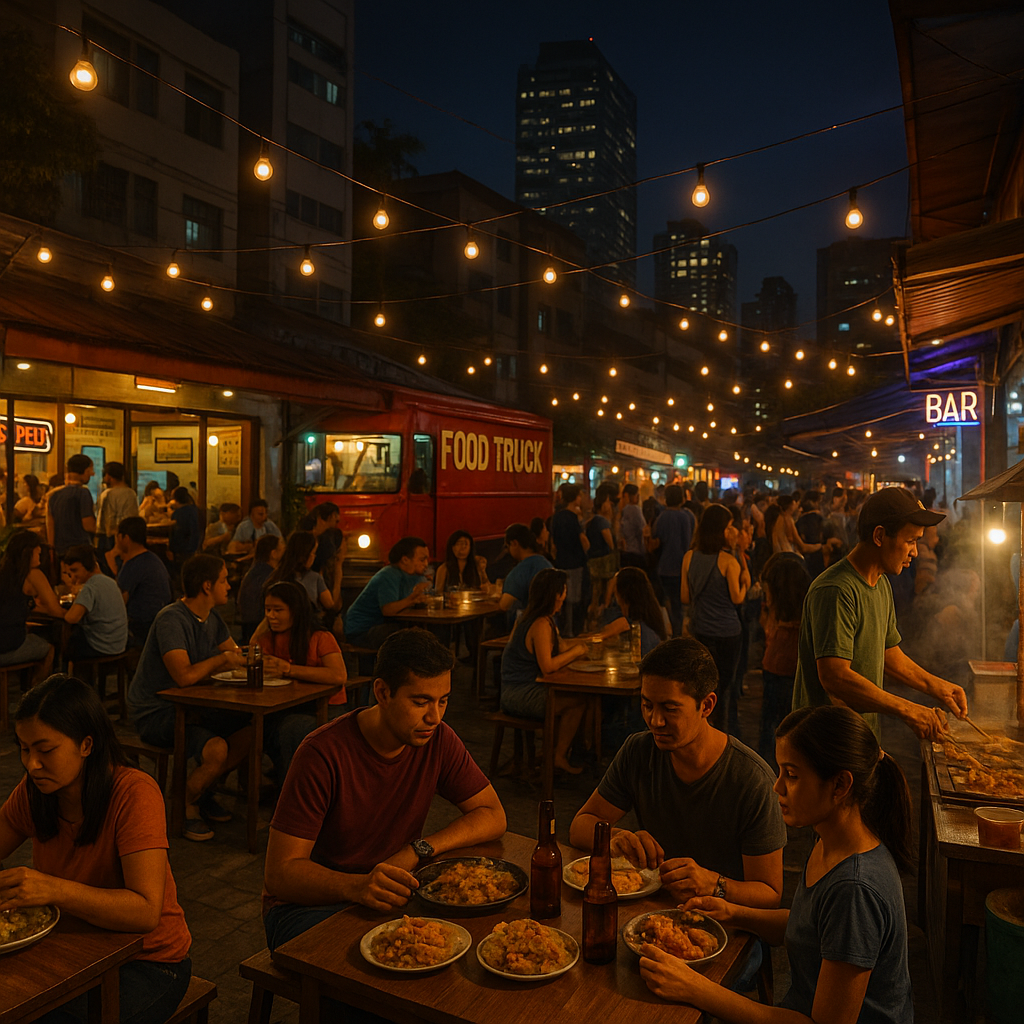
If you want to understand how Filipinos spend their evenings, look at their dining habits once the workday ends. Urban nightlife in the Philippines revolves around food just as much as music or entertainment. Busy streets, lively plazas, and commercial centers all become stages for a nightly ritual of eating, drinking, and socializing.
In Metro Manila and other large cities, several neighborhoods are known for their dense concentration of after-hours food options. Business districts transform at night, when office towers cast light over rows of restaurants, bars, and food trucks. Young professionals, students, and tourists mingle in these areas, moving from one establishment to the next in search of their preferred atmosphere and cuisine.
Local eateries remain the backbone of this ecosystem. Simple carinderias serve home-style dishes like ginataang gulay, adobo, and menudo with generous portions of rice. These places may not have elaborate décor, but they offer flavor and affordability, drawing regular customers who treat them as an extension of their own kitchen.
Meanwhile, street vendors bring a sense of spontaneity. Their carts and makeshift stands appear near sidewalks, alleys, and transport hubs, especially in the early evening. They serve skewered meats, fish balls, balut, and other quick bites. The act of standing by the cart, dipping skewers into plastic containers of sauce, and chatting with friends is a familiar part of urban life.
Organized night markets give a slightly different experience. They often pop up on weekends in parking lots or designated streets, filled with string lights and rows of stalls. Here you can try regional specialties, creative fusion dishes, and popular international foods all in one place. The shared seating and live entertainment make these markets feel like open-air food festivals.
Bars, clubs, and lounges rely heavily on food as well. While drinks take the spotlight, menus usually feature a strong lineup of pulutan. Sizzling sisig, nachos with local twists, grilled seafood, and crispy pork dishes keep groups ordering and sharing throughout the night. Many places also offer acoustic performances or DJs, combining dining with entertainment.
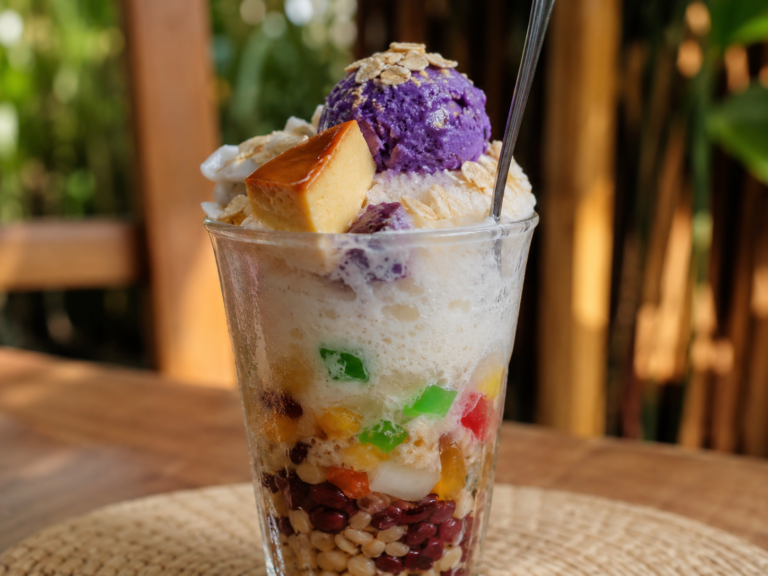
Contemporary Filipino restaurants have introduced a more refined form of nightlife dining. They experiment with ingredients such as ube, calamansi, and coconut in both savory dishes and desserts. Rustic recipes like bulalo or kare-kare might appear with modern plating and unexpected side dishes. These restaurants draw diners who are curious about how Filipino cuisine can evolve while preserving its roots.
Coffee shops and dessert bars extend the evening in a gentler way. They stay open late to serve pastries, gelato, specialty coffee, and drinks inspired by local flavors. Groups who are done with loud music often transfer here to continue their conversations in a calmer setting, ending the night with something sweet or comforting.
All these spaces—street corners, food parks, mall restaurants, rooftop bars—work together to shape the character of Filipino city nights. The variety reflects the diversity of the people who fill them: office workers, students, families, and travelers. By moving through these dining spots after dark, you can feel how food connects communities and keeps the cities lively well into the night.