Traditional entertainment in the Philippines offers a broad and colorful picture of the nation’s cultural life. It is not limited to staged amusement; it is tied to ritual, celebration, memory, and social connection. Across different regions, communities created performance forms that allowed them to share stories, honor beliefs, celebrate important occasions, and strengthen communal bonds. Because the Philippines has been shaped by indigenous traditions as well as Asian, Islamic, and Spanish influences, its entertainment heritage is especially diverse.
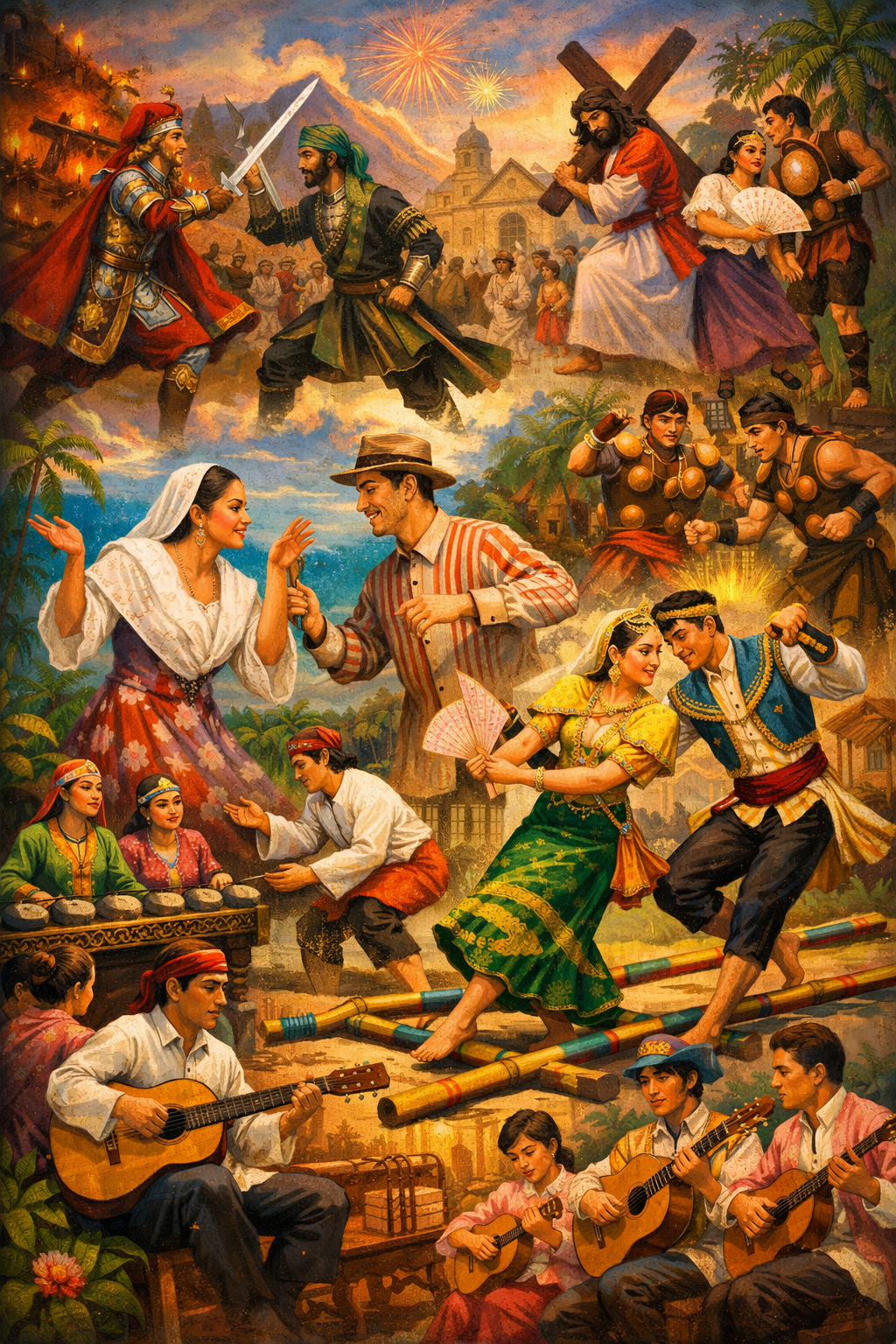
A meaningful place to begin is with pantomime and movement-based storytelling. In many Filipino traditions, performers rely on gesture, posture, and facial expression to convey narrative. This approach is effective because it allows the performance to be understood by audiences of different ages and language backgrounds. The Bicol region’s Pantomina is a well-known example. Often described as a courtship dance, it presents romantic interaction through elegant and symbolic movement. The dancers create drama through physical distance, teasing motion, and shifts in rhythm rather than through direct speech. This emphasis on expressive movement shows how Filipino audiences have long appreciated entertainment that is visual, participatory, and emotionally immediate.
Traditional dramatic forms add another layer to the country’s performance culture. The komedya or moro-moro became one of the most visible community spectacles in earlier centuries. It is marked by ornate costumes, formal language, heroic conflicts, and staged combat. Although it has roots in colonial history, it was localized by Filipino communities and became a familiar part of town fiestas and public celebrations. The senakulo, commonly performed during Holy Week, is another major tradition. It reenacts biblical events related to the Passion of Christ and brings together religion, drama, and local artistry. Through these forms, entertainment became a community project involving actors, musicians, tailors, stage builders, and spectators.
Music is essential in sustaining the emotional power of these performances. In southern Philippine traditions, the kulintang ensemble creates a sophisticated sound world built around gongs and percussion. It is used in ceremonies, festive gatherings, and social occasions, showing that music is both artistic and functional. In many northern and central communities, the rondalla tradition provided a very different sound, using plucked string instruments to accompany dance and theater. These musical systems differ in style and history, yet both demonstrate the importance of ensemble performance in Filipino entertainment culture.
Folk dance remains one of the strongest symbols of traditional Filipino artistry. Tinikling is famous for its bamboo poles and rapid stepping patterns, demanding coordination and alertness from the dancers. Cariñosa highlights shyness, affection, and graceful interaction between partners, often using simple props that enrich the visual effect. Singkil, rooted in Maranao heritage, is associated with nobility and ceremonial elegance. Its complex movement through bamboo poles, combined with richly detailed costume, creates a performance of dignity and control. Other dances such as Maglalatik, Subli, and Sayaw sa Bangko further illustrate how daily life, religious devotion, and local humor can be transformed into performance.
Today, these traditional forms continue to appear in cultural festivals, classrooms, community events, and heritage programs. Their value lies in more than entertainment alone. They preserve stories, protect regional identity, and remind modern audiences that performance has always been one of the Philippines’ most powerful ways of expressing who its people are.