
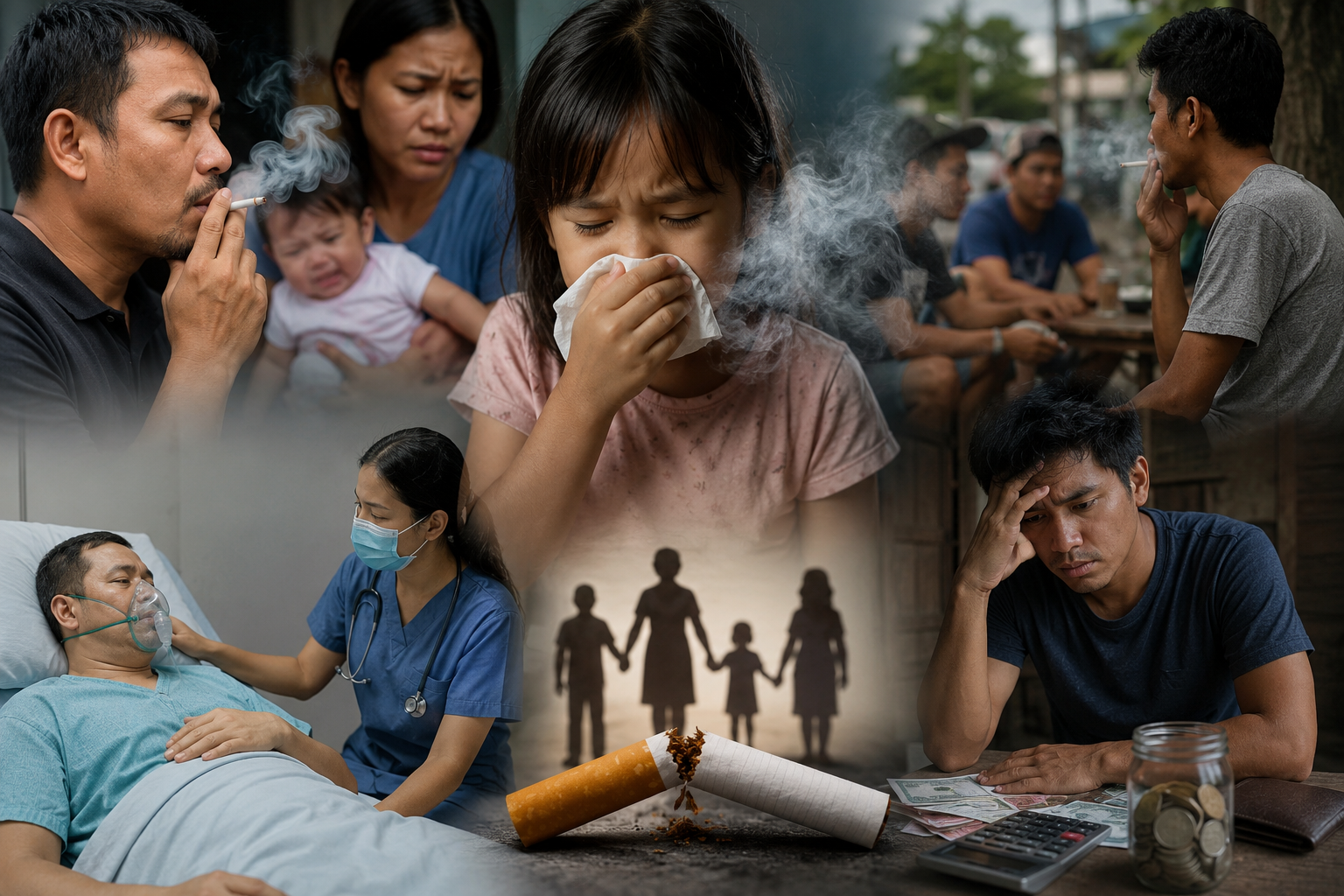
The health burden of smoking in the Philippines is not limited to people who buy cigarettes. It spreads through homes, public spaces, workplaces, and healthcare systems. Tobacco use contributes to chronic disease, secondhand smoke exposure, family financial pressure, and preventable loss of life. For a country working to improve public health access and disease prevention, reducing smoking remains a major priority.
Secondhand smoke is one of the clearest examples of how smoking affects non-smokers. When cigarettes are burned, smoke enters the surrounding air and can be inhaled by anyone nearby. In small homes, shared rooms, eateries, transport areas, and crowded neighborhoods, exposure can happen easily. This is especially concerning for children, pregnant women, older adults, and people with asthma or heart disease.
Children exposed to tobacco smoke may experience more coughing, wheezing, asthma symptoms, and respiratory infections. Adults who inhale secondhand smoke may also face higher risks, particularly if they already have existing medical conditions. The idea that smoking away from a child or near an open window is enough to remove risk is misleading. Smoke particles can remain in indoor environments and settle on surfaces.
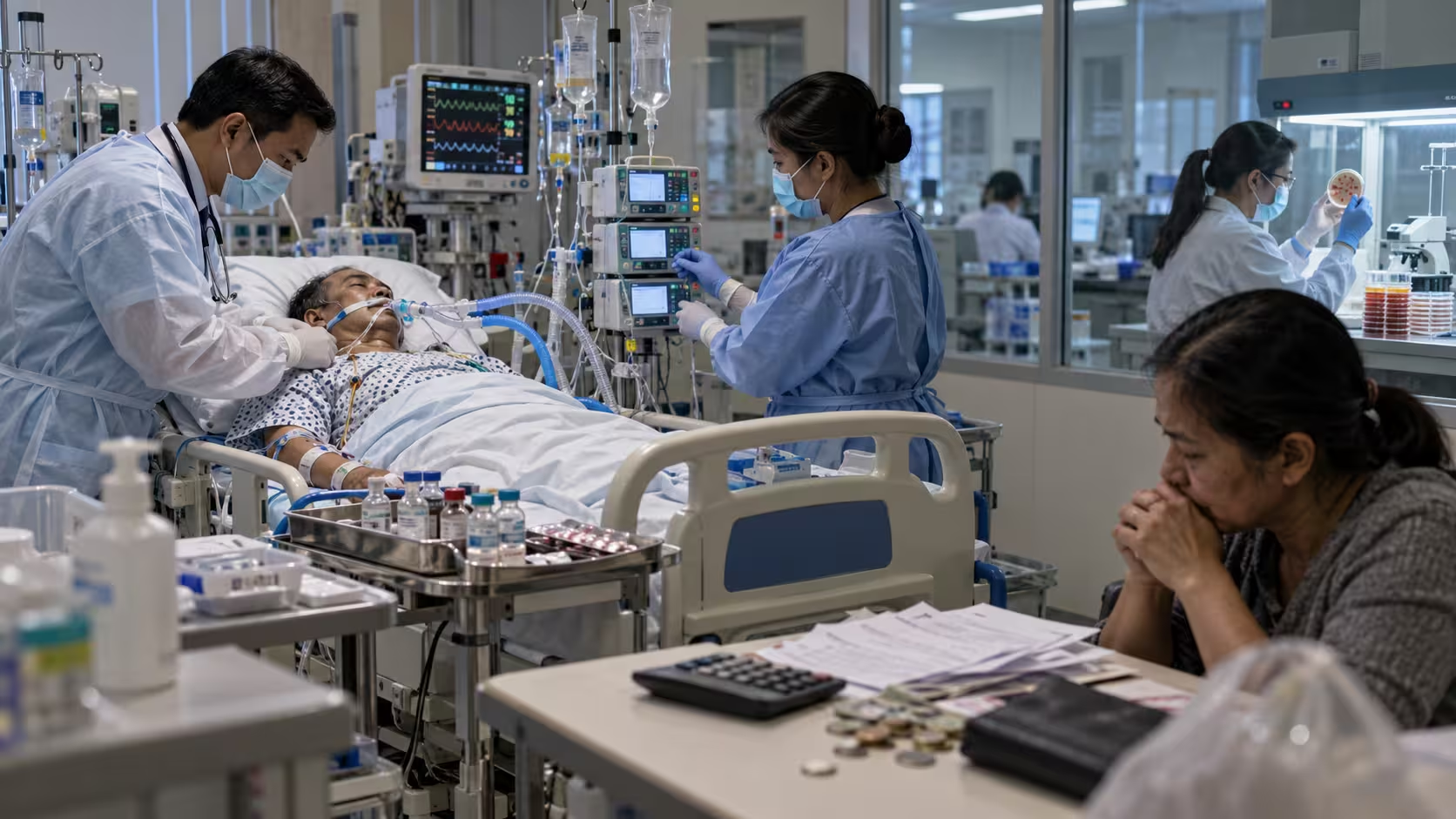
For smokers themselves, the long-term disease risks are severe. Cigarette use is associated with lung cancer, chronic obstructive pulmonary disease, heart disease, stroke, and several other serious conditions. These illnesses often require long-term treatment, repeated medical consultations, medicine, diagnostic tests, or hospitalization. The result is a heavy burden not only on patients but also on caregivers and healthcare providers.
The Philippines has made important progress in tobacco control. Public smoking restrictions, warning labels, advertising limits, and higher taxes are designed to reduce tobacco use and protect public spaces. These policies reflect a broader recognition that smoking is not simply an individual issue. It has social, medical, and economic consequences that require coordinated action.
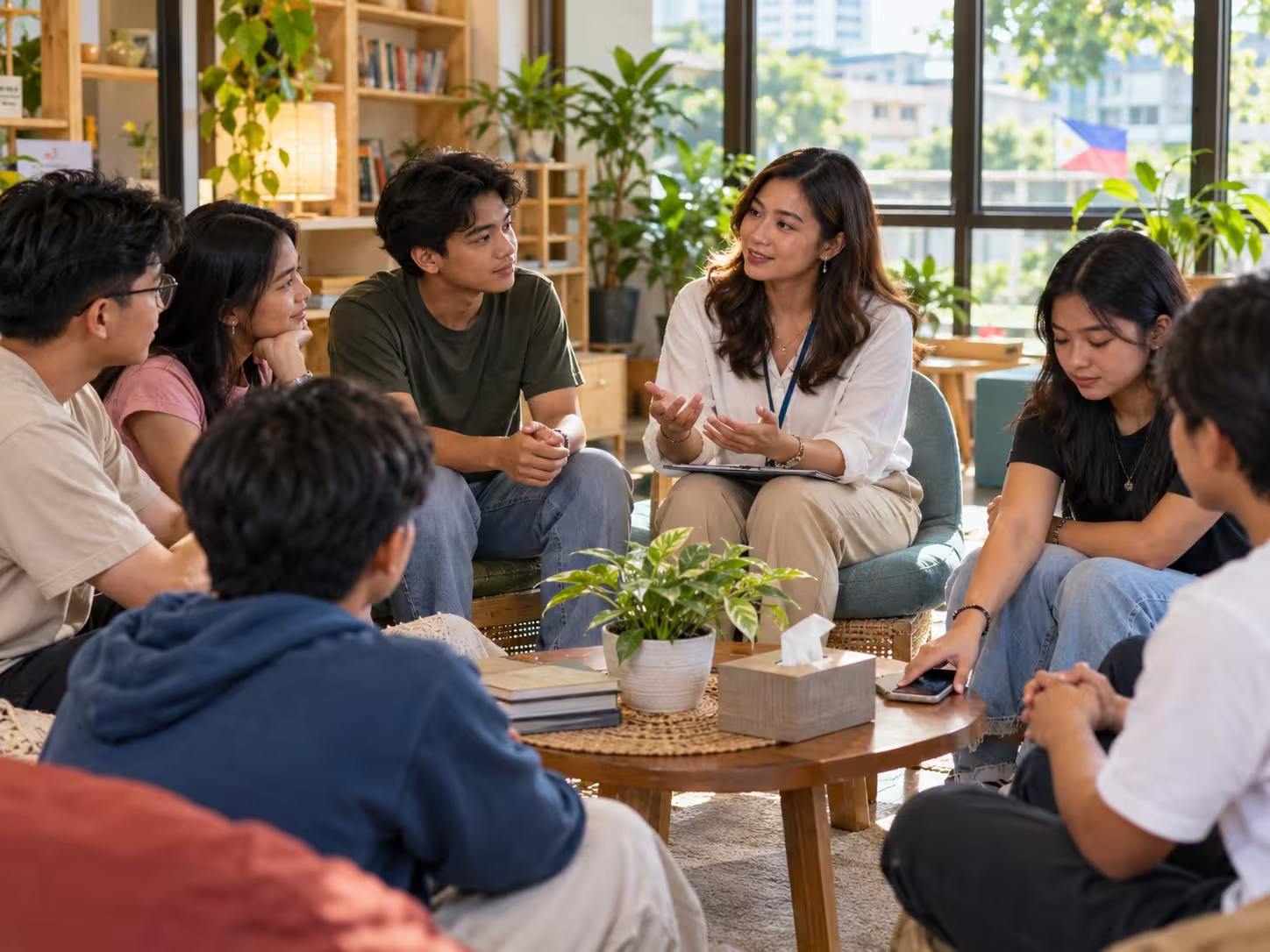
Healthcare workers play an important role in prevention. A brief conversation with a doctor, nurse, or community health worker can encourage a smoker to consider quitting. When cessation advice is combined with family support and accessible services, the chances of success improve. However, many smokers still lack structured support or feel discouraged after previous failed attempts.
Quitting smoking is often a process rather than a single decision. Withdrawal symptoms, stress, social pressure, and daily habits can make relapse common. This does not mean quitting is impossible. It means support should be practical, patient, and consistent. Smoke-free home rules, avoiding triggers, seeking counseling, and replacing smoking routines with healthier habits can all help.
The role of young people is also critical. Preventing the first cigarette may be one of the most effective ways to reduce future disease. Schools and families can help by explaining not only the medical risks but also the marketing tactics and social pressures that make tobacco appealing. The same attention is needed for vaping and other nicotine products, which may attract younger users through flavors, design, and online visibility.
Smoking’s health burden is visible in clinics, hospitals, family budgets, and everyday breathing problems. But it is also preventable. With stronger awareness, better cessation support, and consistent protection from secondhand smoke, the Philippines can reduce the damage caused by tobacco and help more families live healthier lives.