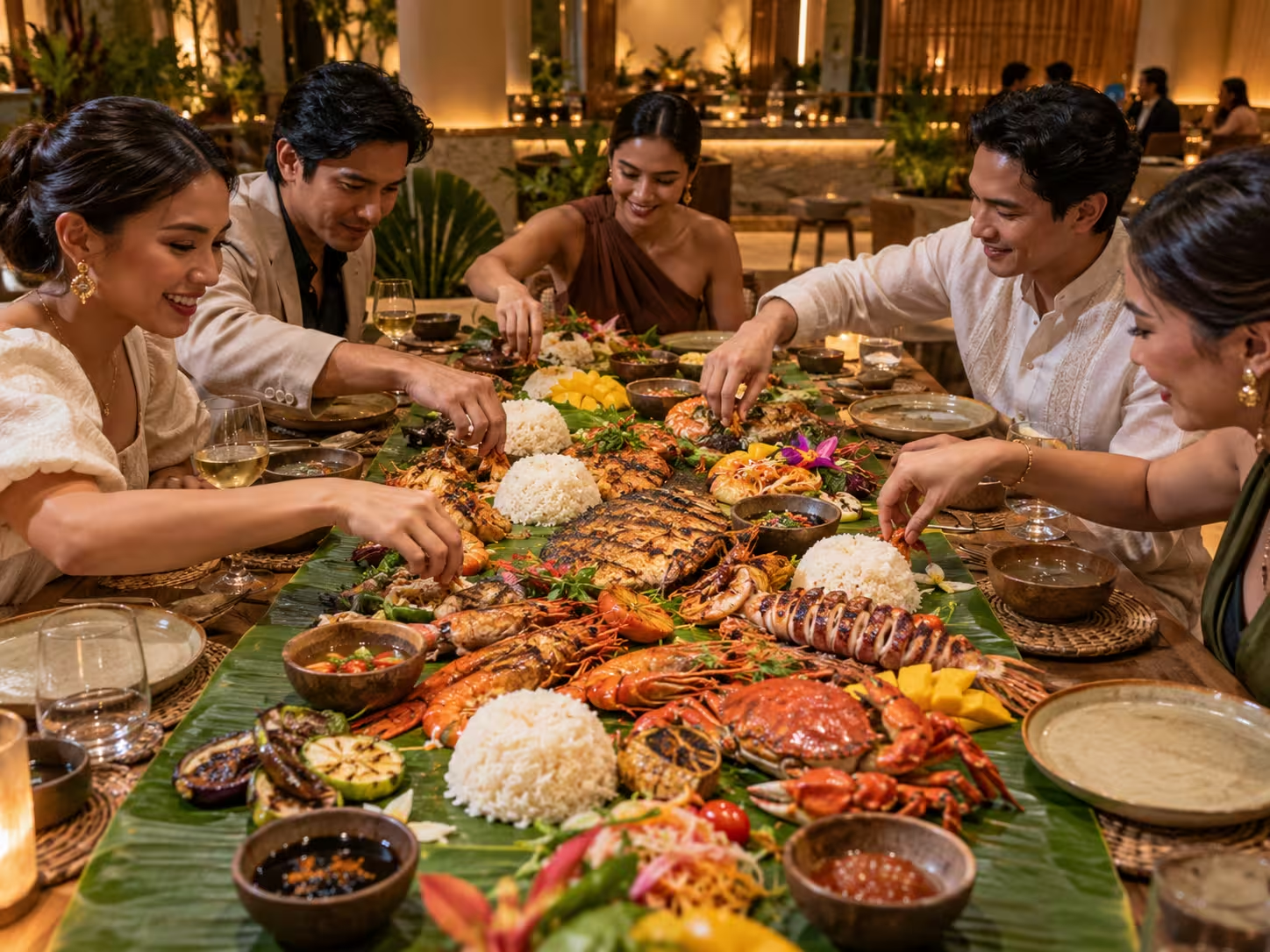
The act of eating with one’s hands is older than the Philippines itself. Yet for centuries, kamayan was pushed to the margins—first by Spanish colonial rule, which imposed utensils and individual plating, and later by urban modernity, which associated hand-eating with the provincial and the unrefined. In 2026, that hierarchy is being inverted. The modern kamayan is not merely tolerated; it is celebrated, exported, and increasingly recognized as a marker of cultural sophistication.
The Cultural Reclamation
The revival is driven by a generation of Filipino chefs who see kamayan not as a nostalgic curiosity but as a living heritage. The BBC has documented how kamayan-style dining, largely swept aside during Spanish rule, is being reclaimed by chefs who view the practice as “a physical connection to Filipino heritage” and “a way of preserving that cultural history” in communities around the world. In Manhattan’s Hell’s Kitchen, chef Anton Dayrit’s Tradisyon transforms from a quick-service Filipino spot into a kamayan feast destination by night, conjoining tables and laying out four-foot-long banana leaves for 20-person communal meals. Similar offerings exist at a handful of restaurants across the city, signaling a quiet but growing demand.
This reclamation is not confined to the diaspora. In the Philippines, the kamayan has been elevated to a symbol of national culinary identity. Toyo Eatery’s kamayan menu, which won the Gin Mare Art of Hospitality Award at Asia’s 50 Best Restaurants 2025, is explicitly framed as an homage to Filipino conviviality. The award’s citation did not treat the feast as a novelty; it recognized it as a serious expression of hospitality, on par with any tasting menu in the region.
The Heritage Economics
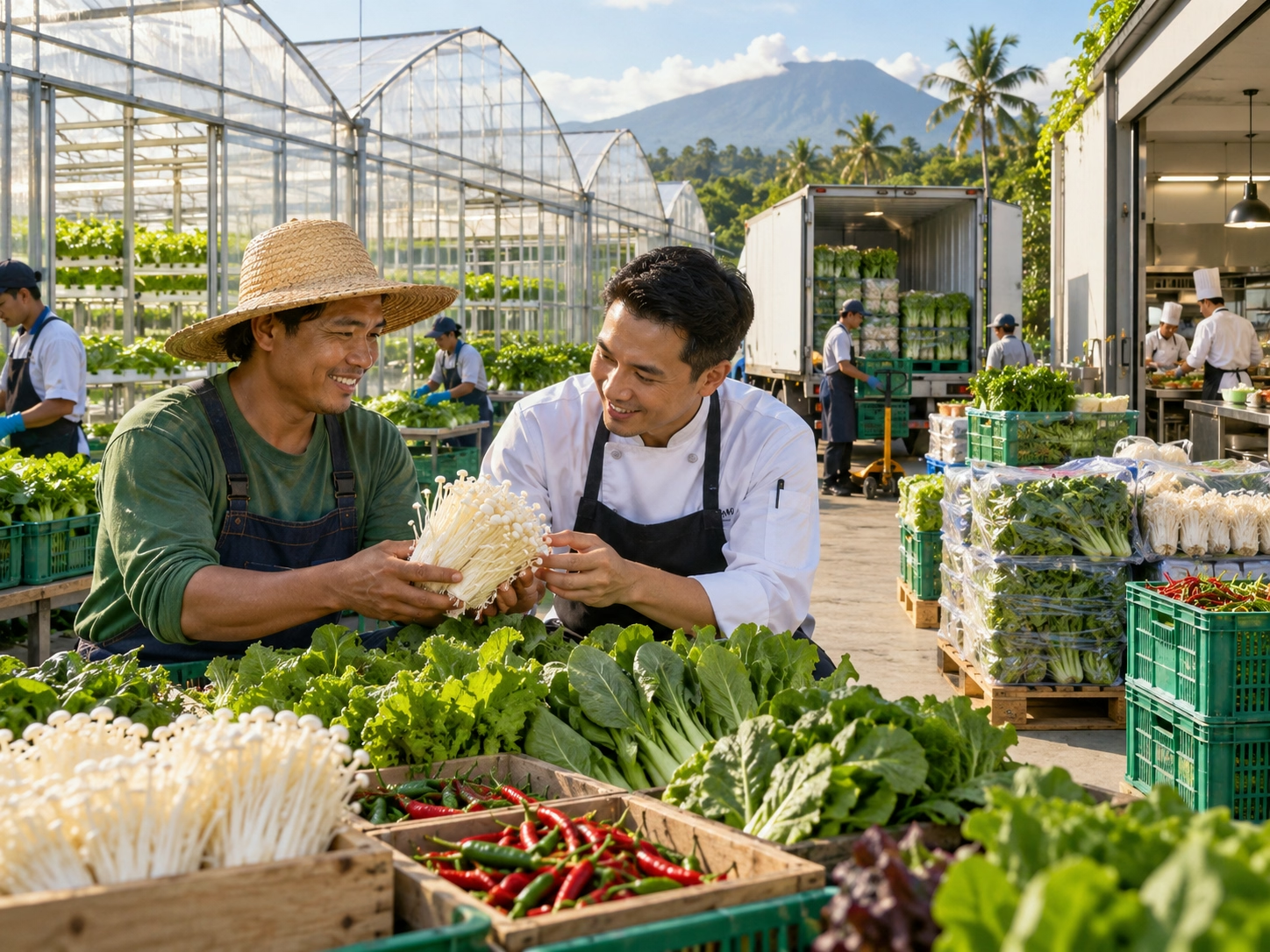
The globalization of kamayan is also an economic story. As the Philippine food tourism market expands toward $36.9 billion by 2036, the demand for authentic, participatory cultural experiences is rising. The kamayan fits this demand precisely: it is difficult to commodify without losing its essence, and therefore commands a premium when executed with integrity. In Siargao, Chef Migs Barcenas has built an entire tour business around boodle fights, blending local flavors with adventure and supporting local fishermen and farmers. In Panglao, UMA’s Build Your Own Boodle Fight integrates the feast into a farm-to-table narrative, reinforcing the connection between heritage and sustainability.
The Tension Between Revival and Authenticity
The global expansion raises a necessary tension: can a tradition born of improvisation and abundance survive the pressures of commercial replication? The most thoughtful practitioners answer by treating kamayan as a format, not a formula. Cev Siargao’s collaboration series invites chefs to create their own “boodle” experience, shaped by place and perspective rather than a fixed menu. Gubat in Quezon City serves individual banana-leaf portions in a garden setting, preserving the tactile essence while adapting to the realities of restaurant service. Toyo Eatery’s version is plated with fine-dining precision yet insists on the absence of cutlery.
These variations suggest that the modern kamayan is not a single thing but a living practice—one that can hold both the memory of a provincial fiesta and the ambition of a globally recognized restaurant. The hands that remember are also the hands that innovate. And as the feast travels from Manila to Manhattan, from Siargao to Panglao, it carries with it a simple, radical proposition: that the most profound way to connect with Filipino culture is to sit down, reach out, and eat.