
From Ingredient to Innovation Platform
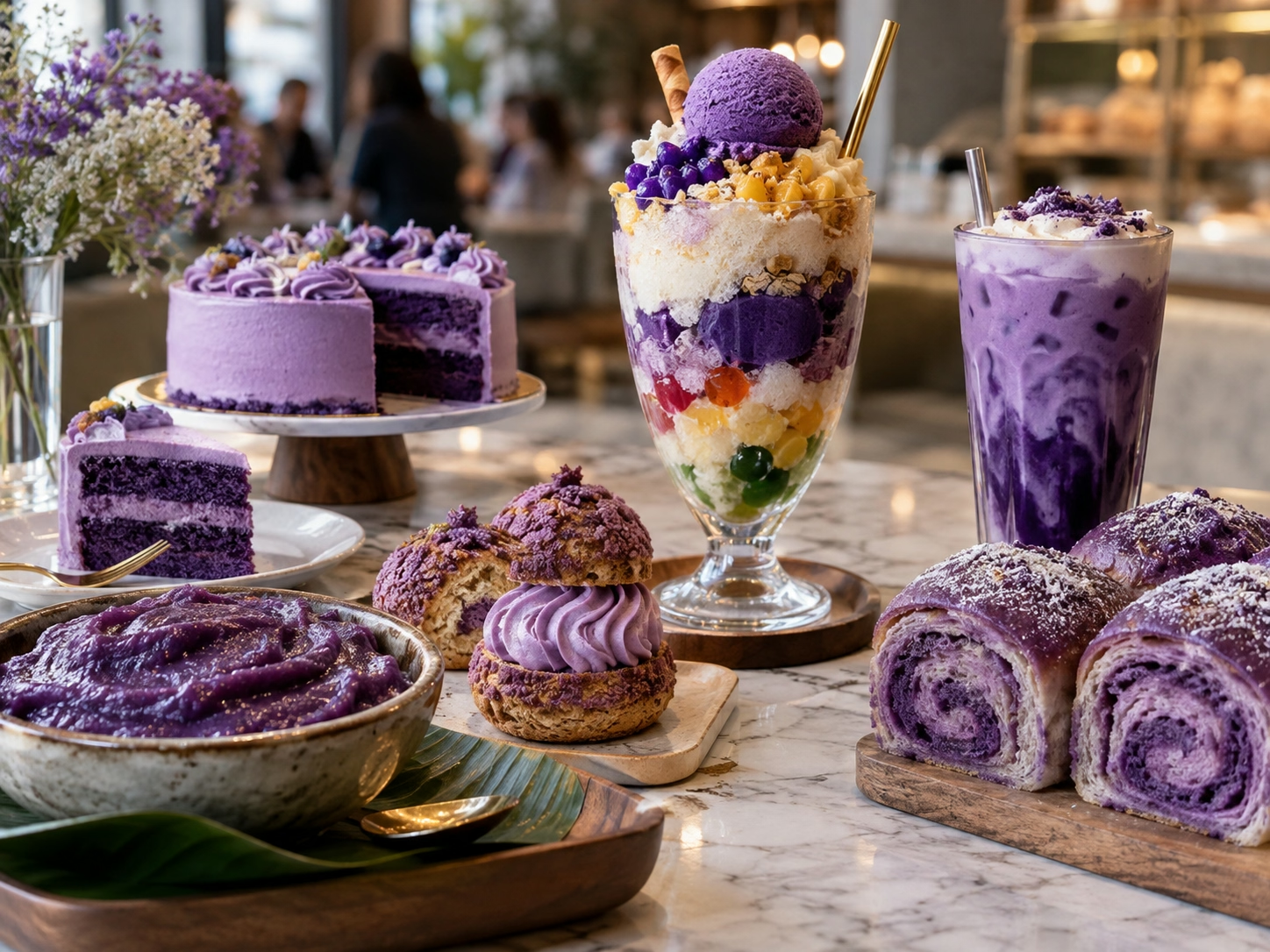
The global rise of ube is not merely a story of increased export volumes. It is a story of product innovation—of how a traditional Filipino ingredient is being reimagined, reformulated, and repositioned for premium markets around the world. From artisanal gelato in Tokyo to mass-market beverages in China, ube has become a platform for culinary creativity that transcends its humble origins.
The Matcha Comparison
Industry analysts frequently draw parallels between ube and matcha, the Japanese green tea that became a global cafe staple. Both ingredients have moved from culturally specific culinary traditions into familiar formats—lattes, ice creams, chocolates—where their distinctive flavors are softened, sweetened, or blended to suit broader tastes, while their striking colors remain a key draw .
This comparison is instructive. Matcha’s global trajectory demonstrates how a niche ingredient can achieve mainstream adoption through strategic product development. Ube appears to be following a similar path. Mintel’s Global New Products Database recorded 359 product launches worldwide featuring ube across various markets .
Innovation Hotspots: Japan, China, and the U.S.
Different markets are embracing ube in distinct ways. In Japan, ube appears in chilled and shelf-stable desserts, with specialty cafes in Tokyo and Hiroshima incorporating its distinctive color and flavor into desserts and beverages . The Philippine Embassy in Tokyo has actively promoted Kinampay ube—a premium variety from Bohol known for its aromatic qualities—as Japan’s next favorite Philippine agricultural product .
In China, ube features in cakes, pastries, malt drinks, and hot beverages . In the United States, it appears in dairy-based ice cream, frozen yogurt, sweet biscuits, and cookies . Major retailers like Costco and Trader Joe’s have scrambled to stock ube products, while Korean coffee shops have launched new ube items .
Innovation Gaps and Opportunities
Despite this momentum, significant innovation gaps remain. Only 7% of food operators are currently innovating with ube, despite 25% consumer interest, according to industry insights . This gap represents a substantial opportunity for product differentiation and expansion into new categories such as alcoholic beverages.
The Philippine food industry is responding. A patented process for producing semi-dry purple yam wine using the Kinampay variety has been developed, showcasing the potential for ube to move beyond desserts into new beverage categories . Researchers are also developing higher-yielding purple ube varieties that could substantially increase local production .
Building a Premium Brand Identity
For Philippine ube to sustain its premium positioning, branding will be critical. Stakeholders have called for a single Philippine ube identity to differentiate local products from lower-priced regional competitors . Concerns have been raised that geographical indications linked solely to Bohol’s Kinampay variety could limit broader national promotion .
The DA has committed to supporting an independent market study to determine the country’s optimal branding strategy while continuing efforts to register and promote Philippine ube globally . Legal protection for Philippine ube and concentration of investments in the country’s most competitive production areas are also priorities .
The Road Ahead
The Philippine ube industry stands at an inflection point. Global demand is strong, product innovation is accelerating, and government support is increasing. Yet structural challenges—limited planting materials, fragmented supply chains, and inconsistent quality standards—remain unresolved. The industry’s ability to address these challenges will determine whether ube becomes a permanent fixture in global food culture or a fleeting trend. What is clear is that the purple yam has already transformed from a traditional Filipino ingredient into a dynamic platform for premium product innovation.