

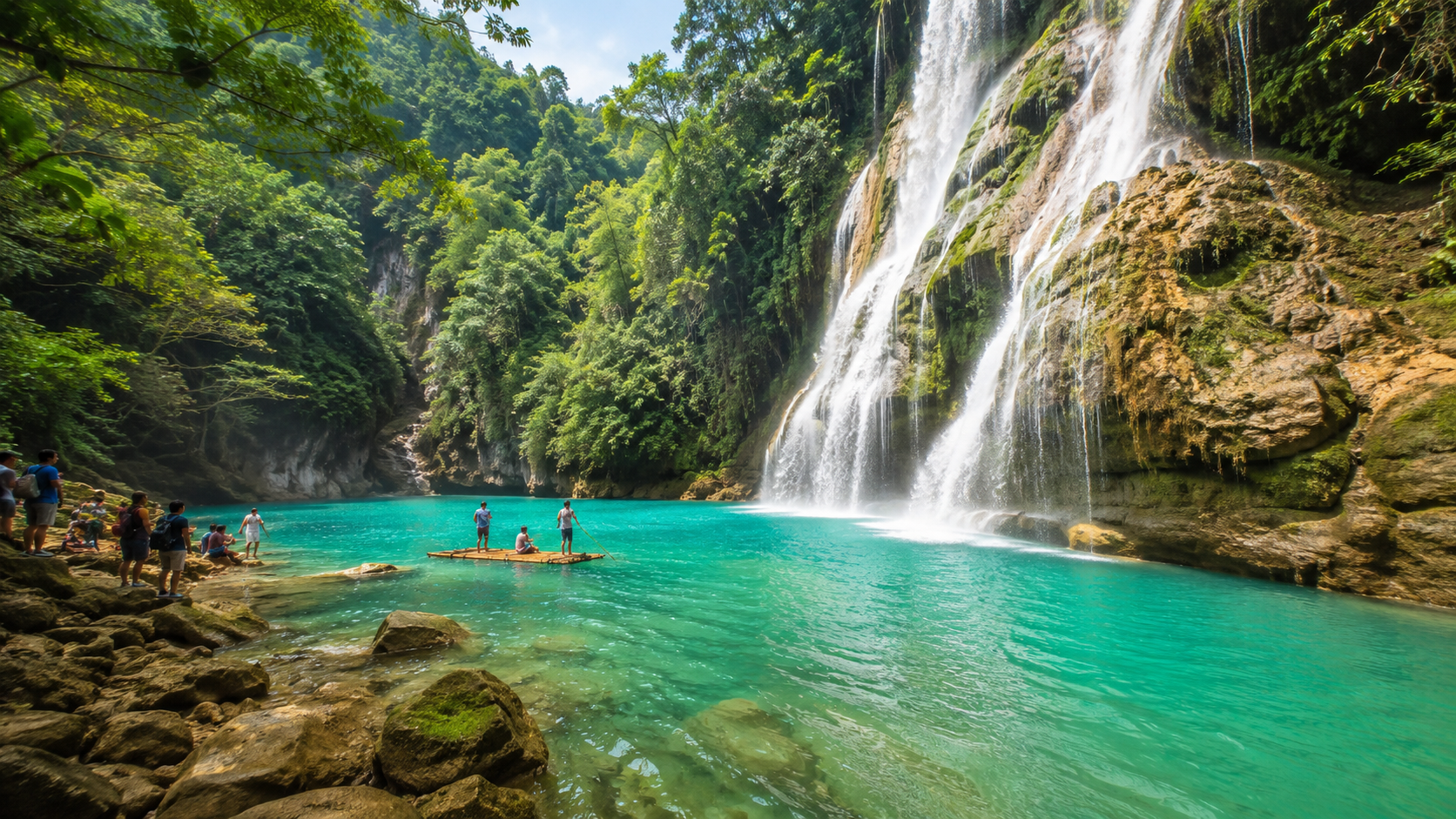
Waterfalls Are Reshaping the Philippine Travel Map
For decades, the Philippines has been promoted through white-sand beaches and tropical islands. But a growing number of travelers now want a more layered itinerary. Waterfalls answer that demand. They bring visitors inland, closer to mountains, rivers, forests, and communities that are often missed in beach-focused trips.
For planning, the Philippine Department of Tourism’s official platform at https://philippines.travel/ is a useful source for checking destination information and broader travel guidance. Because waterfall access may depend on weather and local rules, travelers should also verify updates with local tourism offices before visiting.
Kawasan Falls: Beauty, Adventure, and the Cost of Popularity
A Current Tourism Lesson from Cebu
Kawasan Falls in Badian, Cebu, is one of the most recognizable waterfall destinations in the Philippines. Its blue water and canyon routes have made it a major draw for adventure tourism. However, its success has also brought challenges familiar to many natural attractions: large visitor numbers, safety concerns, and the need for stronger environmental management.
This real-world context makes Kawasan more than a beautiful stop. It shows how Philippine destinations are adapting to modern tourism pressures. Guided canyoneering, required safety gear, and environmental rules are now part of the visitor experience. The goal is not to reduce enjoyment but to protect the river system and the people who depend on it.
Must-See Waterfalls Across the Archipelago
Pagsanjan Falls, Laguna
Pagsanjan Falls is one of Luzon’s classic nature attractions. Its river route through a steep gorge makes the journey as memorable as the waterfall itself. It is a strong option for travelers who want a day trip from Metro Manila with a mix of scenery and movement.
Tinuy-an Falls, Surigao del Sur
Tinuy-an Falls is known for its impressive width and multi-level drop. The mist, rock formations, and surrounding greenery create a dramatic landscape that appeals to photographers and nature travelers.
Tinago Falls, Iligan
Tinago Falls offers a more enclosed and atmospheric setting. Visitors descend steps to reach a deep basin surrounded by cliffs. Its hidden quality gives the site a sense of discovery, especially for those who enjoy less urbanized nature trips.
Asik-Asik Falls, North Cotabato
Asik-Asik Falls is among the most unusual waterfalls in the country. Water streams through a wall of vegetation, creating a soft, curtain-like effect. It is a destination for travelers who want something visually different from the standard vertical cascade.
How to Travel Smarter and Safer
Waterfall tourism rewards preparation. Weather can quickly change river conditions, especially in mountainous areas. Travelers should avoid visiting during dangerous rainfall, follow guide instructions, and never underestimate slippery rocks or strong currents.
Responsible travel also means respecting local systems. Environmental fees, accredited guides, and access limits are part of keeping these destinations open. The best travelers do not only collect photos; they help preserve the places they visit.