

The traditional question was simple: Where is the most beautiful place to visit in the Philippines?
A more responsible question is: How can travelers visit without damaging what makes the destination beautiful?
This change in perspective matters because tourism pressure can rapidly affect beaches, reefs, forests, caves, rivers, wildlife habitats, and local communities.
A useful international reference is UN Tourism’s sustainable development page, which explains how tourism should contribute to environmental, economic, and social goals. The resource is available at https://www.unwto.org/sustainable-development.
Build an Itinerary Around Impact
A low-impact Philippine itinerary should combine nature experiences with responsible operators and locally owned services.
Instead of visiting five islands within one week, travelers can choose fewer destinations and stay longer. Slower travel may reduce transport emissions, decrease logistical pressure, and allow visitors to spend more money within local communities.
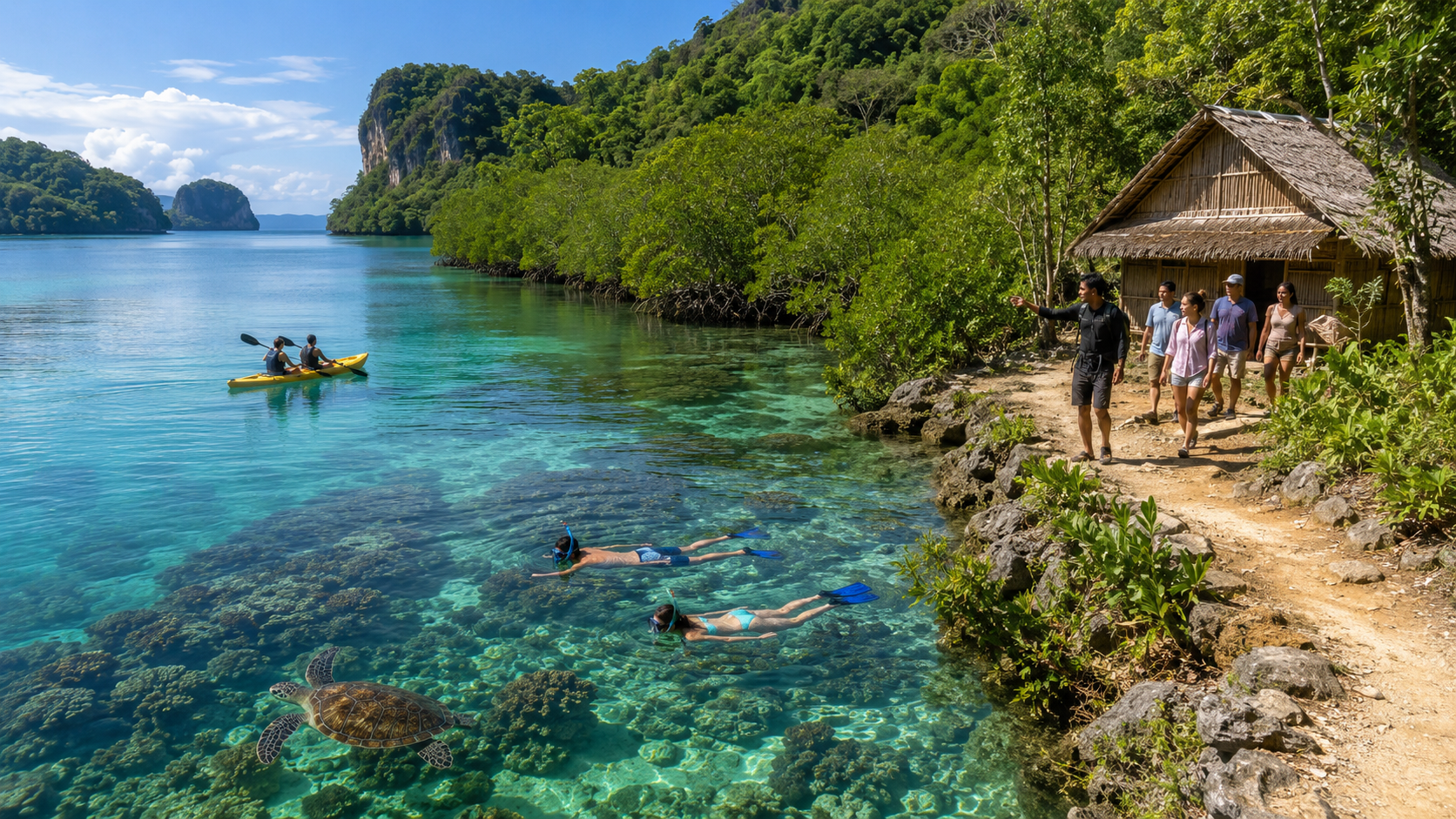
A responsible itinerary could include reef diving with conservation fees, a mangrove kayaking tour, a community-guided forest walk, and accommodation at a locally operated homestay or environmentally responsible lodge.
The purpose is not to avoid tourism. It is to make each activity contribute positively to the destination.
Choose Reef-Safe Diving and Snorkeling
Travelers should select operators that provide environmental briefings, avoid anchoring on reefs, limit group sizes, and enforce no-touch policies.
Responsible operators should also explain safe swimming distances from marine animals and discourage visitors from standing on coral.
Reef-safe behavior is particularly important in areas where coral ecosystems already face pressure from warming seas, pollution, and coastal construction.
Select Ethical Wildlife Encounters
Wildlife tourism should never depend on feeding, touching, crowding, or chasing animals.
Ethical wildlife encounters prioritize distance, patience, and natural behavior. Whether observing sea turtles, birds, dolphins, whale sharks, or other species, the activity should be designed around animal welfare rather than guaranteed photographs.
Tours that promise extremely close contact should be examined carefully before booking.
Support Forest and Watershed Conservation
Guided treks in conservation areas may help finance trail maintenance, reforestation, environmental education, and local ranger programs.
Travelers should remain on marked paths, follow guide instructions, avoid loud behavior, and never collect plants, shells, rocks, or wildlife souvenirs.
Small actions are especially important in sensitive habitats where repeated visitor pressure can cause erosion and disturb wildlife.
How to Recognize Greenwashing
Words such as “eco,” “natural,” “green,” and “sustainable” are easy to place on advertisements. Genuine sustainability should be visible in daily operations.
Before booking, travelers should ask whether a tour supports a protected area, hires local guides, limits visitor numbers, reduces plastic use, manages waste responsibly, and enforces wildlife regulations.
Businesses should also be able to explain how environmental fees are used. Vague claims without evidence may indicate greenwashing.
Lessons From Philippine Tourism Development
The Philippines has already experienced how uncontrolled visitor growth can damage destinations and force difficult rehabilitation measures.
This makes early planning essential. Islands, reefs, mountains, and coastal communities need carrying-capacity rules, waste systems, water management, and visitor controls before overcrowding becomes a crisis.
The most responsible choice is not always the most famous destination. A lesser-known community tour, conservation-linked dive operator, or locally managed nature reserve may provide a better experience with less environmental pressure.
Travelers can also carry reusable water bottles, reduce disposable packaging, book small-group tours, pay environmental fees, and support local restaurants, markets, guides, and transportation services.
Low-impact travel is not about achieving perfection. It is about repeatedly making better decisions. In the Philippines, those decisions can help protect coral reefs, forests, mangroves, wildlife, and the communities that depend on them.