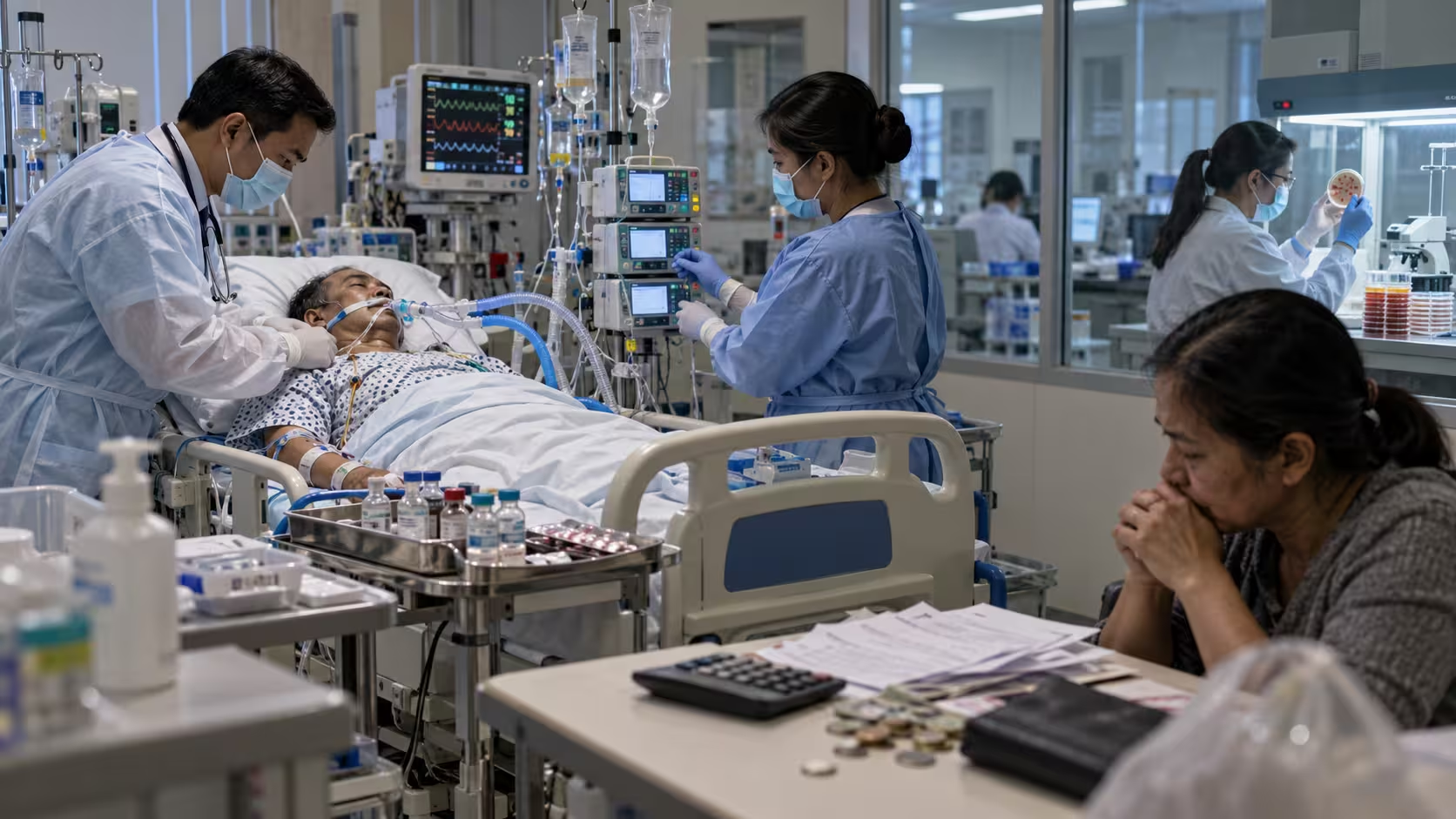

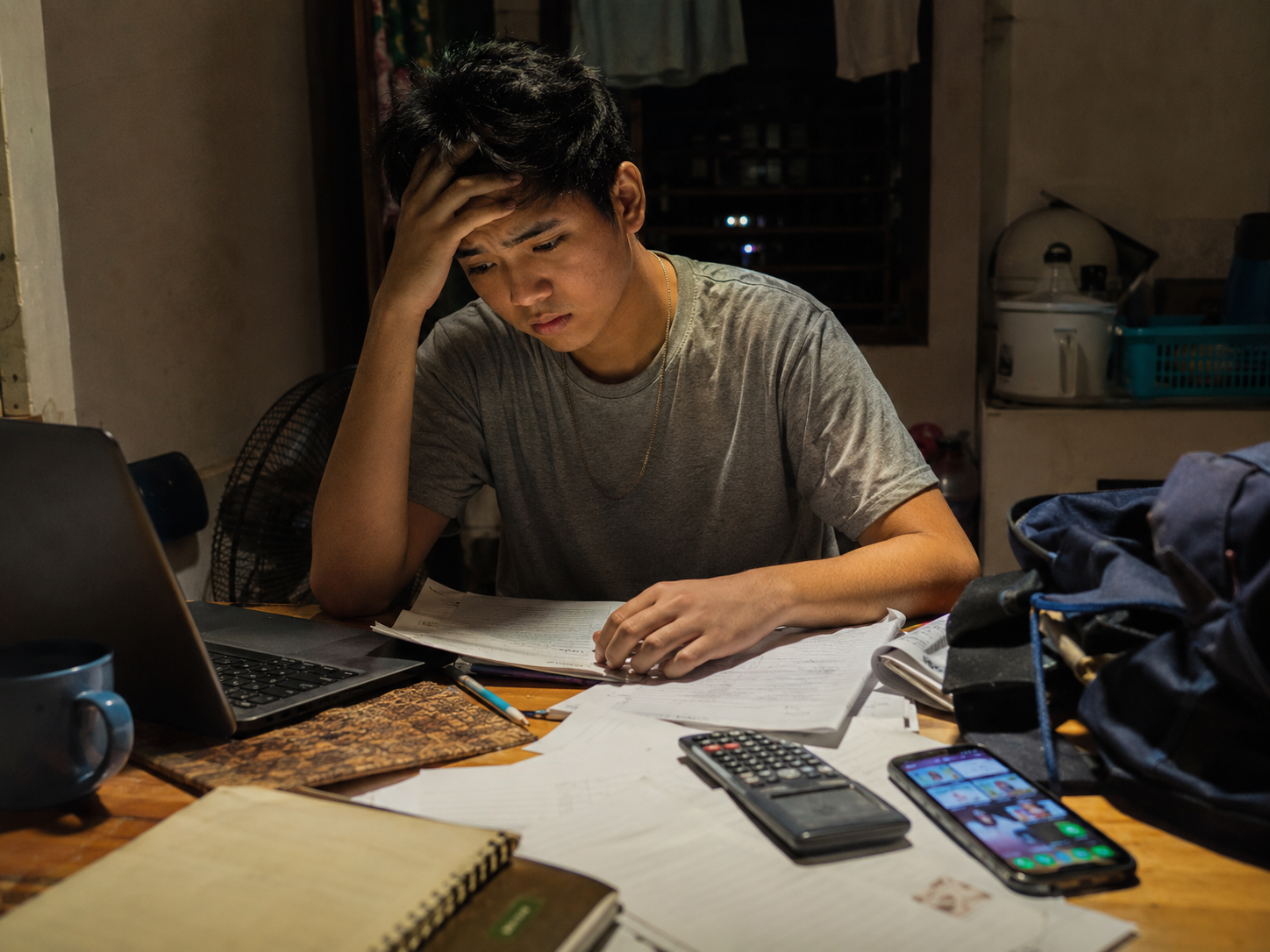
Stress among students and young adults in the Philippines is frequently treated as a temporary part of growing up. However, persistent academic pressure, financial uncertainty, social-media exposure, family expectations, and fear about future employment can produce significant mental and physical health effects.
Young people may be expected to perform well in school while helping with household responsibilities, caring for siblings, or managing long commutes. College students may also worry about tuition, project expenses, internships, and whether their chosen degree will lead to stable employment.
Academic Pressure Can Affect the Entire Body
Stress is often first noticed through emotional changes, but it can also appear physically. Students may experience recurring headaches, stomach pain, jaw tension, rapid heartbeat, fatigue, or changes in appetite.
Sleep is one of the most commonly affected areas. A student who studies late, uses a phone in bed, or worries about examinations may struggle to fall asleep. Insufficient sleep then reduces memory, attention, emotional control, and problem-solving ability.
This creates a damaging pattern: stress interferes with sleep, poor sleep lowers academic performance, and disappointing performance produces even more stress.
UNICEF Philippines provides information on mental health and psychosocial support for children and young people at UNICEF Philippines: Mental Health and Psychosocial Support. The resource emphasizes the need for safe, supportive environments where young people can discuss emotional difficulties and receive appropriate help.
Social Media Adds Constant Comparison
Digital platforms help students communicate, learn, and express themselves, but they can also create nonstop comparison. Young users may see carefully edited images of academic success, travel, appearance, relationships, or career achievements and assume that everyone else is progressing faster.
Online criticism, cyberbullying, exclusion from group conversations, or pressure to maintain a public image may intensify anxiety. Because smartphones are present throughout the day, students may find it difficult to separate themselves from social demands.
The problem is not simply the number of hours spent online. The type of interaction also matters. Passive comparison, hostile messages, or repeated exposure to upsetting content can have a different effect from supportive communication with friends.
Family Expectations and the Fear of Disappointing Others
In many Filipino households, education is viewed as a pathway to family stability. This can motivate students, but it may also create pressure to earn high grades, enter a prestigious profession, or provide financial support after graduation.
A young person may hide distress because parents have made significant sacrifices for tuition and living expenses. The student may believe that discussing exhaustion sounds ungrateful or weak.
Signs of serious strain may include withdrawing from friends, losing interest in usual activities, frequent absences, uncontrolled crying, panic symptoms, self-neglect, or statements expressing hopelessness. These behaviors require compassionate attention rather than punishment.
How Schools and Families Can Respond
Schools can reduce harmful stress by providing accessible counseling, training teachers to identify warning signs, and reviewing whether deadlines or workloads are unnecessarily concentrated. Anti-bullying policies should also cover online behavior connected to the school community.
Parents can help by asking about a child’s well-being before discussing grades. Listening without immediately criticizing or offering solutions may make it easier for young people to speak honestly.
Students can support their health through consistent sleep schedules, regular meals, movement, planned study periods, and breaks from social media. These habits are useful, but they should not replace professional support when symptoms become severe.
A healthy education system should challenge students without making chronic exhaustion appear normal. Academic achievement matters, but it should not come at the cost of a young person’s safety, health, or sense of self-worth.