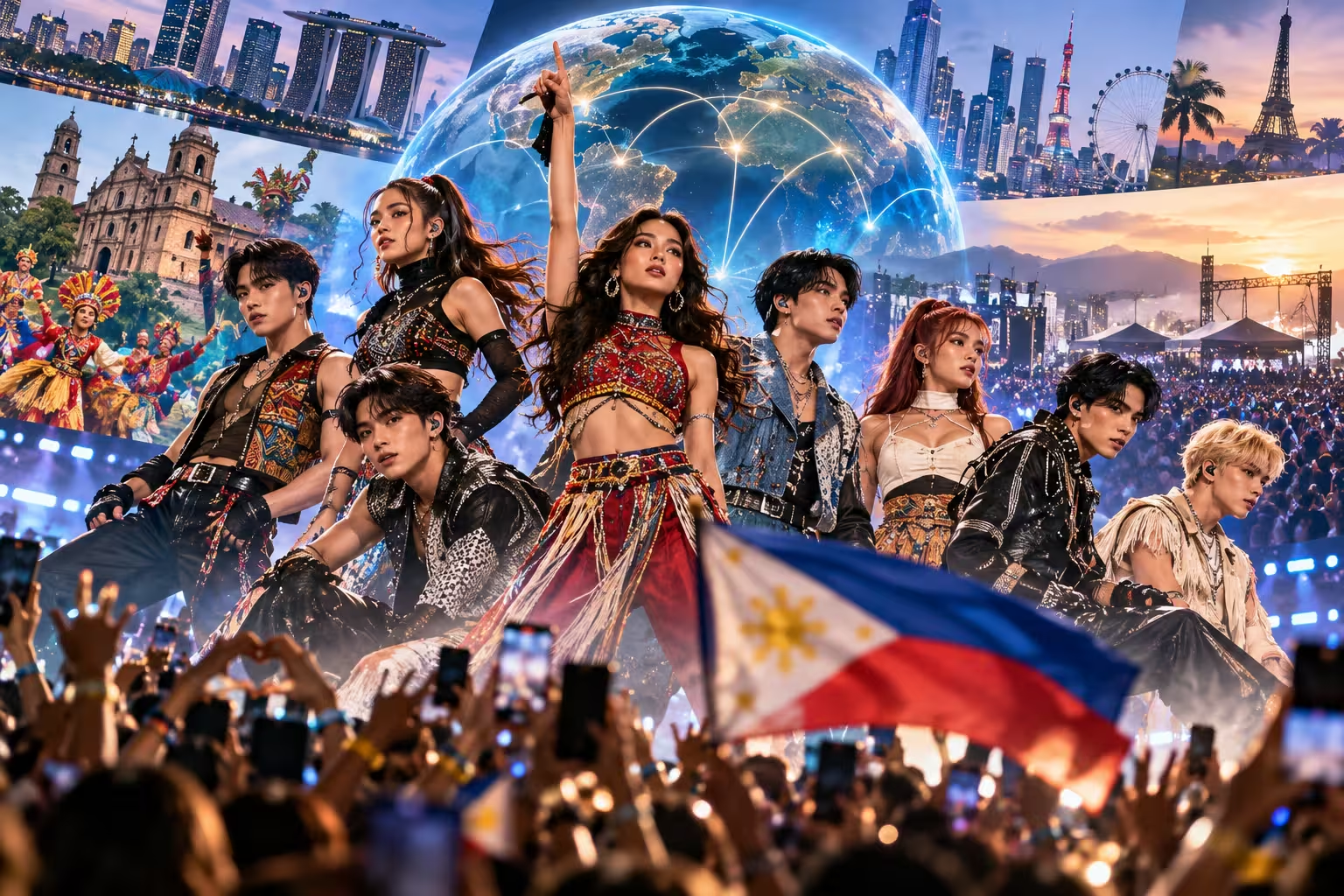

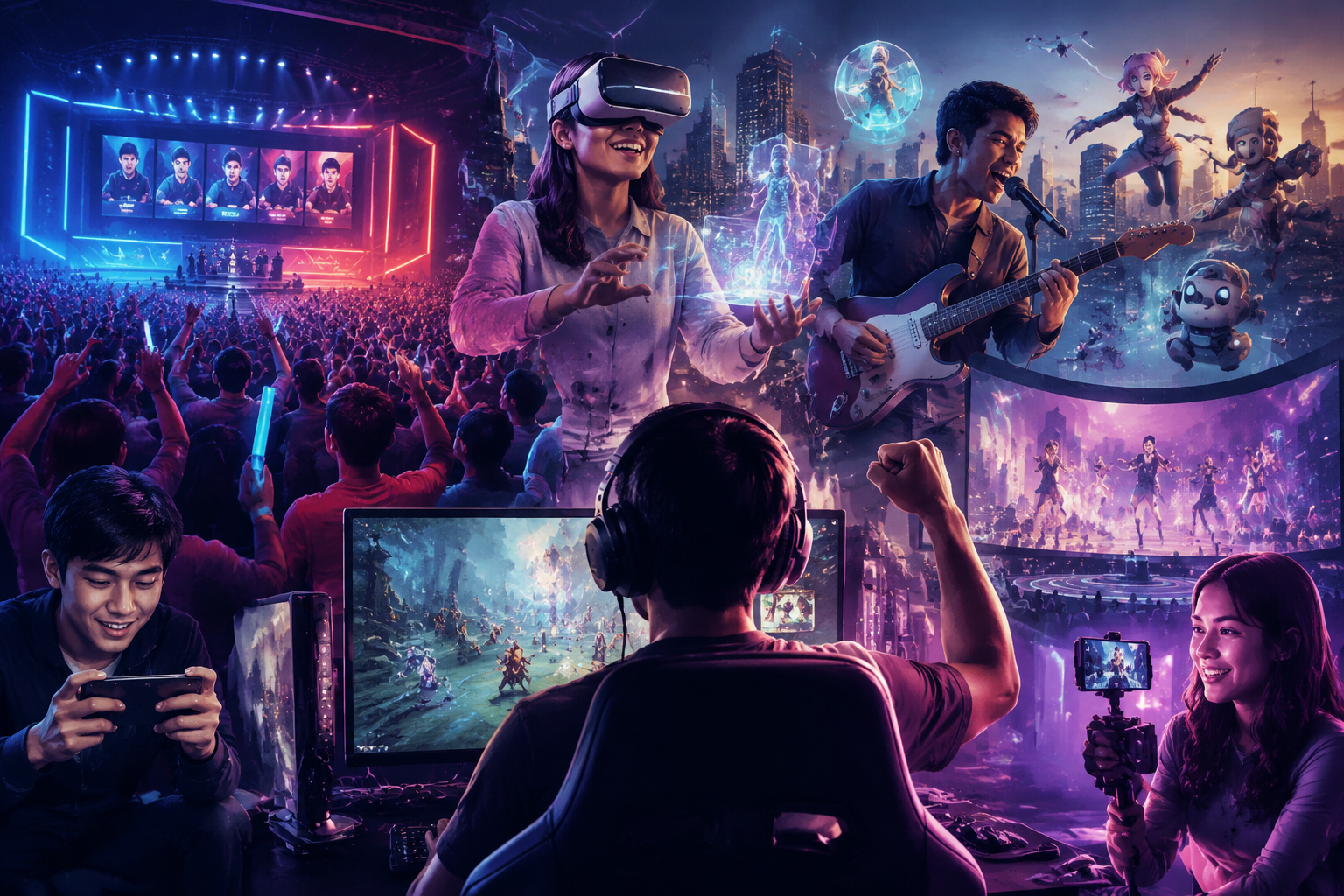
The Philippine entertainment industry is no longer defined only by movies, television programs, and music performances. In 2026, interactive entertainment driven by gaming technology, esports, virtual experiences, and online communities has become one of the fastest-growing segments of the country’s creative economy.
The relationship between audiences and entertainment has changed significantly. Instead of simply watching content, millions of Filipinos now participate in digital experiences through multiplayer games, livestream platforms, virtual events, and online communities.
This transformation reflects a global shift toward interactive entertainment, where audiences become active participants rather than passive viewers. For the Philippines, a country with a young and highly connected population, digital entertainment has created new opportunities for creators, businesses, and technology companies.
According to the International Trade Administration (ITA), the Philippines has one of Southeast Asia’s most active digital markets, with gaming and digital services becoming important parts of the country’s technology-driven economy. Industry information is available through:
https://www.trade.gov/
Esports Has Become a Major Entertainment Industry in the Philippines
Esports has developed from a niche hobby into a professional entertainment sector with dedicated athletes, organizations, sponsors, and large-scale events.
Games such as Mobile Legends: Bang Bang, League of Legends, and Valorant have gained strong popularity among Filipino audiences. Professional tournaments now attract thousands of viewers online and offline, creating entertainment experiences similar to traditional sports competitions.
The success of Filipino esports teams has also increased international recognition. Filipino players have competed successfully in global tournaments, strengthening the country’s reputation within the international gaming community.
Technology plays a central role in this growth. High-speed internet, mobile gaming accessibility, livestream platforms, and digital payment systems have allowed esports ecosystems to expand rapidly.
Major gaming events now combine competition, entertainment, sponsorship, and online engagement, creating a business model that connects technology with modern entertainment.
Gaming Technology Is Creating New Forms of Storytelling
The influence of gaming technology extends beyond competitive esports. Game engines, virtual environments, and interactive storytelling tools are changing how entertainment content is created.
Modern game development technologies allow creators to design realistic digital worlds that can be used for animation, film production, advertising, and virtual events.
For Philippine creators, these tools provide opportunities to develop original intellectual properties that can exist across multiple formats. A successful Filipino game concept can potentially expand into animation, merchandise, online communities, and streaming content.
This approach represents a major change from traditional entertainment models. Instead of creating a single movie or television show, companies are increasingly building entire digital ecosystems around characters, stories, and communities.
Virtual Experiences Are Changing Audience Engagement
Another important innovation in Philippine entertainment is the growth of immersive experiences using augmented reality (AR), virtual reality (VR), and interactive digital platforms.
Entertainment companies are exploring ways to create more engaging experiences through virtual concerts, online fan events, and digital exhibitions.
These technologies became increasingly relevant after the global entertainment industry experienced major changes in event participation. Virtual experiences allow fans to interact with artists and performers regardless of physical location.
For Filipino musicians, actors, and influencers, immersive technology provides additional ways to connect with audiences locally and internationally.
A virtual concert, for example, can attract Filipino fans in different countries without requiring expensive international tours.
The Creator Economy Is Becoming a New Entertainment Powerhouse
Technology has also transformed ordinary users into entertainment entrepreneurs. Platforms such as YouTube, TikTok, Facebook Gaming, and livestream services have allowed Filipino creators to build careers through digital content.
Many creators now operate as independent entertainment brands. They manage production, marketing, audience relationships, and partnerships without traditional media companies.
This creator economy has changed how entertainment talent is discovered. Viral content can create opportunities for individuals who previously had limited access to television networks or film studios.
Brands are also recognizing the influence of digital creators, leading to increased investment in influencer marketing and online entertainment partnerships.
Technology Investment Will Shape the Next Generation of Filipino Entertainment
The future of Philippine entertainment will increasingly depend on the integration of creativity and technology. Gaming, esports, immersive media, and digital communities are expanding the definition of entertainment while creating new economic opportunities.
The Philippines has strong advantages in this environment, including a large digital audience, creative talent, and growing technology adoption. As entertainment continues moving toward interactive experiences, Filipino creators and companies have opportunities to compete in a rapidly changing global market.
The next generation of Philippine entertainment will not only be watched—it will be experienced, shared, and actively created by audiences themselves.