



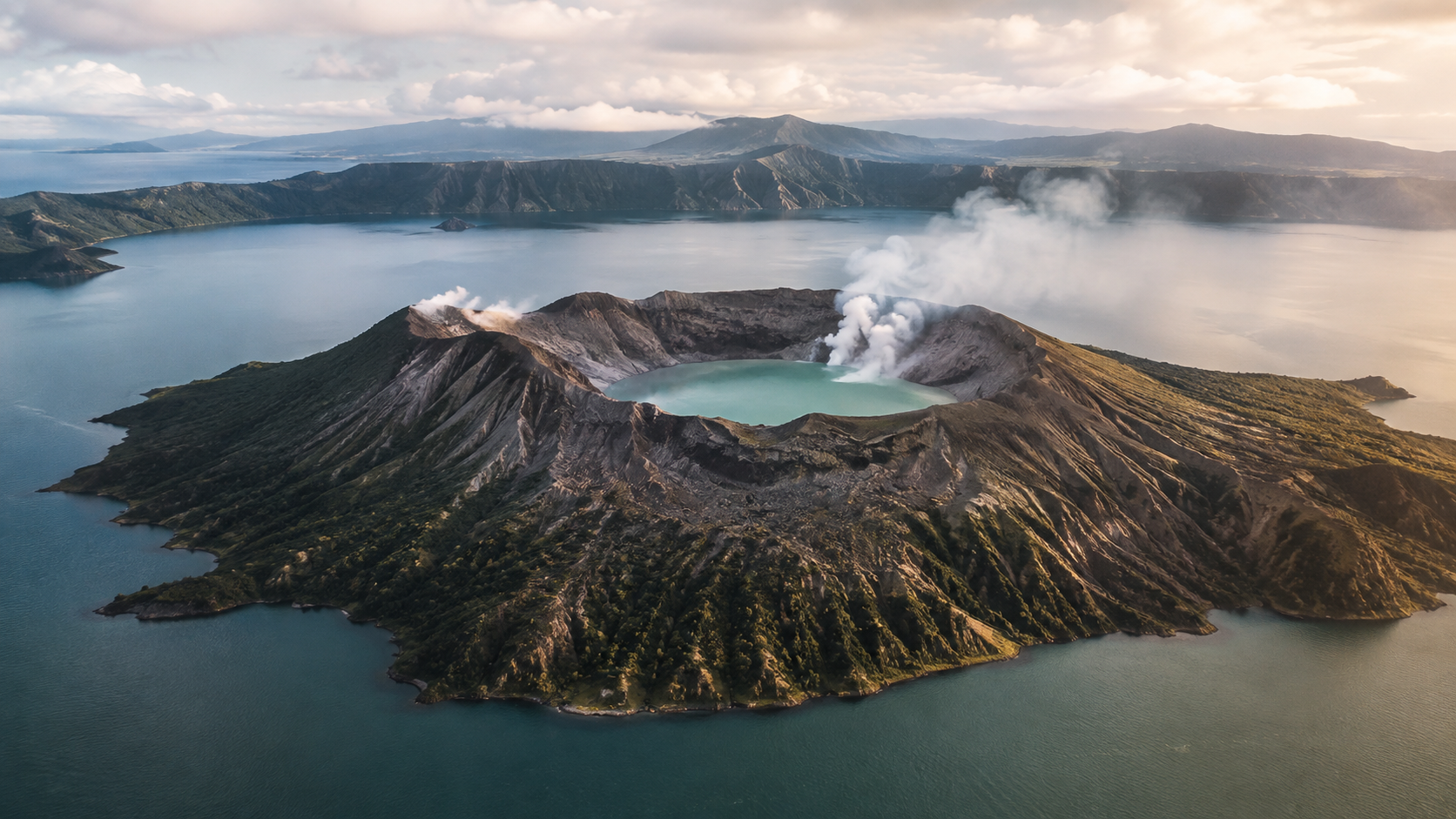
Towering at 2,954 meters, Mount Apo is the rooftop of the Philippines, a dormant volcano where an expansive summit crater, sulfur vents, and the serene Lake Venado converge to create a high-altitude landscape unlike any other in the archipelago.
The Sacred Peak: Biodiversity and Volcanic Features
Mount Apo’s wide summit platform contains a shallow crater marked by active fumaroles and white, sulfur-stained boulders that hiss continuously. Just a few kilometers from the peak, Lake Venado—the country’s highest lake—occupies a smaller volcanic depression, its dark, tannin-tinged waters reflecting the surrounding mossy forest. The mountain is a UNESCO-recognized center of biodiversity, home to the critically endangered Philippine eagle and endemic pitcher plants. Indigenous Bagobo, Manobo, and Klata communities revere Apo as the dwelling of their supreme deity, and climbers are expected to observe rituals such as asking permission before ascending. In 2026, the Davao City Tourism Office (https://www.davaocity.gov.ph/tourism/) implemented an online booking system that requires all hikers to attend a cultural briefing, underscoring the fusion of nature and heritage on this majestic peak.
2026 Permits and Environmental Safeguards
Concerns over trail erosion and waste accumulation prompted a sweeping regulation update in early 2026. The Protected Area Management Board now enforces a strict carrying capacity of 150 climbers per trail per day across the main Kidapawan, Kapatagan, and Sta. Cruz routes. Mandatory porter services, funded by a fixed percentage of permit fees, provide stable income for indigenous families and reduce the volume of non-essential gear discarded along the way. Rangers conduct pack inspections at trailheads, confiscating single-use plastics. These measures, though rigorous, have already shown results: a midyear assessment noted a 40% reduction in trail litter compared to the same period in 2025. Trekkers now tread on cleaner, better-maintained paths, and the crater area has regained much of its pristine allure.
The Trek to the Crater and the Enchanting Lake Venado
A typical summit assault spans two to three days. The final push before dawn brings climbers across a boulder field into the sulfur-rich crater zone, where sunrise illuminates steam plumes in shades of pink and gold. From the crater rim, the panorama stretches over Davao Gulf and, on exceptionally clear mornings, as far as the volcanic silhouette of Mount Matutum. Descending toward the campsite, a detour leads to Lake Venado, often shrouded in mist. Here, trekkers can refill water supplies (after treatment) and soak in the tranquility before the final descent. Guided night treks, newly permitted in 2026, reveal the crater’s phosphorescent fungi and star-filled skies, adding a layer of magic to an already profound journey. Mount Apo is not just a physical challenge; it is a pilgrimage through a living museum of geology, ecology, and culture that leaves every visitor transformed.