Beyond Consumption: Fans as Distribution Channels
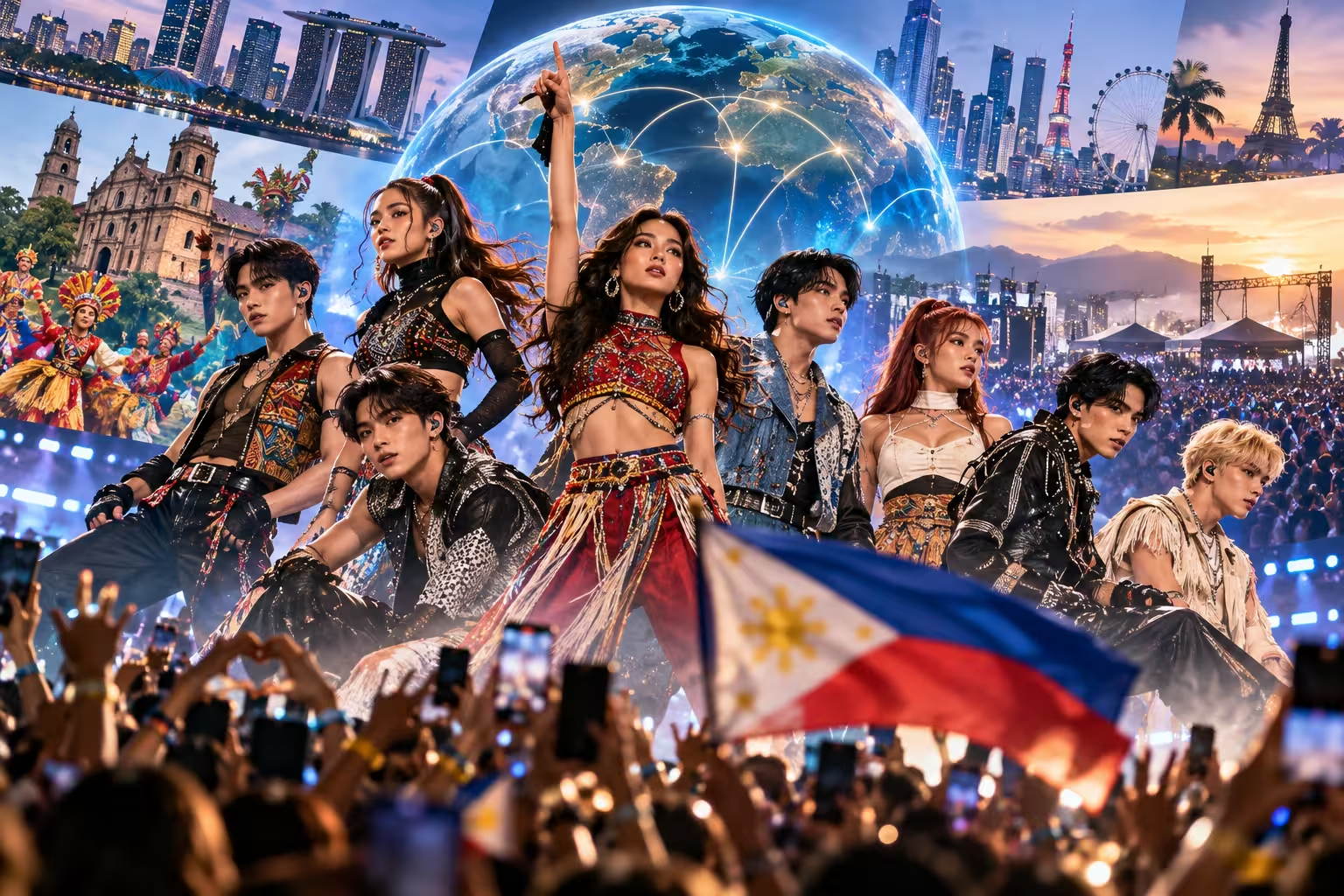
The most significant evolution in the Philippine fan economy is not the amount of money fans spend—it is the role they play in the distribution of cultural products across borders. Filipino fandoms have become de facto marketing infrastructure for regional entertainment industries, transforming fan attention into measurable economic outcomes.
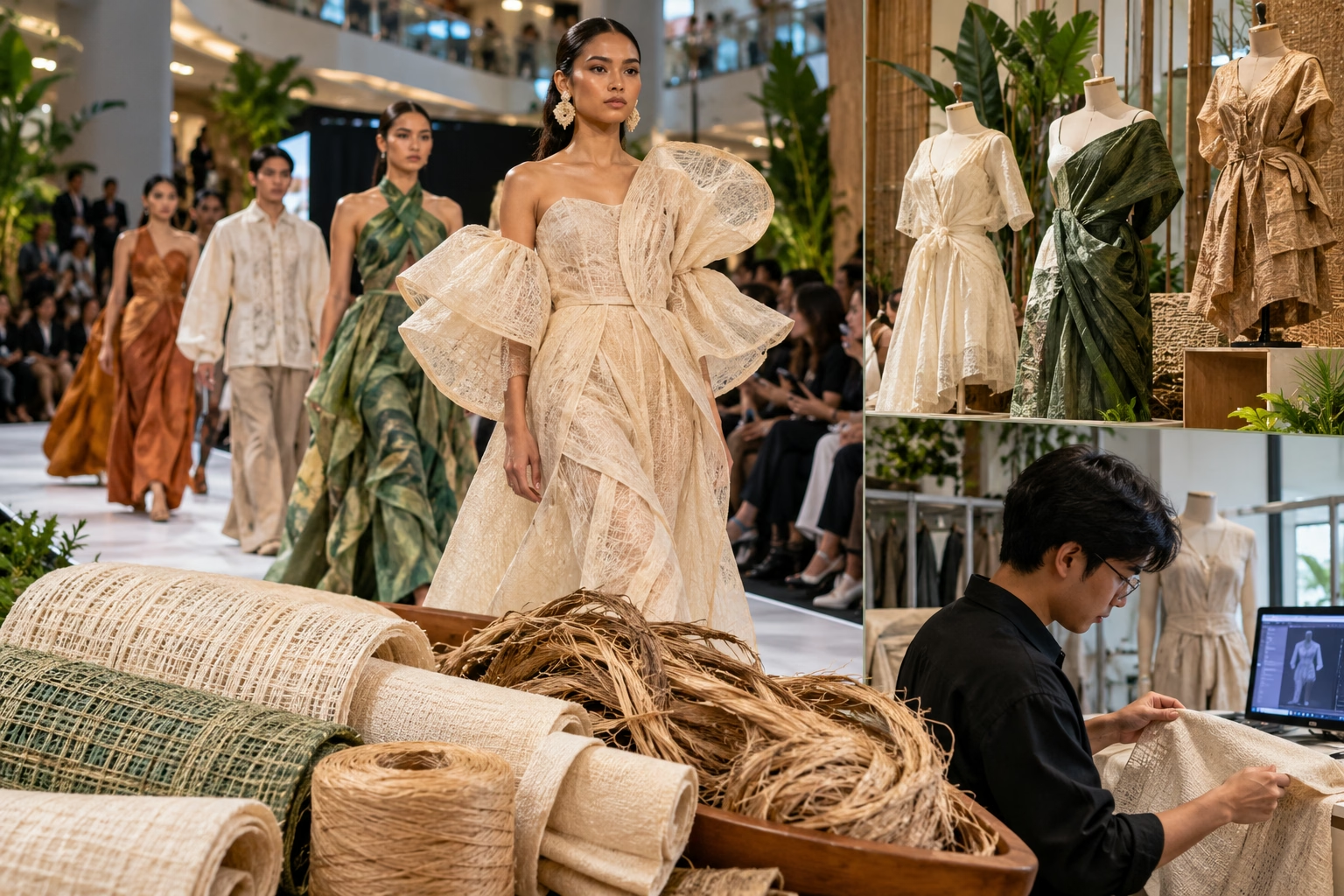
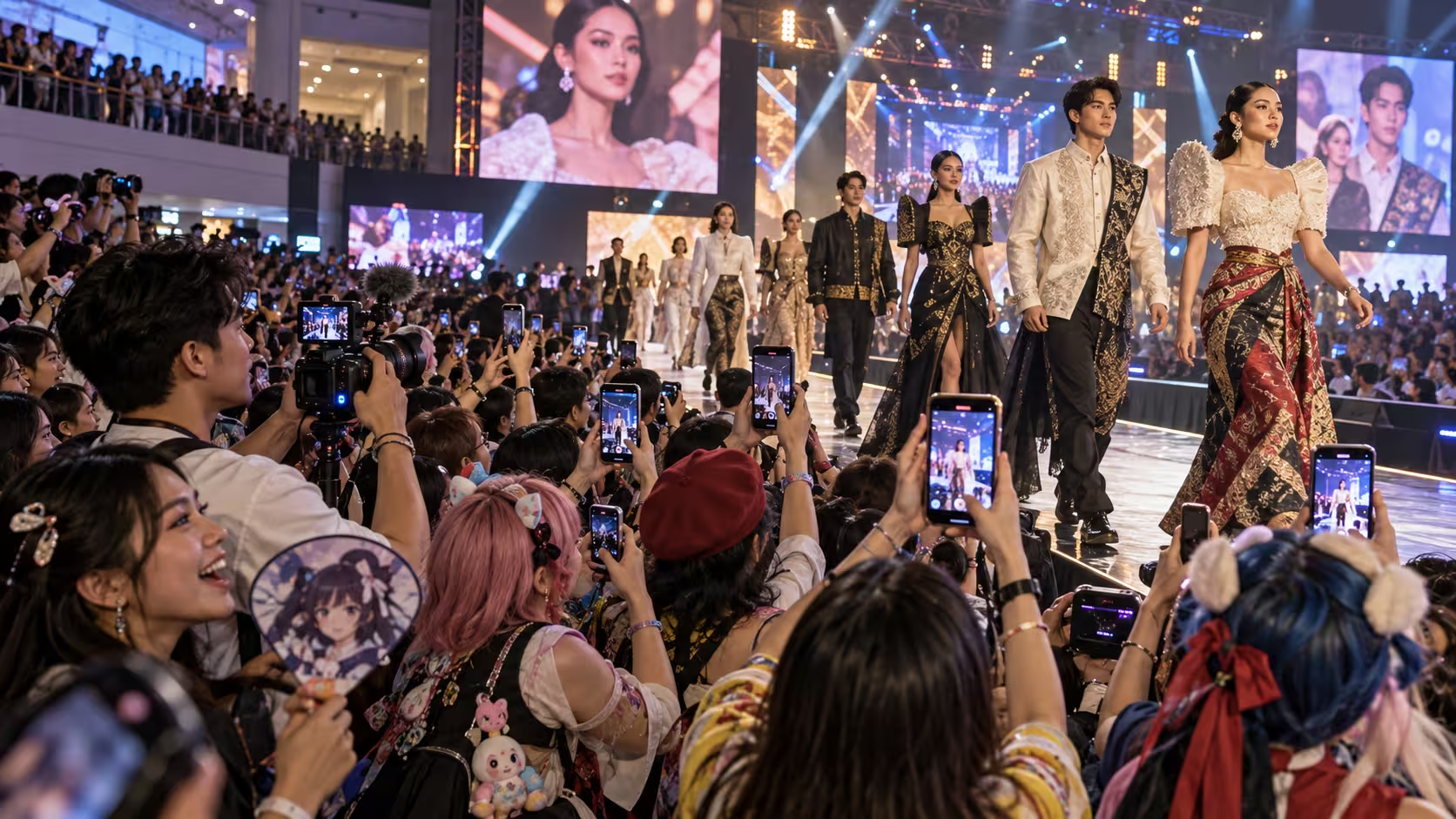
Manila Fashion Week 2026 (MNL FW26) offers the clearest case study. The event, held September 3-6 at SMX Convention Center in SM Aura Premier, featured 12 designers across nine shows. According to its digital mileage report, the campaign generated a projected ₱201.6 million—approximately US$3.2 million—in full-cycle earned media value, with 948,022 engagements. Engagement rose 1,708 percent year on year, while the overall engagement rate improved 32-fold.
The “Thai Effect”: When Fan Communities Become the Distribution Model
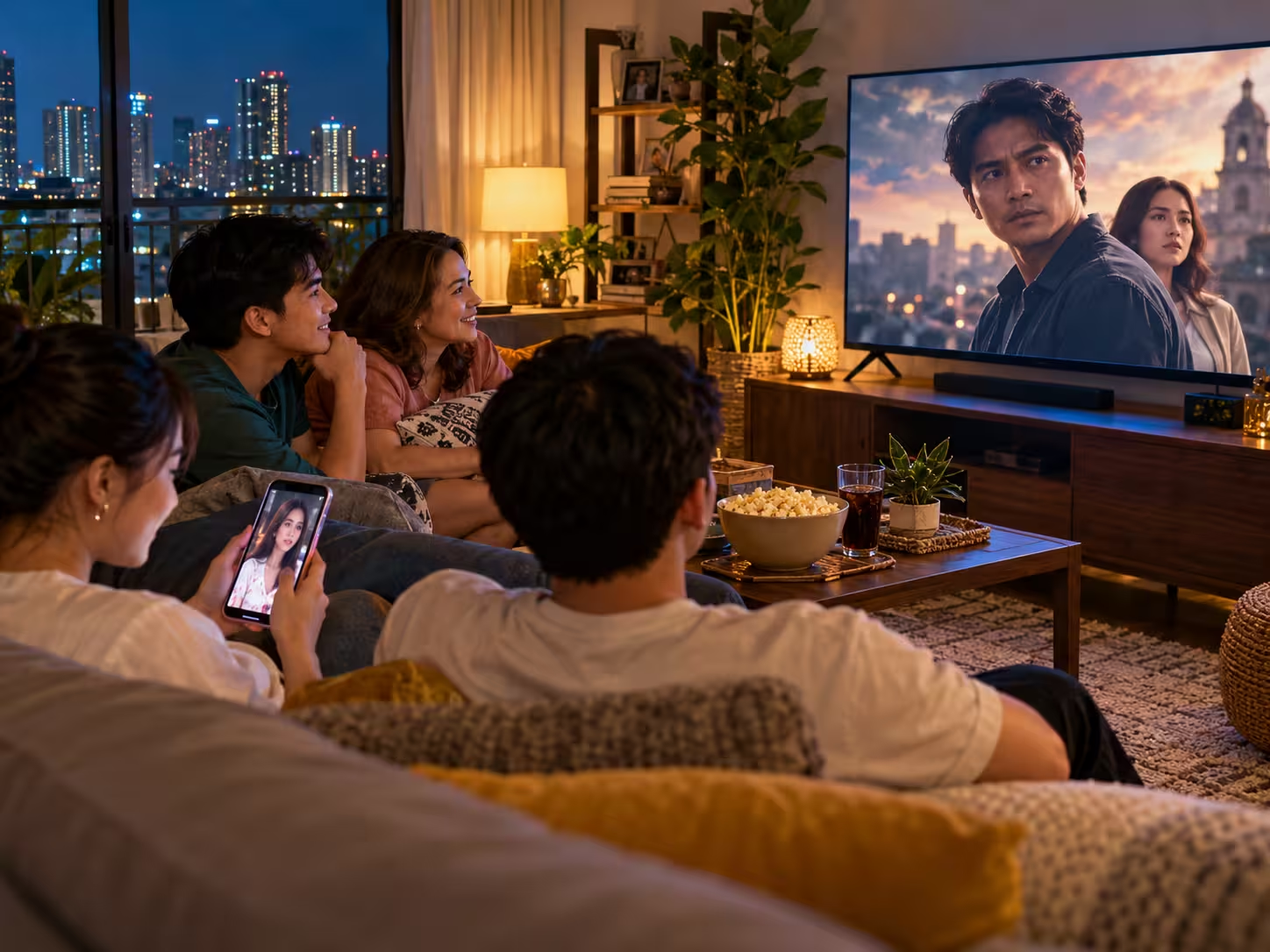
What drove those numbers was not traditional fashion media. MNL FW26 built its campaign around what organizers called the “Thai Effect”—a strategy that treated regional fandom itself as distribution. Thai actors Ormsin Supitcha, Folk Sutima, Sonya Saranphat, and Lookmhee Punyapat walked the runway alongside Filipino labels, giving their fan communities across Southeast Asia material to follow, save, and discuss.
The commercial frame is instructive: celebrity-led fandom amplification contributed a projected ₱51.6 million (approximately US$824,000) in earned media value. Fan attention was not cultural decoration around the show—it was one of the event’s measurable distribution engines.
Regional Creators as Cultural Translators
MNL FW26 extended the same logic beyond celebrity fandom by inviting creators from Vietnam and Indonesia to interpret Filipino fashion for their own audiences. Vietnamese creators Bá Tùng Tyler and Nguyen Ngoc Linh Chau, together with Indonesia’s Helen Hiuu and Cissy Lia, generated a modeled ₱7.6 million (around US$121,000) in earned media value.
This cross-border creator strategy succeeded because it gave regional creators a reason to make Filipino fashion legible within their own feeds and audiences. The result was closer to cultural translation than syndication—a model that brands and event organizers across Southeast Asia are now studying.
Anime Fandom and Pop Culture Tourism: The Next Frontier
The same cross-border dynamics are reshaping anime fandom in the Philippines. Southeast Asia’s anime market generated US$1.26 billion in 2024, led by Indonesia, the Philippines, and Thailand. Trip.com data shows that searches for anime- and comic-related keywords in the Philippines surged 155 percent year-over-year in 2026, positioning the country as one of Southeast Asia’s most passionate anime fan communities.
Thai entertainment companies have taken notice. In August 2026, eighteen Thai companies from film, drama, series, and related service sectors traveled to Manila for “THAI CONTENT IN THE PHILIPPINES 2026,” explicitly targeting Filipino fandoms for Thai actors and series. The message is clear: Filipino fan communities are no longer passive audiences—they are market-entry infrastructure for Southeast Asian entertainment exports.
The Strategic Implication for Global Brands
For global entertainment companies, streaming platforms, and consumer brands, the Filipino fandom market offers something rare: a digitally mobilized, cross-border, multi-platform consumer base that functions as both audience and distributor. The ₱2.12 trillion Philippine creative economy—with ₱747 billion in combined creative goods and services exports—provides the industrial foundation for this role.
The Philippines is not just a market to be penetrated. It is a distribution hub to be partnered with. Brands that understand this distinction will be positioned to capture value across Southeast Asia’s fragmented but interconnected fan economies.