The Mortality Ledger
The most cited Philippine AMR mortality figure remains the 2019 estimate: 15,700 deaths directly attributed to resistant infections and 56,700 associated deaths. These numbers, derived from the Global Burden of Disease methodology, represent a baseline that subsequent years have almost certainly exceeded. The Philippines’ high antimicrobial consumption—third globally in total volume, dominated by the swine sector—creates conditions for resistance selection that surpass many comparable economies.
The Economic Cost Is Cumulative and Compounding
A Western Pacific Region analysis projects the Philippines’ cumulative AMR-related total economic cost at over US$3 billion under a baseline scenario, rising to US$3.35 billion with a 50% increase in resistance. These figures encompass direct healthcare expenditures, productivity losses from illness and premature death, and broader macroeconomic drag.
The livestock sector bears a distinct economic burden. The FAO’s 2026 report on the economic cost of action or inaction in livestock antimicrobial use, presented at the Committee on Agriculture in Rome, emphasized that inappropriate antimicrobial use for growth promotion yields short-term benefits but long-term socio-economic problems, including reduced livestock productivity and trade restrictions. For a country with a significant agricultural export sector, the trade implications of AMR are not hypothetical.
Hospitals as Economic Sinks
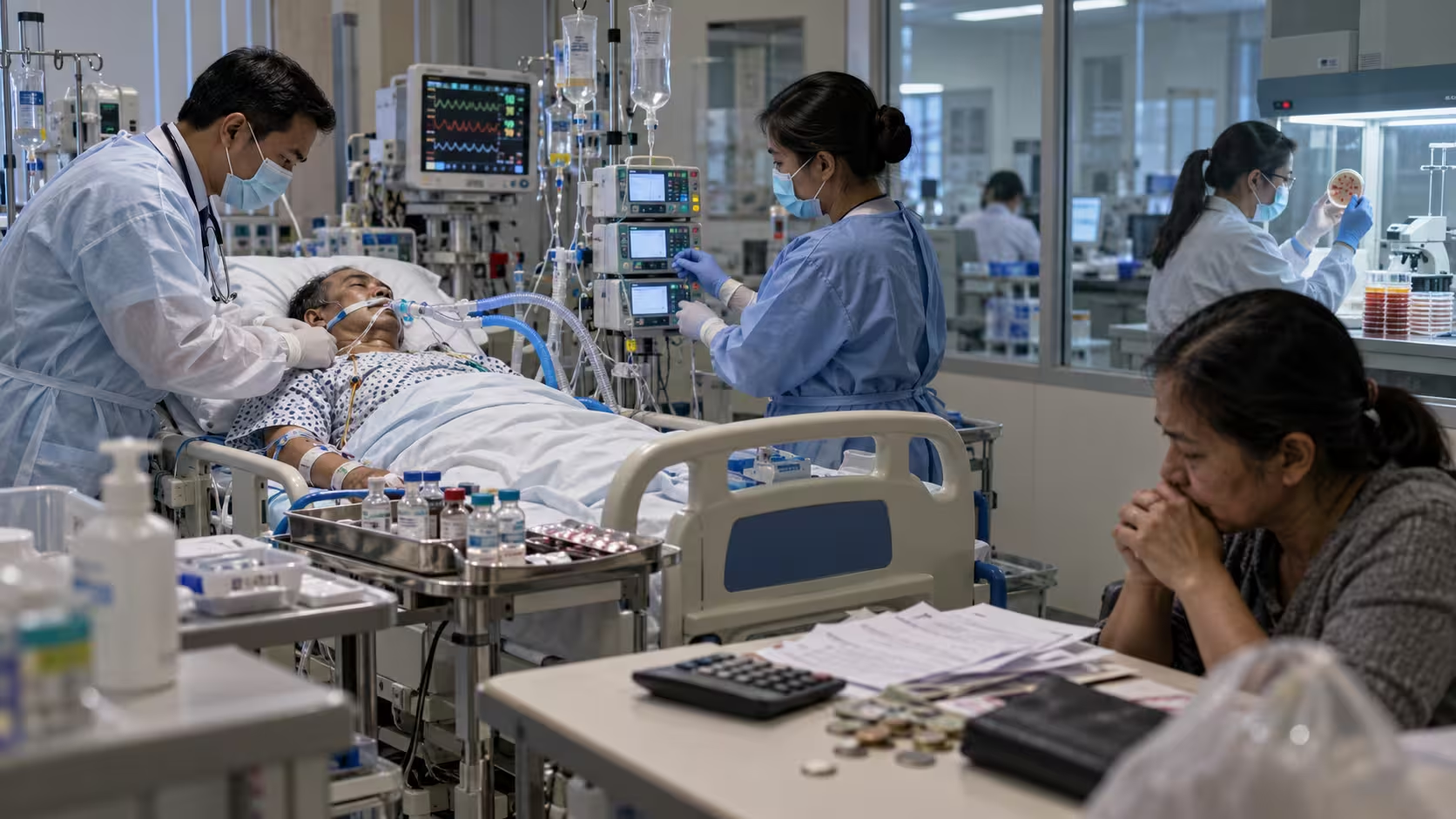
Resistant infections extend hospital stays, require more expensive second- and third-line antibiotics, and increase the likelihood of ICU admission. The 2025 ARSP Annual Report, available through arsp.com.ph, provides the surveillance data necessary to quantify these clinical burdens. When carbapenem-resistant Klebsiella pneumoniae reaches 15% prevalence, as Philippine data indicates, the proportion of patients requiring last-resort antibiotics—with costs often exceeding standard regimens by multiples—expands accordingly.
The Productivity Drain Beyond Healthcare
AMR’s economic impact is not confined to hospital budgets. A 2026 study of community AMR risks in a peri-urban Davao City community documented clinical data and wastewater analysis confirming that resistance circulates in everyday environments. When common infections become difficult to treat, workers lose more days to illness, caregivers withdraw from the labor force, and household expenditures shift toward medical costs.
The Vaccine Alternative and Its Economic Logic
The International Vaccine Institute (IVI) has been advancing vaccine-driven solutions to AMR in the Philippines, arguing that preventing infections reduces the need for antibiotics and slows resistance selection. From a purely economic standpoint, vaccination programs that avert resistant infections generate returns not only in health outcomes but in avoided treatment costs and preserved productivity. This framing is increasingly central to how Philippine health economists approach AMR.
The Cost of Inaction
The Philippine National Action Plan 2024–2028 includes budget allocations for surveillance, stewardship, and awareness campaigns, but the broader economic case for aggressive intervention rests on the counterfactual: what happens if resistance continues unchecked? The FAO’s 2026 framing of “the economic cost of action or inaction” captures the essential calculus. The Philippines has the data, the institutional framework, and the technical capacity. The economic argument for sustained investment is no longer a projection; it is a documented reality.