
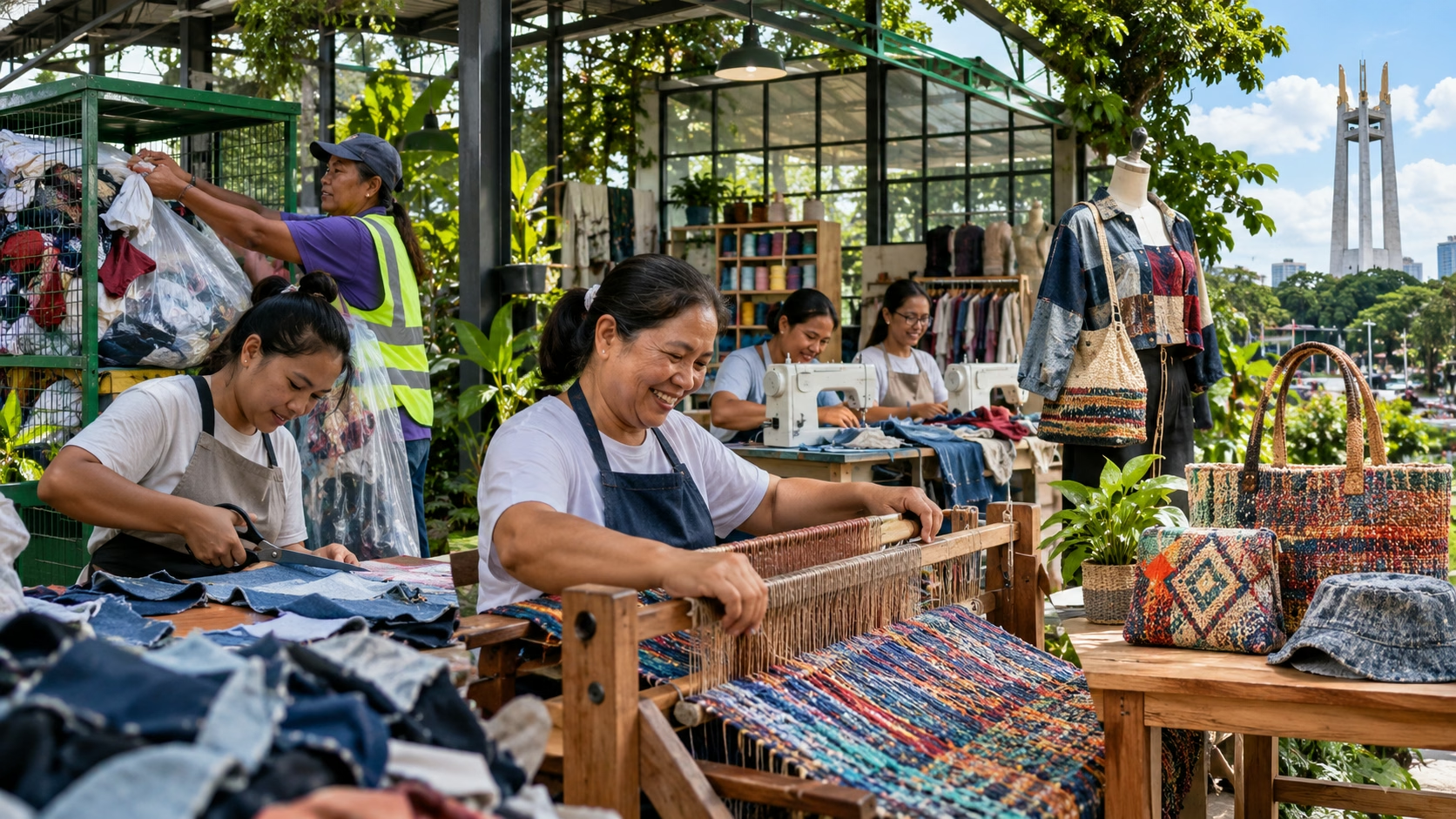
The circular fashion conversation often centers on consumer habits in wealthy markets: buy less, choose better, recycle more. But the Philippine experience reveals a different reality. A significant share of the textile waste flowing into the country is not generated by local consumption. It arrives as imported waste, unsold secondhand clothing, and industrial offcuts from factories contracted by international brands.
Naming the Structural Problem
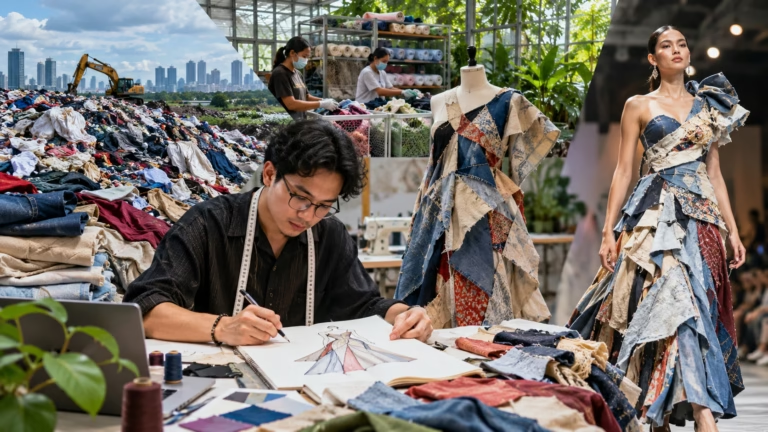
Cebu-based designer Jann Bungcaras brought this dynamic to the United Nations Fashion and Lifestyle Network panel during Climate Week NYC. He described the situation as a form of modern textile-waste colonialism, in which developing economies absorb the environmental consequences of global overproduction. The numbers support the framing: the Philippines discards roughly 267,111 tonnes of textile waste annually, much of it connected to global production networks rather than domestic demand.
Bungcaras’s own label operates as a closed-loop circular system, beginning not with newly manufactured fabrics but with textile scraps, unused fabrics, and garments destined for landfill. His design philosophy is grounded in a striking statistic: more than 85 percent of a garment’s environmental impact is locked in the design process. This means that circularity cannot be retrofitted at the end of a linear supply chain; it must be designed in from the start.
From Advocacy to Institutional Capacity
The global advocacy is beginning to intersect with domestic institutional capacity. DOST-PTRI’s SusTELAbility flagship program promotes circular economy principles and environmentally conscious local materials, with TexRev as a key initiative for converting post-industrial waste into spun yarn. The partnership with SoFA Design Institute and Shell Pilipinas explicitly aims to equip young designers with the knowledge to integrate circularity into their practice—not as an add-on, but as a core design competency.
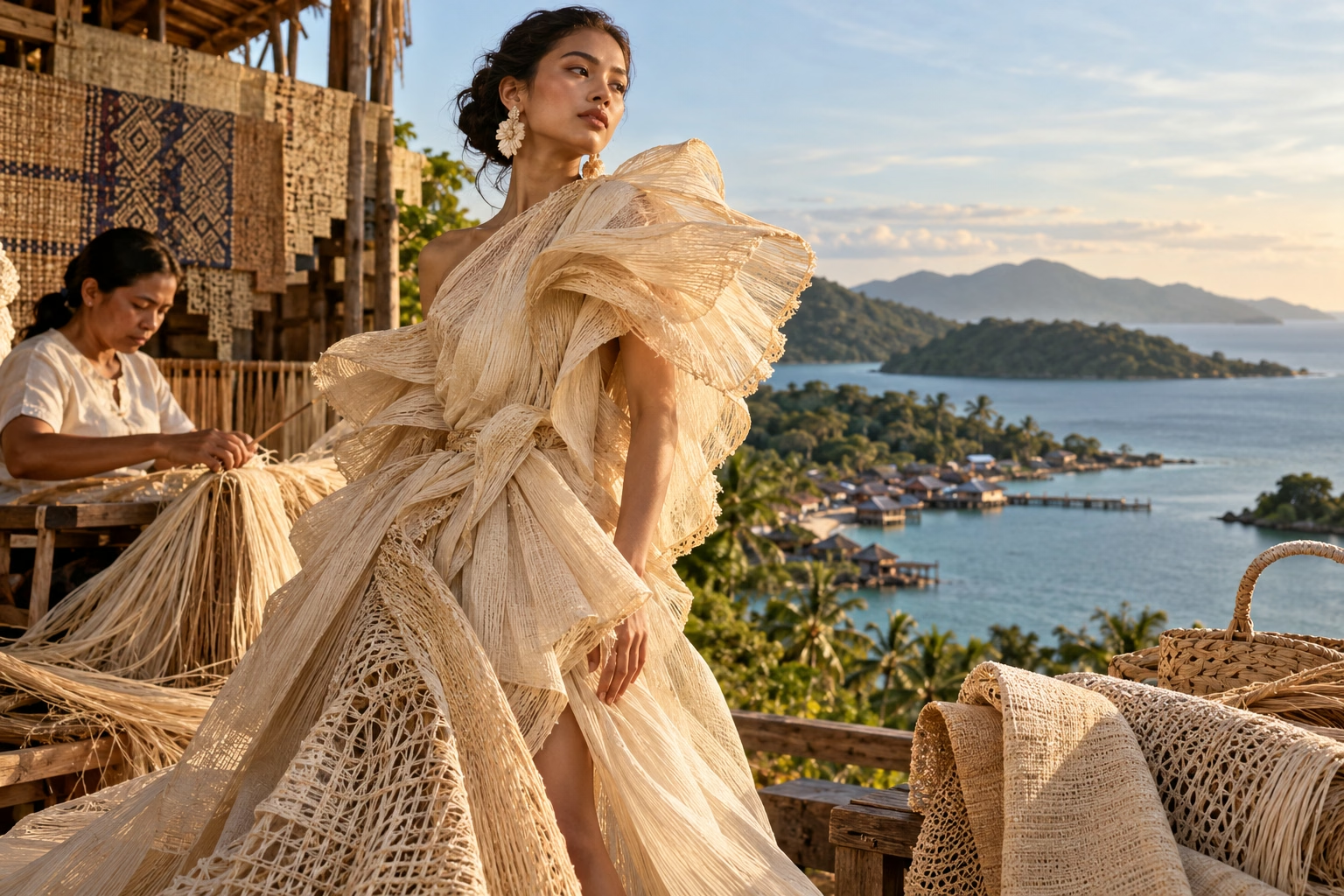
This educational dimension matters because the Philippines possesses a deep reservoir of craft knowledge—handloom weaving, natural dyeing, traditional textiles—that can be mobilized for circular design. The risk is that circular fashion becomes a technical exercise divorced from cultural context. The opportunity is that Filipino designers can pioneer heritage-informed circularity, where waste reduction and cultural preservation reinforce each other.
The Accountability Frontier
The global fashion system cannot outsource its waste problem indefinitely. As brands face pressure under extended producer responsibility frameworks and consumer scrutiny, the Philippines’ experience offers a critical lesson: circular fashion in the Global South is not simply about adopting Northern sustainability templates. It requires trade justice, waste import regulation, and investment in local circular infrastructure.
Filipino designers and policymakers are not waiting for a global solution. They are building circular systems at the local, municipal, and industrial levels—while simultaneously demanding that the global industry account for the waste it exports. That dual strategy—local construction and global accountability—may be the most consequential contribution of the Philippine circular fashion movement.