
A franchise cannot exist without enforceable ownership. For Filipino entertainment IP to move from local characters to global properties, the legal infrastructure must be clear enough for investors, licensees, and international partners to commit. Two regulatory developments in 2026 suggest that infrastructure is maturing—with complications.
Revised Copyright Rules and the Human Authorship Standard
In February 2026, the Intellectual Property Office of the Philippines issued Memorandum Circular No. 2026-007, revising copyright registration rules and taking effect on March 20, 2026. The new rules mandate electronic filing and specify grounds for refusal of registration, including lack of human authorship, lack of originality or creative expression, public domain works, and traditional cultural expressions . Legal analysts have noted that the human authorship ground may serve as a basis to refuse registration for outputs autonomously created by artificial intelligence, while works where humans use AI as an assistive tool may still be registrable for the human-authored components .
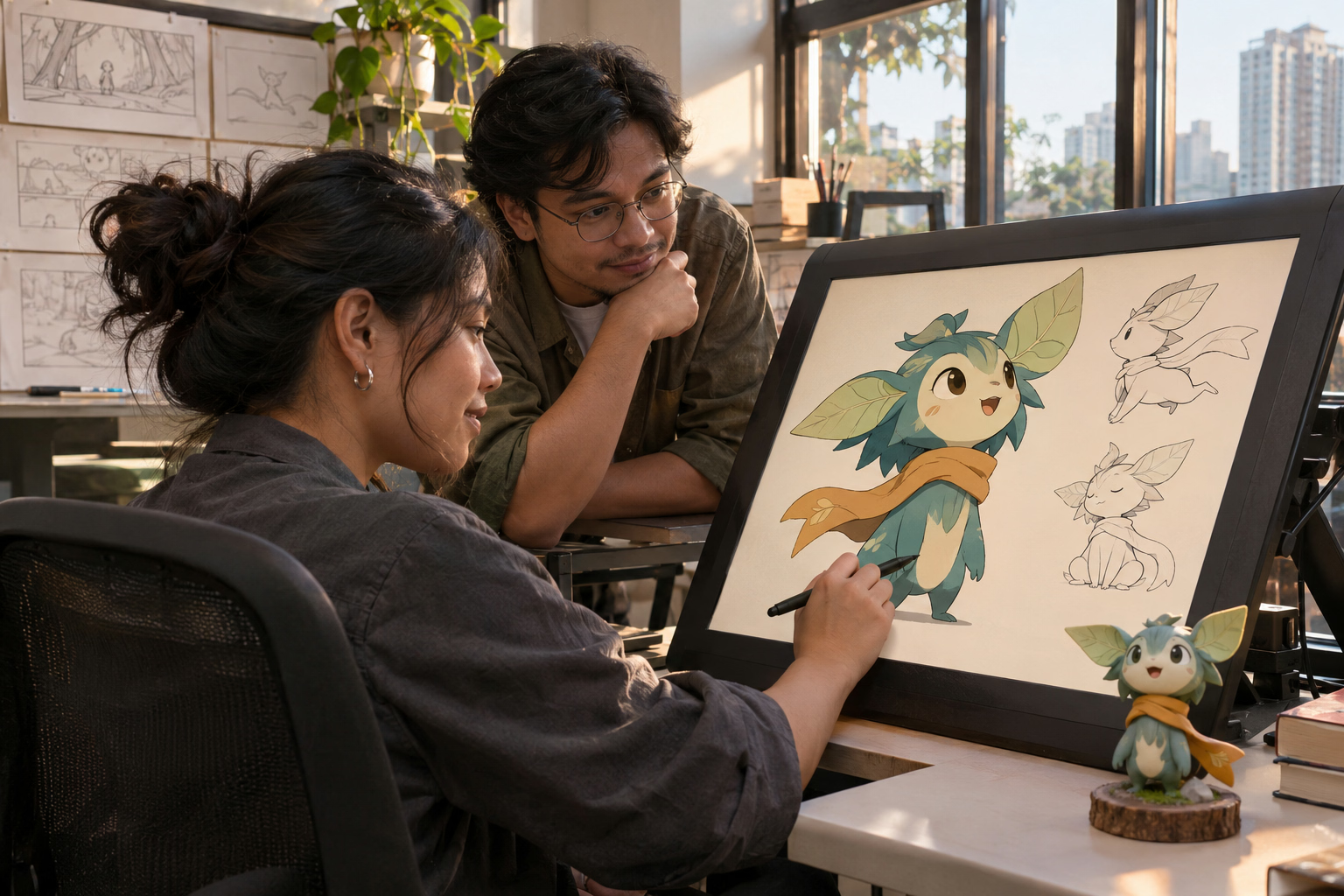
For entertainment IP, this clarity matters. Character designs, scripts, musical compositions, and animation assets all require defensible copyright to support licensing. The explicit human authorship requirement aligns Philippine practice with emerging international standards, potentially easing cross-border licensing negotiations.
AI and the Artist Protection Question
IPOPHL has also been developing separate draft guidelines specifically addressing AI and creative works, with public consultations conducted in 2026. Bureau of Copyright and Related Rights director Emerson Cuyo outlined four categories under consideration: AI-assisted, AI-enhanced, hybrid work, and purely AI-generated work. Under the draft framework, registration cannot be automatic; works can be registered only if there is sufficient original and creative contribution from a human, and AI-generated portions must be declared upon registration .
The regulatory attention to AI reflects a real tension in the Philippine creative sector. AI tools offer productivity gains for studios and independent creators, but they also threaten to devalue the human labor that constitutes Filipino IP’s competitive advantage. The government’s approach—protecting human authorship while not banning AI use—mirrors the broader global debate but has specific implications for a country positioning itself as a creative services and original content hub.
What the Infrastructure Still Lacks
Copyright registration is necessary but insufficient for franchising. Franchise development requires trademark protection across multiple classes and territories, clear chain-of-title documentation, and enforcement capacity. The diagnostic report’s emphasis on digital IP protection and commercialization pathways acknowledges these gaps, but building enforcement mechanisms—particularly against infringement in export markets—remains a work in progress.
The more fundamental limitation is economic. Legal infrastructure enables franchising; it does not create it. A Filipino character becomes a franchise when audiences outside the Philippines demand more of it—merchandise, sequels, adaptations, experiences. The copyright certificate is the prerequisite, not the product.
For now, the Philippine entertainment IP ecosystem has clearer rules, a data baseline, and policy attention. The commercial breakthrough—a Filipino-owned character or story that generates licensing revenue across multiple countries and product categories—remains the missing proof point. The infrastructure is ready to support it; the market has yet to deliver it.