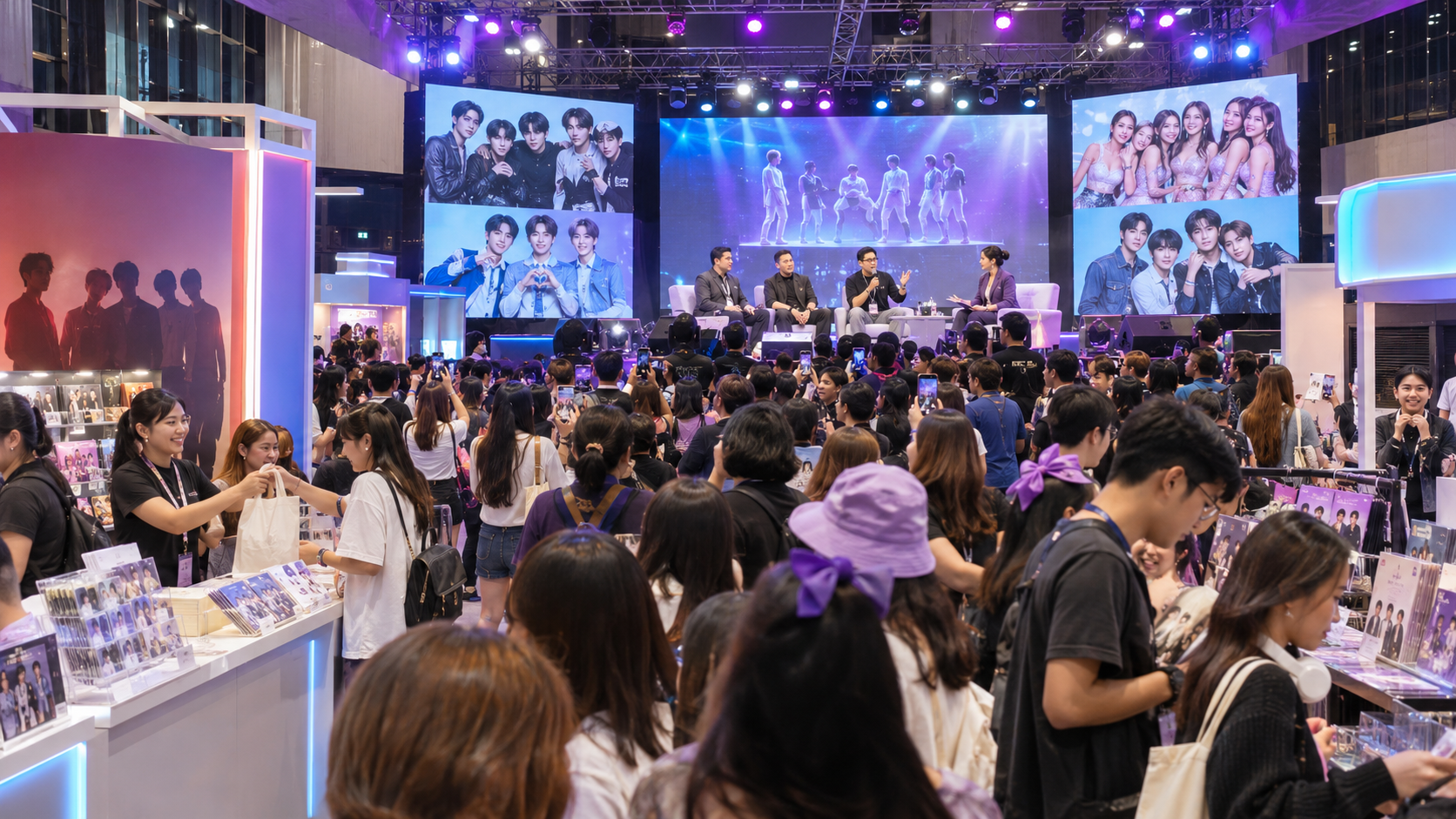

When BINI stepped onto the Coachella stage in April 2026, the moment was celebrated as a triumph of talent and perseverance. It was that. But it was also a triumph of geography and language. The Philippines’ unique position—a pop-culture-obsessed, English-fluent, hyper-online nation of over 30 million people aged 10 to 24—has given P-Pop a structural advantage in the global marketplace that its neighbors in Seoul and Tokyo cannot easily replicate . The convention in Manila, with its panels and brand activations, was not just a domestic celebration. It was a trade show for an export product with a built-in competitive edge.
The Language Multiplier
Industry professionals have noted that Filipino artists can speak directly to international audiences in a way that many K-pop and J-pop acts cannot without mediation . When BINI members gave interviews in California, they did so in fluent English, bypassing the subtitle barrier that can limit cross-border fandom. This is not a trivial advantage. It shortens the distance between the artist and the global listener. It makes late-night talk show appearances, festival press conferences, and brand partnerships smoother. The convention’s industry panels, featuring executives speaking in English to an English-fluent audience, mirrored this dynamic on a domestic scale .
The Hyper-Online Domestic Engine
The other half of the advantage is internal. The Philippines has one of the most phone-obsessed populations on the planet, and the pandemic accelerated a shift toward local content that has not reversed . Rolling Stone Philippines documented that by late 2026, OPM and P-Pop acts occupied the overwhelming majority of the domestic Top 200 chart, with K-pop’s presence essentially vanishing from the upper tiers . This domestic dominance provides a revenue floor and a testing ground. A group can build a sustainable career at home while preparing for an international push, rather than betting everything on a single global breakout.
The Risk of Complacency
Yet the convention also revealed a tension. The infrastructure is still nascent. The global visibility of BINI and SB19 has outpaced the domestic industry’s ability to capitalize on it. The 2026 convention was a promising first step—a physical space where the entire ecosystem could see itself reflected in one room . But the real test will be whether the momentum of a Coachella debut and a successful convention translates into sustained investment in training, production, and international marketing. The fans have done their part. The question now is whether the industry can build the next stage before the current spotlight dims.