
Traditional Filipino music plays an integral role in the culture and identity of the Philippines. It is an embodiment of the country’s rich history, diverse ethnic groups, and the evolution of its society over centuries. Through its rhythms, melodies, and instruments, traditional music in the Philippines reflects both the influences of indigenous groups and external forces, such as colonization and trade.
The Philippines is home to more than 180 ethnolinguistic groups, each with its own unique style of music. Indigenous Filipino music is deeply connected to the daily life of its people, with different songs and musical forms used for various purposes, including rituals, work, storytelling, and celebrations. Music is often viewed as a sacred art, with some tribes considering it a form of communication with spirits and gods.
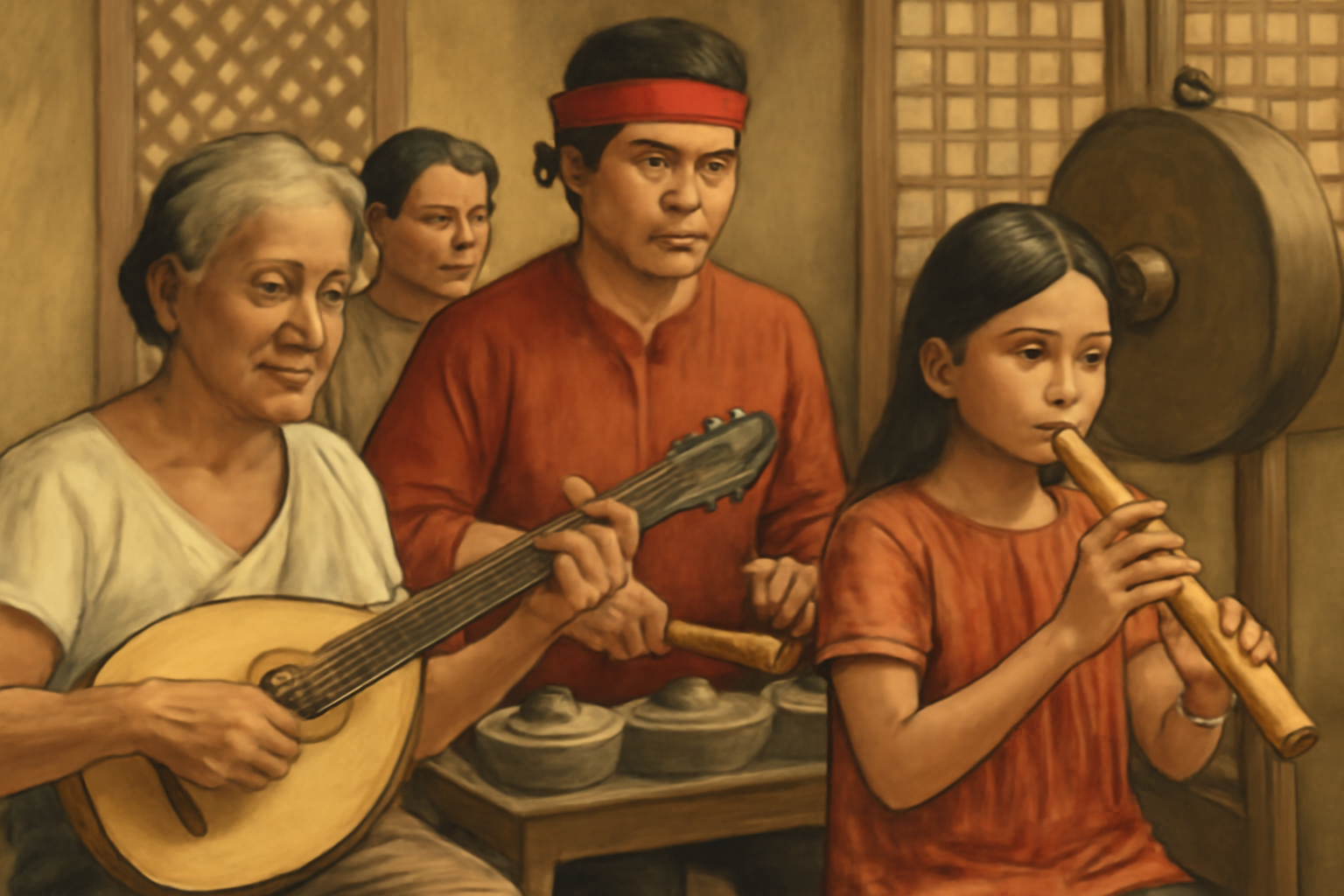
A significant element of traditional Filipino music is the use of indigenous instruments. These range from percussion instruments such as the kulintang, a set of gongs played in various regions of the Philippines, to string instruments like the bandurria, a type of lute with Spanish influence. Other notable instruments include the guitar, kalatong (bamboo percussion), and the agung, a large, suspended gong. These instruments not only produce distinct sounds but also carry with them centuries of history and cultural meaning.
The kulintang, for instance, is not just a musical instrument but a symbol of communal identity. It is central to the music of Mindanao and other parts of Southern Philippines, where it is used in social and ceremonial events. The repetitive patterns and interlocking melodies of the kulintang invite group participation, creating a sense of unity and belonging within the community.
Aside from indigenous sounds, Filipino traditional music also reflects the influences of Spanish colonization, which brought new instruments like the guitar and violin, as well as European musical forms. These influences led to the development of genres such as kundiman (traditional love songs), which combine Western harmonic structures with Filipino poetic lyricism.
Filipino traditional music has always been dynamic, adapting to the changing times while still maintaining its cultural essence. The role of music in Filipino culture can be seen in various ceremonies, such as weddings, harvest festivals, and funerals. In these contexts, music plays a pivotal role in strengthening social ties, preserving traditions, and providing a sense of community.
Moreover, Filipino music serves as an educational tool. In many regions, songs are used to teach children about history, language, and values. These songs often incorporate stories and myths passed down through generations, preserving the wisdom and traditions of the ancestors. Music, in this sense, is not only an art form but also a powerful means of cultural transmission.
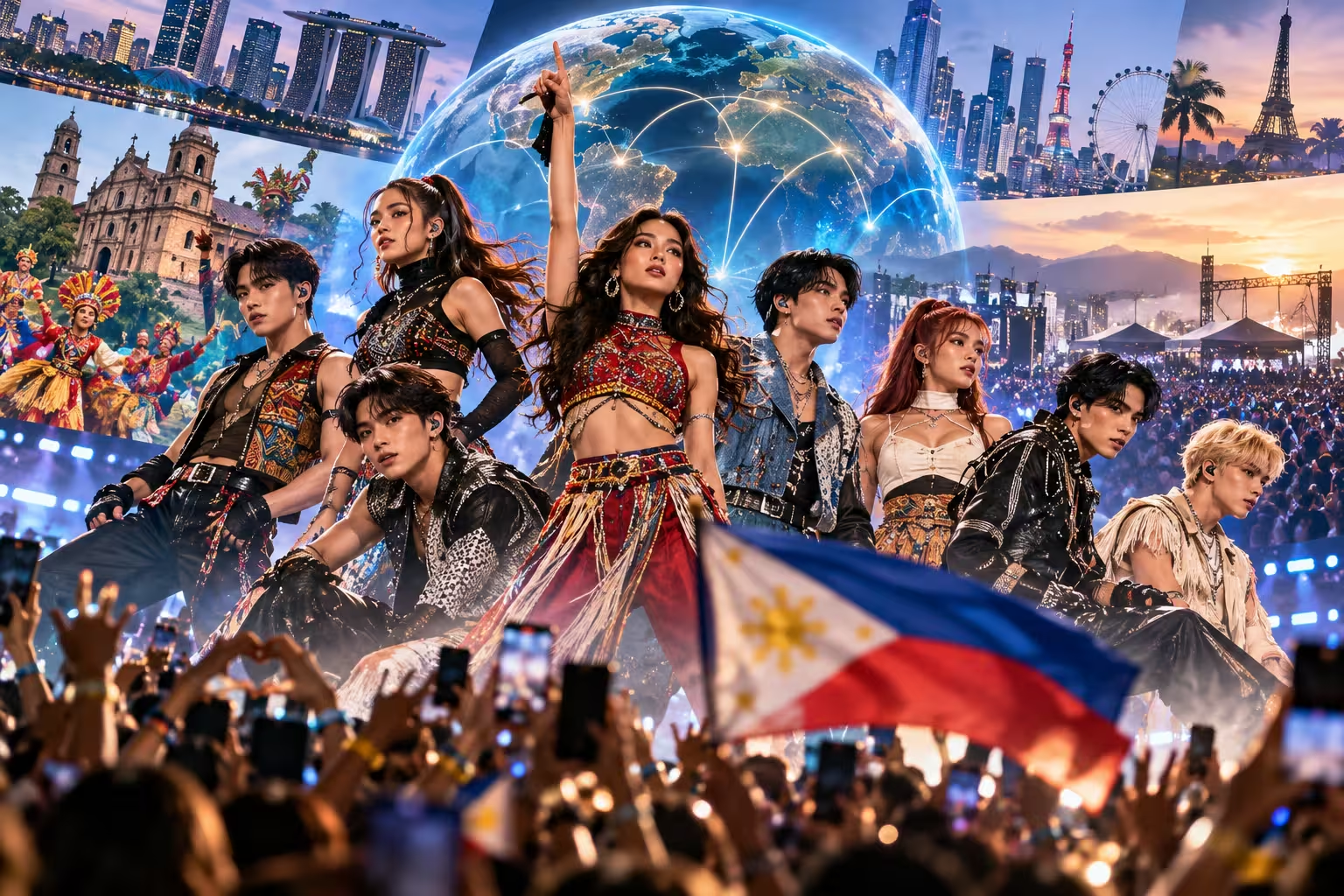
In contemporary times, the popularity of traditional Filipino music has faced challenges due to the dominance of Western pop culture. However, there has been a growing movement among younger generations to preserve and revitalize traditional music. Many Filipino musicians are experimenting with traditional instruments and sounds, blending them with modern genres like jazz, rock, and hip-hop, to create a fusion that resonates with a global audience while still honoring cultural roots.
In conclusion, traditional Filipino music holds a prominent place in the cultural fabric of the Philippines. It is a reflection of the country’s diverse ethnicities, history, and ongoing cultural evolution. Despite the challenges posed by globalization and modernization, Filipino traditional music continues to thrive, acting as a bridge between the past and present, and ensuring that the cultural heritage of the Philippines is passed on to future generations.