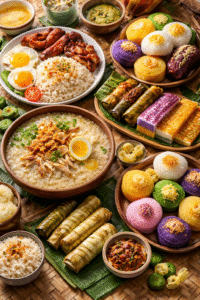









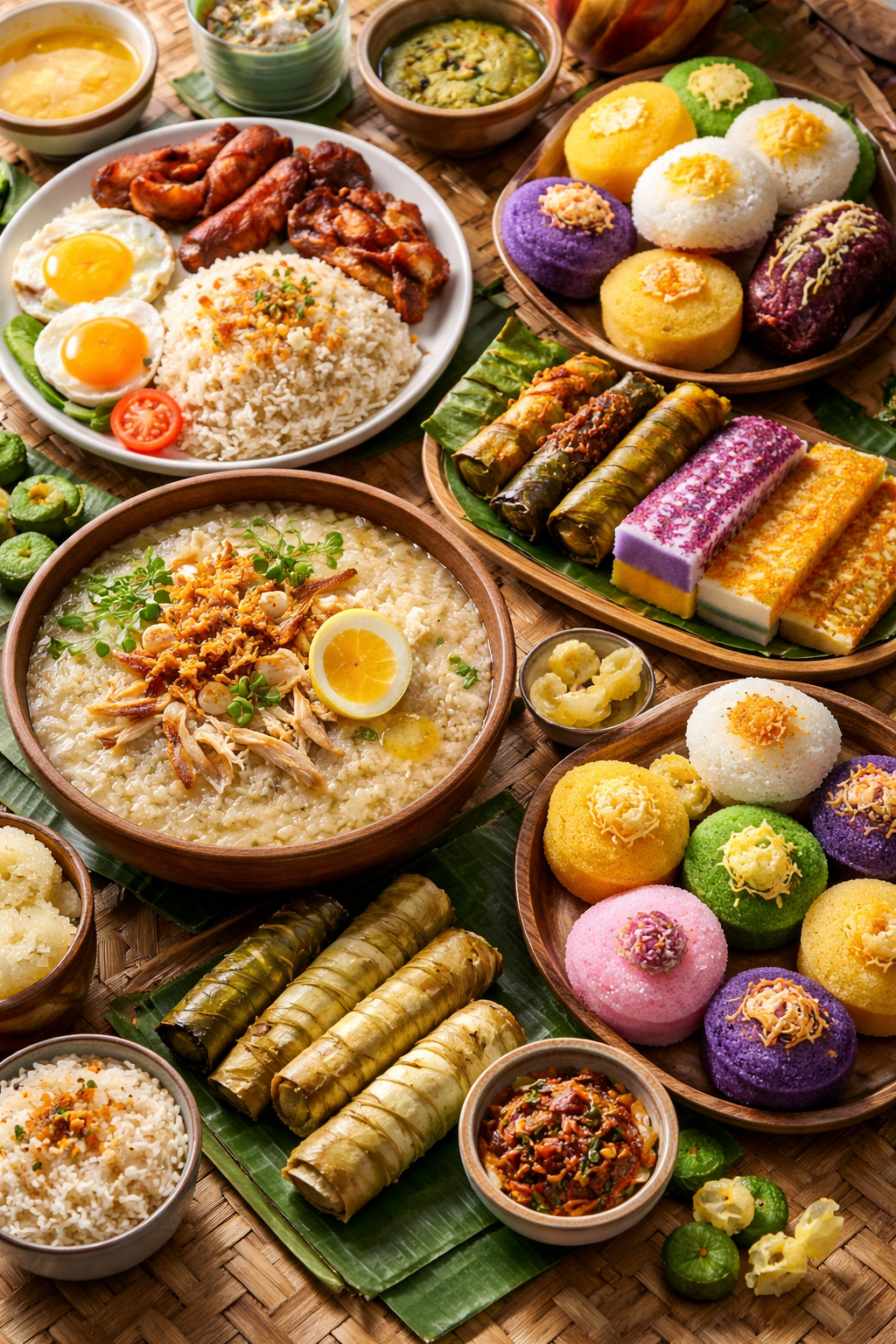
To speak about Filipino cuisine is to speak about rice. Across the Philippines, rice is woven into daily eating habits, seasonal celebrations, and inherited cooking practices. It appears in the simplest meals and in the most ceremonial foods. What makes Filipino rice dishes especially interesting is not only their variety, but the way each form answers a different need: hunger in the morning, comfort during bad weather, sweetness in times of celebration, and familiarity during social gatherings. From sinangag to puto, rice tells the story of Filipino food culture.
A familiar and much-loved dish is sinangag, often translated as garlic fried rice. It is usually prepared using rice left over from the previous meal, which gives it a drier texture that fries well without becoming mushy. Garlic is the dominant flavor, cooked until fragrant and slightly golden before being mixed with the rice. The final dish is straightforward, but that simplicity is exactly what makes it effective. It balances salty or sweet breakfast meats and eggs without overwhelming them. On Filipino breakfast plates, sinangag functions as both a filler and a flavor carrier, turning an ordinary morning meal into something satisfying and complete.
Rice also becomes a source of comfort in dishes like lugaw, goto, and arroz caldo. These porridges are important in Filipino households because they are gentle, practical, and easy to customize. A plain bowl of lugaw may be enough for someone feeling unwell, while arroz caldo, enriched with chicken and ginger, offers deeper flavor and warmth. Goto, usually made with tripe, is a more robust variation often sold in eateries and roadside stalls. These dishes reveal another side of Filipino rice culture: rice is not only central because it fills the stomach, but because it can be adapted to moments of care, recovery, and rest.
Rice further extends into the category of kakanin, traditional rice-based treats that occupy an important place in local markets and family gatherings. These foods often rely on glutinous rice, rice flour, coconut milk, and unrefined sugar. They may be steamed, boiled, or cooked slowly until thick and glossy. In many communities, kakanin is linked to religious feasts, birthdays, and holiday tables. It reflects a cooking tradition in which rice is elevated from daily necessity to celebratory food, often through time-consuming preparation and the use of regional ingredients.
Within this category, puto stands out for its soft texture and broad appeal. Puto is a steamed cake made from rice batter or rice flour, usually lightly sweetened and served in small round portions. It may seem simple at first glance, yet its variations are numerous. Some types are fluffy and plain, others are tinted yellow, purple, or green, while modern versions may include butter or cheese. Certain regional forms preserve older methods involving fermentation, which contributes a subtle tang and tenderness. Puto is commonly eaten as a snack with hot drinks, but it is also paired with savory foods, making it unusually versatile.
Filipino rice dishes show how one staple can support an entire culinary system. In fried rice, rice becomes fragrant and hearty. In porridge, it becomes soothing and restorative. In kakanin and puto, it turns festive, sweet, and expressive of local tradition. The breadth of these dishes explains why rice remains indispensable in the Philippines: it is not merely eaten, but transformed repeatedly into forms that match everyday life, memory, and celebration.