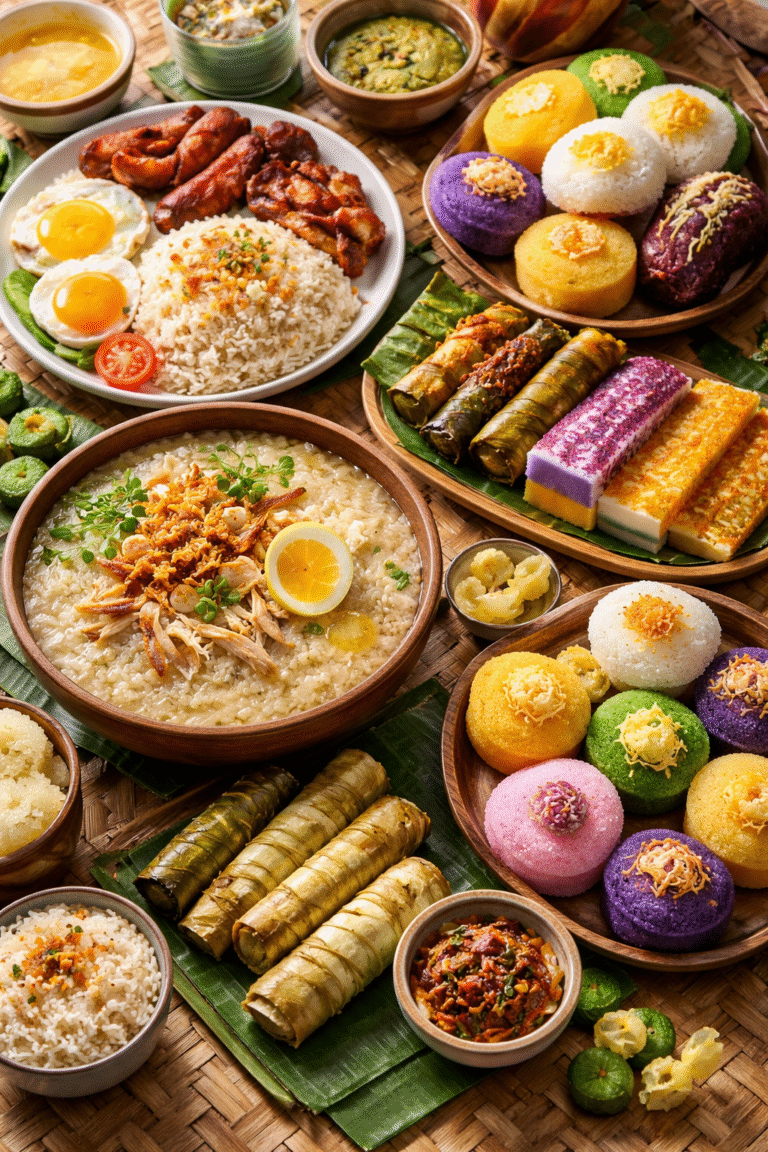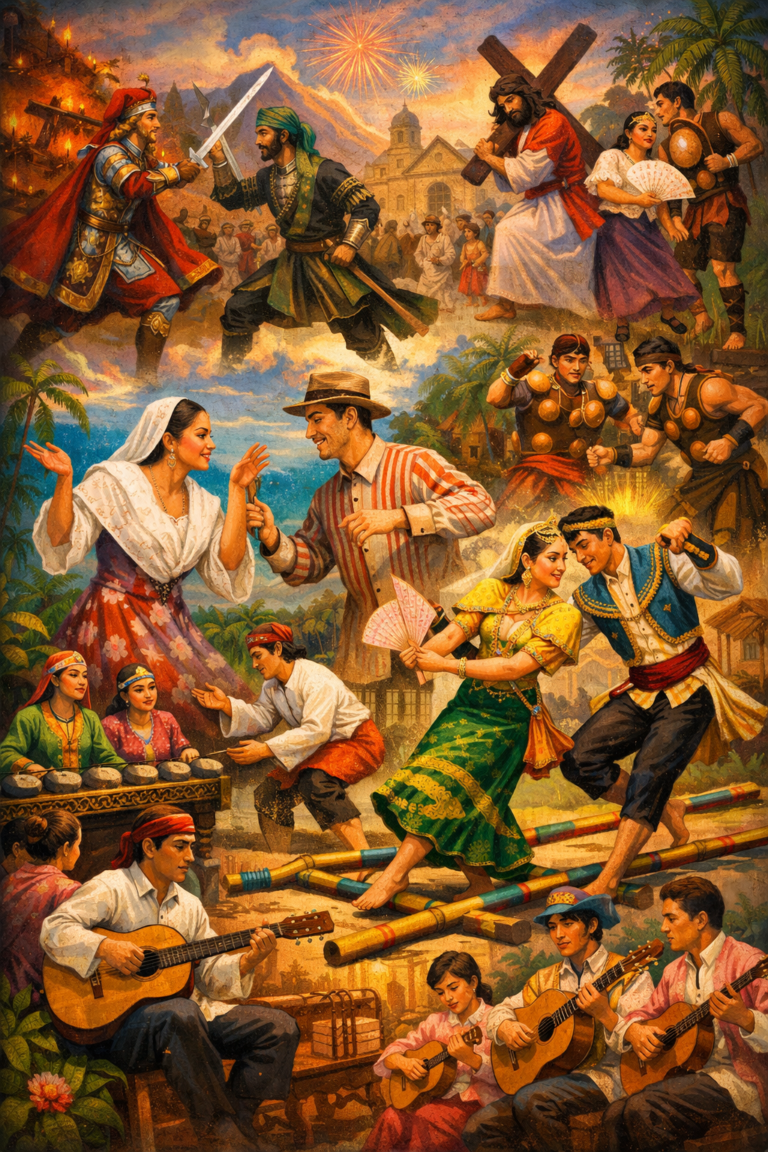










Filipino traditional food is a culinary reflection of the rich and diverse history of the Philippines. A unique blend of indigenous ingredients, Asian influences, and colonial history, Filipino dishes offer a captivating journey through time. The country’s food culture has evolved through centuries of interaction with traders, colonizers, and neighboring countries, each contributing distinct flavors and techniques to the Filipino kitchen.
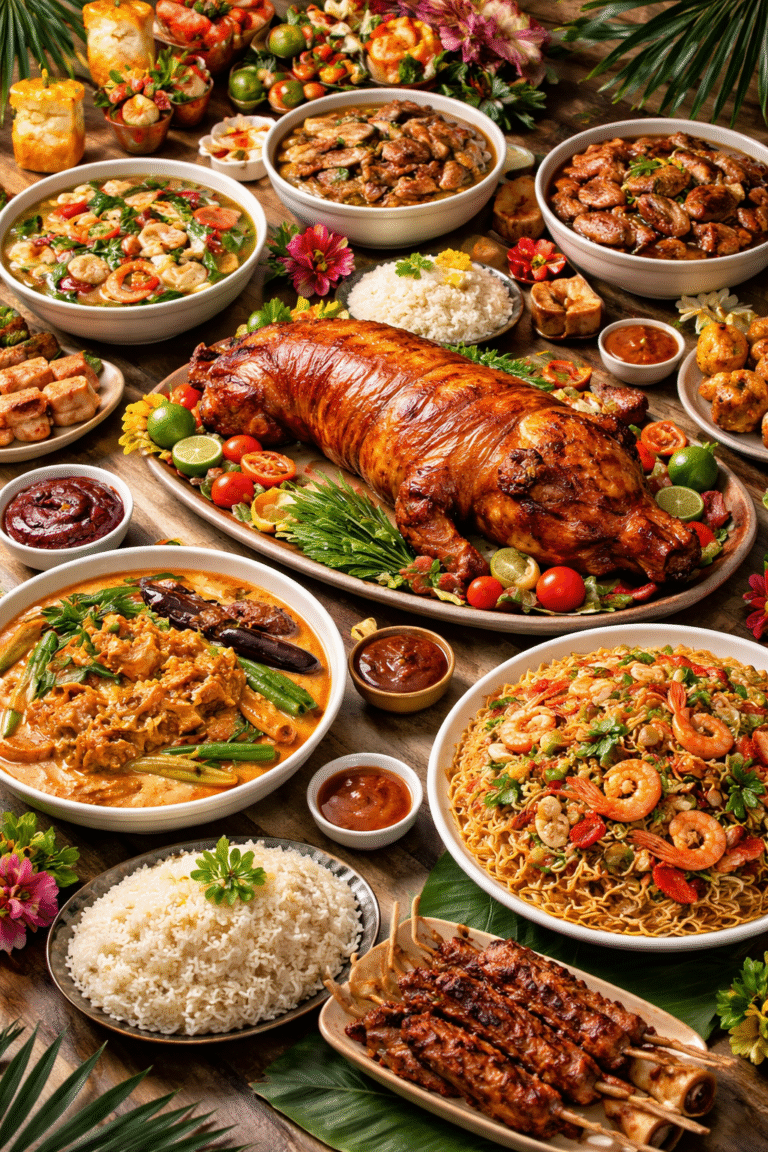
One of the most iconic dishes in Filipino cuisine is adobo, a savory stew made with chicken or pork marinated in vinegar, soy sauce, garlic, and bay leaves. This dish’s roots can be traced back to pre-colonial times when Filipinos preserved meat using vinegar and salt. The Spanish colonizers introduced soy sauce, which gave the dish its characteristic flavor profile. Today, adobo is often considered the national dish of the Philippines, with regional variations depending on local ingredients.
Another beloved Filipino dish is sinigang, a tangy and savory soup made with tamarind, tomatoes, and a variety of vegetables. The dish is commonly cooked with pork, shrimp, or fish, and the sourness of the broth is both refreshing and comforting. Sinigang is believed to have evolved from the early Filipino practice of cooking sour soups using native fruits like tamarind or guava, which were abundant in the archipelago.
In addition to these iconic dishes, Filipino cuisine includes an array of street food that reflects the local flavors and culture. Balut, a boiled fertilized duck egg, is a popular snack often enjoyed with a pinch of salt, vinegar, and chili. It is a dish with a deep historical connection, believed to have been influenced by Chinese traders who brought similar dishes to the Philippines during the 14th century.
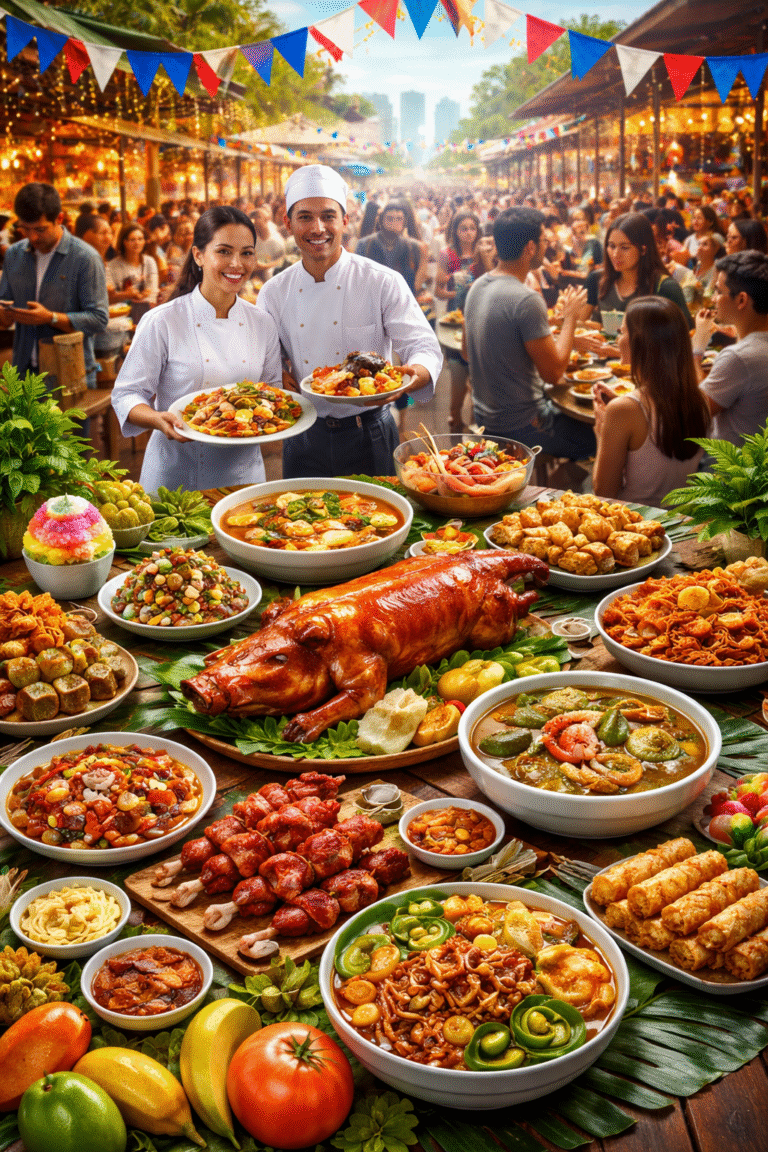
The rich history of Filipino food is also evident in lechon, a roasted whole pig typically served during festive occasions. This dish, often associated with Filipino celebrations, has a strong connection to Spanish colonial rule, as they introduced the technique of roasting whole animals. The use of spices and marination methods has been adapted over time to suit local tastes.
Filipino food is not just about taste; it also reflects the hospitality and warmth of the Filipino people. The act of sharing meals with family and friends is a cornerstone of Filipino culture, with food being seen as a way to create bonds and celebrate togetherness. Filipino dishes are often hearty, flavorful, and designed to be enjoyed in a communal setting, reinforcing the importance of family and community in Filipino society.
In conclusion, Filipino traditional food is a flavorful testament to the country’s complex and diverse history. With its blend of indigenous ingredients, Asian influences, and colonial legacies, Filipino cuisine continues to evolve, offering a rich tapestry of flavors and stories that reflect the Philippines’ cultural heritage.