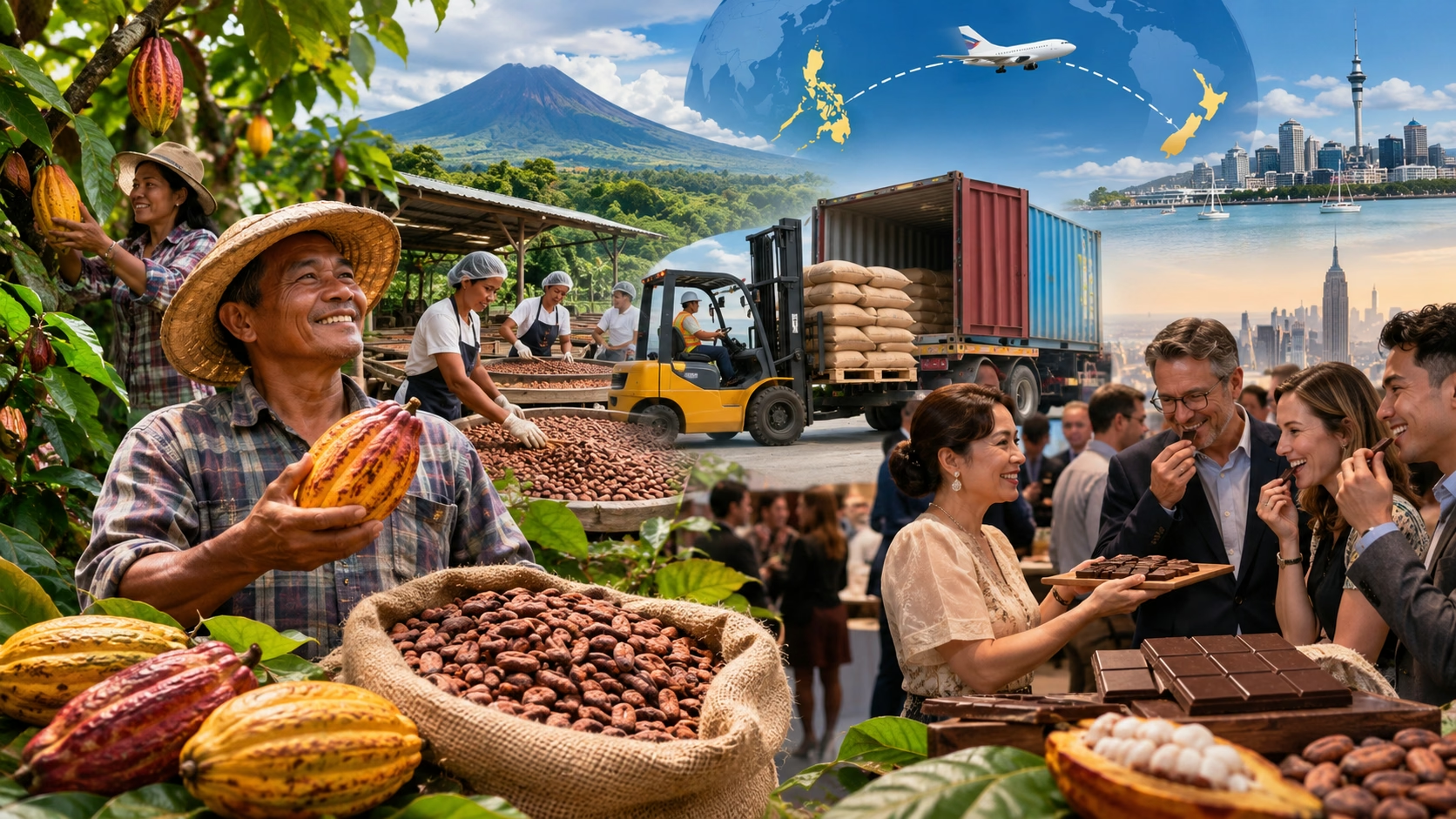
A Landmark Shipment to New Zealand
The journey of a single-origin bean from Davao to a global market is a complex logistical and diplomatic feat. In June 2026, that journey reached a new milestone with the shipment of 6 metric tons of premium dried and fermented cacao beans from the Kapalong Cooperative in Davao del Norte to New Zealand. The transaction, formalized with Rautini, a New Zealand-owned social enterprise, was not merely a trade deal but a strategic entry into a market with strict food safety and premium quality standards. This milestone, a direct outcome of the Department of Agriculture’s PRDP I-REAP program, demonstrates how institutional support can connect local cooperatives to high-value international buyers, transforming them from “struggling” entities into profitable partners in the global value chain.
Showcasing the Terroir in New York
While the New Zealand shipment represents a tangible trade breakthrough, parallel efforts are focused on brand-building and market education in the world’s largest economy. In October 2026, the Philippine Trade and Investment Center in New York hosted “Chocolate and Conversations,” an event dedicated to showcasing Philippine cacao and fine chocolate to U.S. businesses and consumers. The event highlighted the growing appreciation for premium, origin-specific chocolates and positioned the Philippines as a producer of quality cacao and award-winning products. This dual approach—securing direct trade deals while cultivating consumer awareness—is essential for building a sustainable export market that values the unique story and quality of Davao’s beans.
The Road Ahead: Scaling Premium Exports
The export trajectory is supported by a broader national ambition. The Philippine Cacao Roadmap (2026–2030) and ongoing trade initiatives are designed to push the country’s cocoa into higher-value markets. The success of the New Zealand shipment and the promotional efforts in the U.S. are not isolated wins; they are proof-of-concept moments. They demonstrate that when quality, traceability, and strategic market linkages align, Davao’s single-origin cacao can compete on the world stage. The challenge now is to scale this success, ensuring that the benefits of premium export prices reach more cooperatives and farmers across the region, cementing Davao’s status not just as the Philippines’ cacao capital, but as a recognized origin of fine chocolate globally.