

The Philippines is home to a wealth of historical churches and religious sites that reflect the nation’s deep Catholic heritage. These landmarks have stood the test of time and continue to serve as important places of worship and pilgrimage for millions of Filipinos. They also stand as historical monuments, giving visitors insight into the country’s colonial past and the role of religion in shaping its cultural identity.
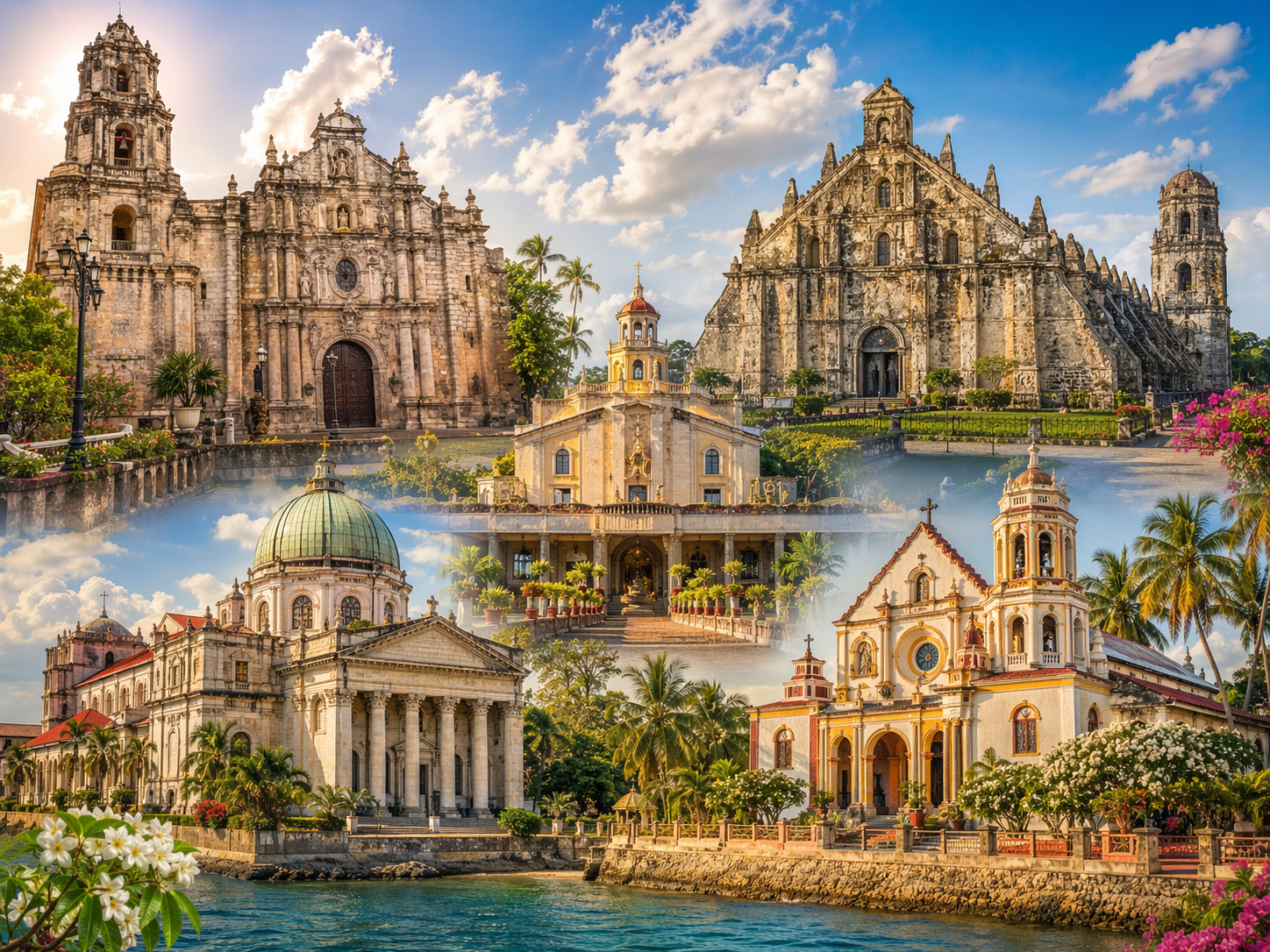
Among the most famous religious sites is San Agustin Church in Manila. As the oldest stone church in the Philippines, it is a UNESCO World Heritage Site and one of the most important landmarks in the country. The church’s baroque architecture, intricate woodwork, and stunning ceiling murals make it a masterpiece of colonial-era craftsmanship. The church has also played a significant role in the country’s history, having witnessed various historical events, including the Philippine Revolution and World War II.
In Ilocos Norte, Paoay Church stands out for its unique baroque design. The church’s large, buttressed walls are a distinctive feature that highlights its earthquake-resistant architecture. Constructed in the 1600s, the church was designed to withstand frequent earthquakes in the region. The stunning church, with its beautiful coral stone façade, is a UNESCO World Heritage Site and is often regarded as one of the finest examples of Spanish baroque architecture in the Philippines.
In Cebu, the Basilica del Santo Niño is another important religious landmark. Built in 1565, it is the oldest church in the Philippines and houses the revered Santo Niño statue, which was brought to the Philippines by Ferdinand Magellan in 1521. The Basilica plays a central role in Cebu’s religious life and is the focal point of the annual Sinulog Festival, a celebration of the Santo Niño’s miraculous powers.
Batangas is home to Taal Basilica, the largest church in the Philippines. Built in the 19th century, this church is known for its grand neoclassical design, beautiful altars, and towering columns. The church has a long history and played a significant role during the Spanish colonial period. Its grandeur and historical importance make it one of the must-see religious sites in the Philippines.
Lastly, Our Lady of the Pillar Church in Zamboanga is another historical gem. Dating back to the Spanish colonial era, this church is dedicated to Our Lady of the Pillar, the patroness of Zamboanga. Its architecture blends Spanish and Filipino styles, making it a beautiful representation of the country’s cultural fusion.
Each of these sacred sites is a treasure trove of history, culture, and faith. They offer an enriching experience for anyone seeking to understand the spiritual and historical roots of the Philippines. Whether you’re visiting for religious purposes or simply to admire their architectural beauty, these churches and places of worship are essential to understanding the soul of the Philippines.