
Coffee in the Philippines is not just a beverage; it is an integral part of daily life, a cultural touchstone, and a source of pride for many Filipinos. While the country might not have the same worldwide coffee fame as Brazil or Colombia, Filipino coffee is beginning to stand out for its unique varieties, rich history, and growing specialty coffee scene. From the iconic “kape barako” to the lesser-known yet equally fascinating Excelsa variety, Filipino coffee is worth exploring. This article dives into the history, cultural significance, and varieties of Filipino coffee.
The History of Coffee in the Philippines
Coffee arrived in the Philippines during the 18th century, likely brought by Spanish colonizers. The country’s tropical climate and diverse topography made it an ideal place for coffee cultivation, and over time, coffee farming became an important part of the local economy. By the 19th century, the Philippines was a prominent coffee producer, contributing significantly to global exports. However, in the 20th century, the industry faced significant setbacks, including the spread of coffee rust, pests, and a decline in production, which made room for other coffee-producing countries to take the spotlight.
Despite these challenges, the coffee industry in the Philippines has experienced a revival in recent years. Local coffee farmers and specialty coffee enthusiasts have been working together to reinvigorate the industry by focusing on quality, sustainability, and promoting the distinctive varieties that grow in the country’s diverse regions.
Filipino Coffee Varieties: A Taste of the Archipelago
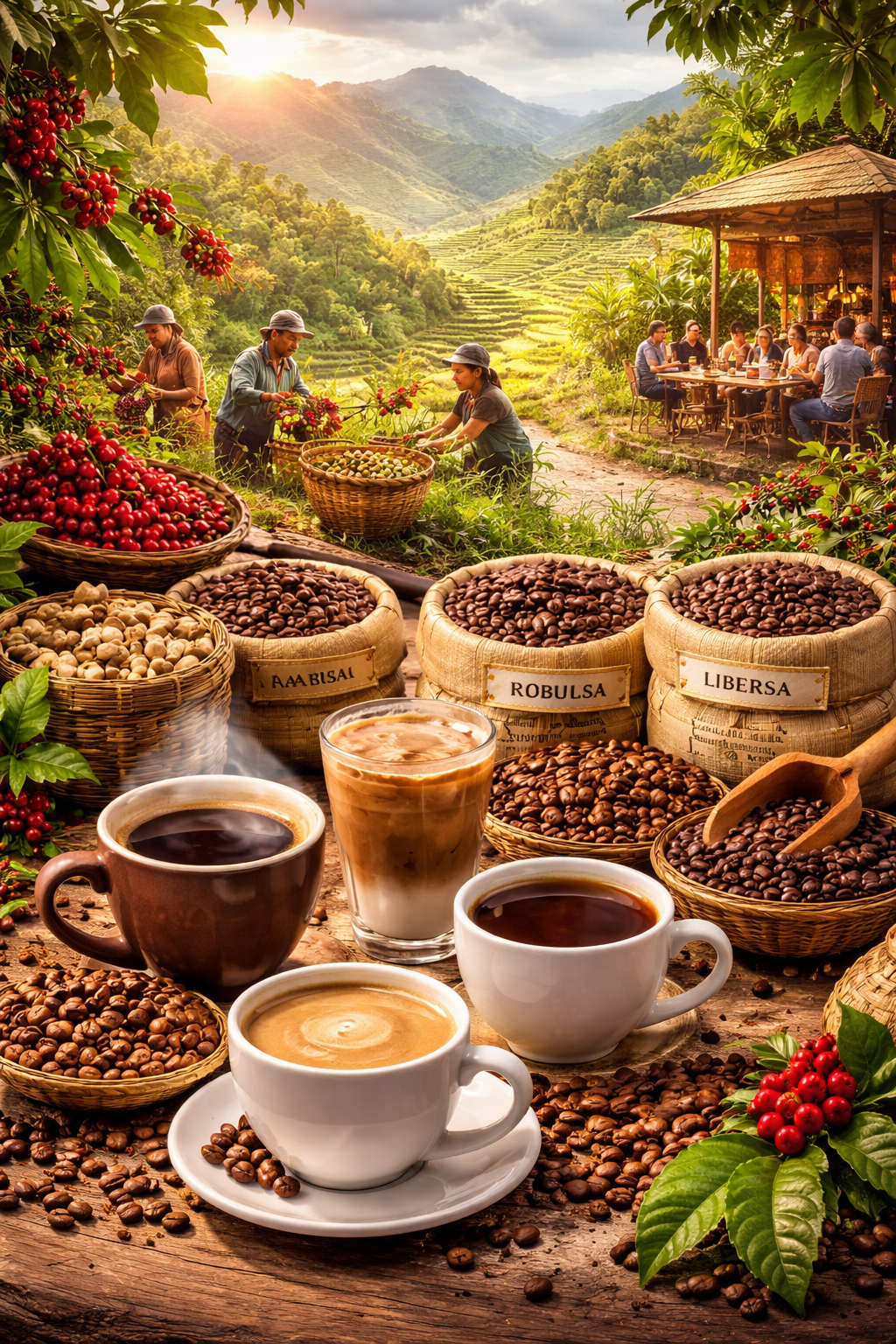
The Philippines is home to several coffee varieties that reflect the country’s rich agricultural heritage. These varieties are typically grown in different regions of the archipelago, each with its own unique flavor profile. The four primary types of coffee grown in the Philippines are Arabica, Robusta, Liberica, and Excelsa, and each has a distinct character that contributes to the overall richness of Filipino coffee culture.
- Arabica: Arabica coffee is one of the most well-known and widely grown varieties in the world, and it is also popular in the Philippines. Grown primarily in the highland regions of the country such as Benguet, Batangas, and Mountain Province, Arabica coffee has a smooth, mild flavor profile with bright acidity and floral notes. It is prized for its balanced taste and relatively low bitterness, which makes it ideal for those who enjoy a gentler cup of coffee. The cooler temperatures at higher altitudes help produce beans with distinct, aromatic qualities.
- Robusta: Robusta coffee is often associated with a stronger, bolder flavor than Arabica. It has a higher caffeine content and a more bitter, earthy taste, making it the go-to variety for many Filipinos who enjoy a powerful brew. Robusta beans are usually grown in lower altitudes and are common in provinces such as Cavite and Quezon. Robusta is also a key ingredient in the production of instant coffee and traditional Filipino coffee blends, known for its thick body and assertive flavor.
- Liberica (Barako): Perhaps the most culturally significant variety of Filipino coffee is Liberica, locally known as “Barako.” Liberica is a unique variety with an intense, smoky flavor and a full-bodied profile. Grown primarily in Batangas and Cavite, Barako coffee has a distinctive aroma and a slightly fruity and woody taste. It is the coffee of choice for many Filipinos, especially those who appreciate a robust, strong cup. Barako coffee is traditionally brewed strong and often consumed during breakfast or social gatherings. This coffee is an iconic symbol of Filipino coffee culture.
- Excelsa: Excelsa is a rare and lesser-known coffee variety in the Philippines, prized for its complex flavor. A hybrid of Arabica and Liberica, Excelsa has fruity and tangy notes with a bold, sometimes spicy finish. Grown in select regions such as Nueva Vizcaya and parts of Mindanao, Excelsa beans are highly valued by specialty coffee enthusiasts for their unique taste profile. Although it is not as widely available as the other varieties, Excelsa offers a unique drinking experience for those seeking something different.
The Importance of Coffee in Filipino Culture
In the Philippines, coffee is much more than just a daily drink. It is a symbol of hospitality, connection, and shared experiences. Offering a cup of coffee to guests is a deeply ingrained cultural practice, and many Filipinos view it as an essential part of social interaction. Whether it’s a casual chat with family members or a more formal gathering with friends and colleagues, coffee plays a central role in fostering relationships.
Traditionally, kape barako (Liberica coffee) is served during special occasions, family gatherings, and festivities, often paired with Filipino treats such as pan de sal (bread rolls) or bibingka (rice cakes). Coffee culture in the Philippines is also tied to its warm, communal nature, where moments of sharing a cup of coffee create bonds and meaningful conversations.
Coffee is also often enjoyed during the morning as part of a Filipino breakfast, which typically includes bread, rice cakes, or local delicacies. In the evening, it serves as an evening drink for relaxation, creating an important ritual that signifies comfort and enjoyment.
Sustainability in Filipino Coffee Production
The rise of the specialty coffee movement in the Philippines has brought increased attention to the sustainability of coffee farming. As the demand for high-quality coffee grows, farmers are increasingly embracing organic and sustainable farming practices. Many cooperatives in coffee-growing regions are focusing on improving the environmental impact of their farms, as well as ensuring fair wages and opportunities for local communities.
Some regions, like the Cordillera mountain range in northern Luzon, are home to heirloom varieties of coffee that have been cultivated for generations. These varieties are increasingly seen as valuable not only for their unique flavors but also for their potential to contribute to the sustainability of Filipino coffee production. Local farmers are working to preserve these heirloom varieties while also engaging in sustainable farming techniques, such as organic growing methods and eco-friendly pest management.
As the global demand for ethically sourced coffee continues to rise, Filipino farmers are tapping into this growing market by promoting their sustainably produced coffee beans. This focus on ethical practices ensures that the benefits of coffee production are more equitably distributed, with farmers and communities gaining fair compensation for their efforts.
The Growing Specialty Coffee Scene
The emergence of specialty coffee shops across the Philippines is further fueling the country’s coffee renaissance. In cities such as Manila, Cebu, and Davao, more cafes are opening their doors, offering high-quality locally grown beans and innovative brewing methods. These specialty coffee shops often work directly with local farmers, helping them access better markets and showcasing the diverse varieties of Filipino coffee.
Baristas and coffee enthusiasts are also gaining recognition for their expertise in brewing Filipino coffee beans. From pour-over techniques to espresso-based drinks, there is a growing appreciation for the craftsmanship behind each cup of Filipino coffee. This specialty coffee scene is contributing to the growing recognition of the Philippines as a country with rich coffee traditions and high-quality beans.