
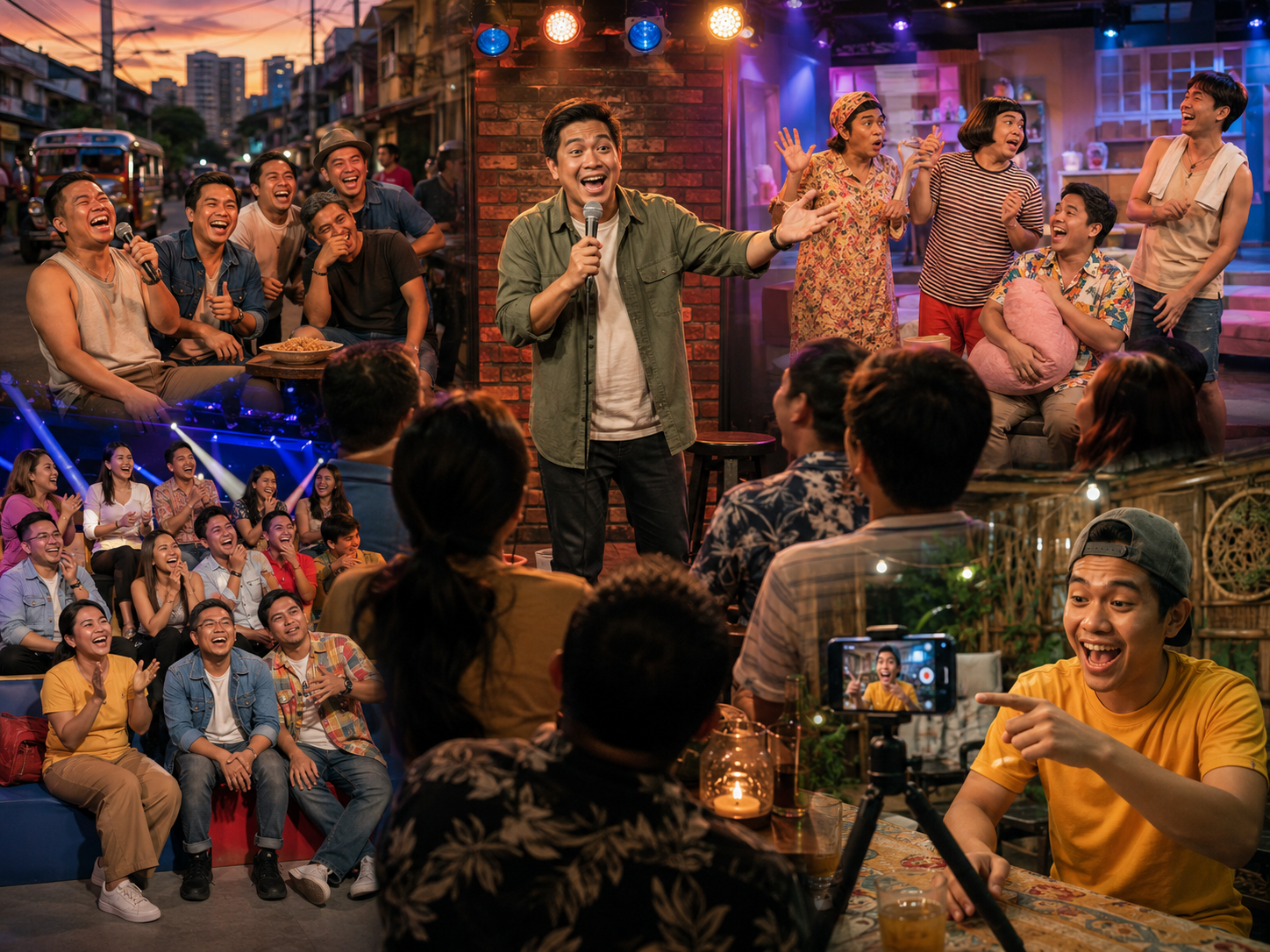
The world of comedy in the Philippines is rich, energetic, and deeply connected to the country’s social life. Filipinos are known for finding humor even in difficult situations, and this attitude is strongly reflected in their entertainment. Comedy appears in television, cinema, stage performances, variety shows, radio, and online platforms. It serves as both amusement and emotional release, giving audiences a way to laugh at problems they recognize in their own lives.
Filipino comedy is shaped by several traditions. One is the love for exaggerated characters, dramatic reactions, and playful banter. Another is the use of language mixing, especially Tagalog and English. Regional humor also plays an important role, as comedians from different parts of the country bring their own accents, expressions, and cultural references. Because of this, Philippine comedy feels diverse and personal.
Becoming a successful comedian in the Philippines often involves years of performance experience. Some comedians begin in small venues, local contests, campus events, or comedy bars. Others enter show business through acting, hosting, radio, or social media. The strongest performers usually know how to adjust to different formats. A joke that works in a comedy bar may need a different delivery on television. A funny online skit may require faster pacing than a sitcom scene.
Comedy bars have had a major influence on the careers of many performers. These venues teach comedians how to handle live audiences, respond to hecklers, and create humor from unexpected situations. They also encourage musical comedy, impersonation, and audience participation. This is why many Filipino comedians are not only joke-tellers but complete entertainers.
Classic comedy figures helped build the foundation of the industry. Dolphy became a national icon because he represented humor with warmth and humanity. His characters were often poor, hardworking, and imperfect, yet they remained lovable. His success showed that comedy could be both funny and emotionally meaningful. Vic Sotto became another major personality through sitcoms, films, and noontime television. His easygoing style appealed to families and made him one of the most familiar faces in Philippine entertainment.
Michael V. contributed greatly to modern sketch comedy. His parodies and characters in “Bubble Gang” showed careful writing and strong awareness of popular culture. He made fun of songs, commercials, social habits, and public trends in a way that many viewers found intelligent and entertaining. Vice Ganda, meanwhile, represents a more contemporary form of comedy built on speed, confidence, and live interaction. Their career shows how comedy bar performance can successfully move into television and cinema.
Many Filipino comedy shows became part of national memory. “John en Marsha” remains important because it turned ordinary family situations into comedy. It showed how marriage, parenting, money, and social status could be funny without feeling unfamiliar. “Home Along Da Riles” became popular for its portrayal of a struggling family whose humor came from hardship, love, and survival. These shows reflected the Filipino household and made viewers feel represented.
“Bubble Gang” became a long-running sketch comedy program because it constantly adapted to changing trends. It used short scenes, recurring jokes, spoofs, and character comedy to entertain viewers. Noontime shows such as “Eat Bulaga!” and “It’s Showtime” also became powerful comedy spaces. Their live format allows hosts and guests to create spontaneous humor, often based on real audience interaction.
Online media has introduced a new generation of Filipino comedians. Short-form videos, memes, podcasts, and digital sketches now compete with traditional television. This shift has allowed more voices to enter the comedy scene, including regional creators and independent performers.
Filipino comedy remains influential because it grows with society. It respects tradition while adapting to new platforms and audiences. At its heart, it celebrates the Filipino ability to laugh, connect, and keep going despite life’s many challenges.