
The Philippines’ religious landscape is a reflection of centuries of faith, colonial history, and artistic achievement. Churches, shrines, and other sacred sites scattered across the archipelago attract visitors who seek spiritual experiences as well as an appreciation of history and culture.
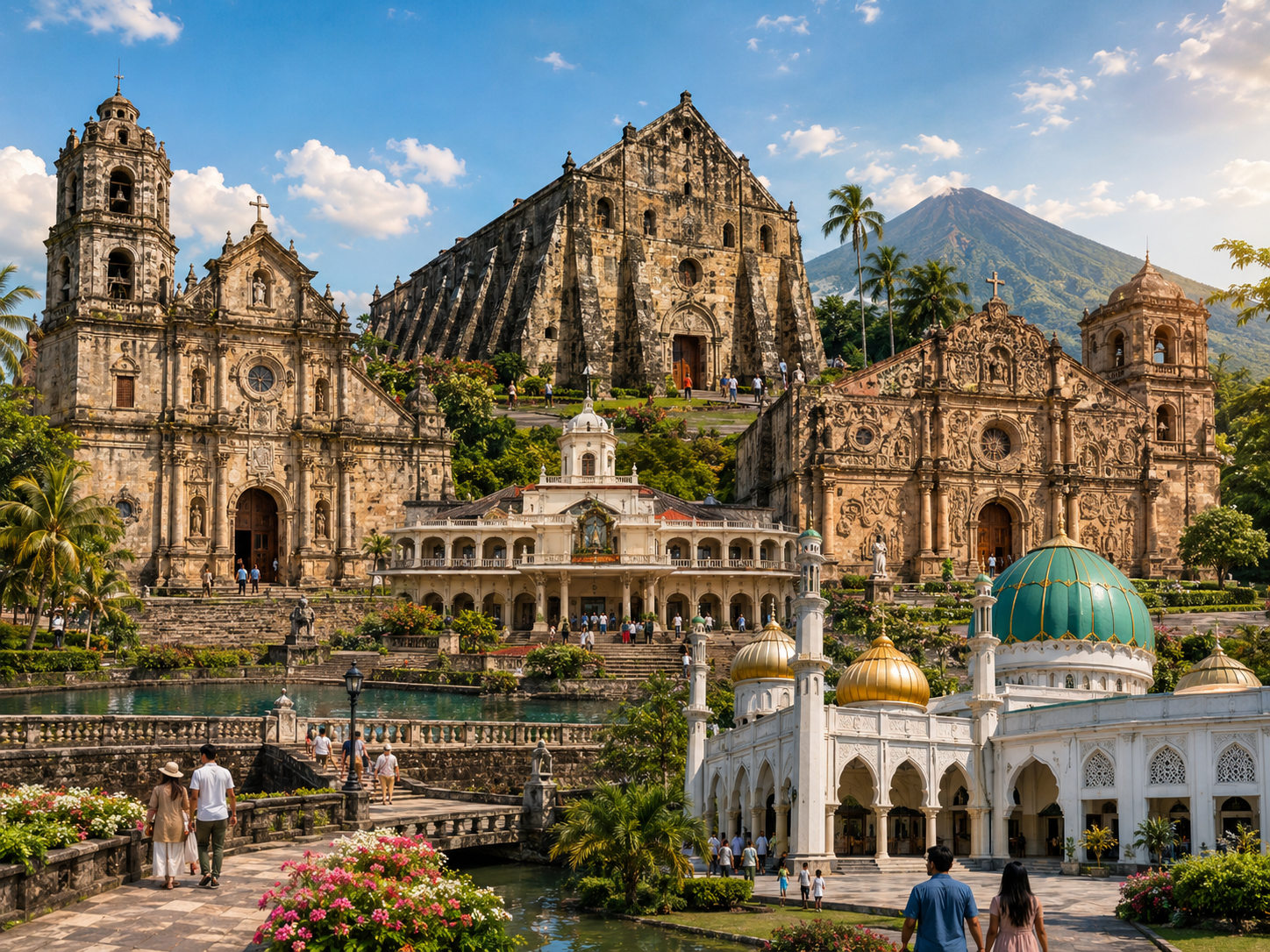
San Agustin Church in Manila is a standout destination for travelers. Established in 1587, it is the country’s oldest stone church and a UNESCO World Heritage Site. Its ornate Baroque architecture, decorative altars, and historical murals make it both a spiritual sanctuary and a cultural treasure. Visitors often marvel at how the church has withstood wars, colonial transformations, and natural disasters while remaining a symbol of Filipino faith.
Another remarkable site is Paoay Church in Ilocos Norte, known for its massive buttresses and Earthquake Baroque design. This 18th-century church demonstrates the innovative adaptation of European architectural styles to local conditions. Its exterior carvings depict biblical stories alongside indigenous motifs, reflecting the blend of imported and native artistic traditions.
In Cebu, the Basilica Minore del Santo Niño continues to serve as a focal point of religious devotion. The church houses the Santo Niño statue, one of the oldest Christian relics in the country, gifted by Magellan during his expedition in 1521. Visitors can witness the annual Sinulog Festival, which combines ritual, dance, and music to celebrate Filipino devotion in a uniquely vibrant and engaging manner.
Miagao Church in Iloilo is another significant site. Its intricate facade features a mix of flora, fauna, and biblical images, illustrating the integration of local craftsmanship with colonial architectural influences. Smaller churches like Miagao offer a more intimate glimpse into community faith practices, emphasizing the cultural and spiritual fabric of provincial Philippines.
Beyond Catholic sites, the Philippines’ Islamic heritage is also prominent, particularly in Mindanao. The Grand Mosque of Cotabato, for instance, showcases intricate Islamic designs and serves as a hub for local Muslim communities. These sites offer travelers a broader perspective of religious life in the Philippines, highlighting the nation’s rich spiritual diversity.
Visiting these historic religious sites allows travelers to witness centuries of devotion, artistry, and community life. Each church and temple tells a story, providing insight into the Philippines’ spiritual history and cultural identity. Religious tourism here is not just about sightseeing—it is an immersive experience that combines heritage, art, and faith into a journey of profound understanding.