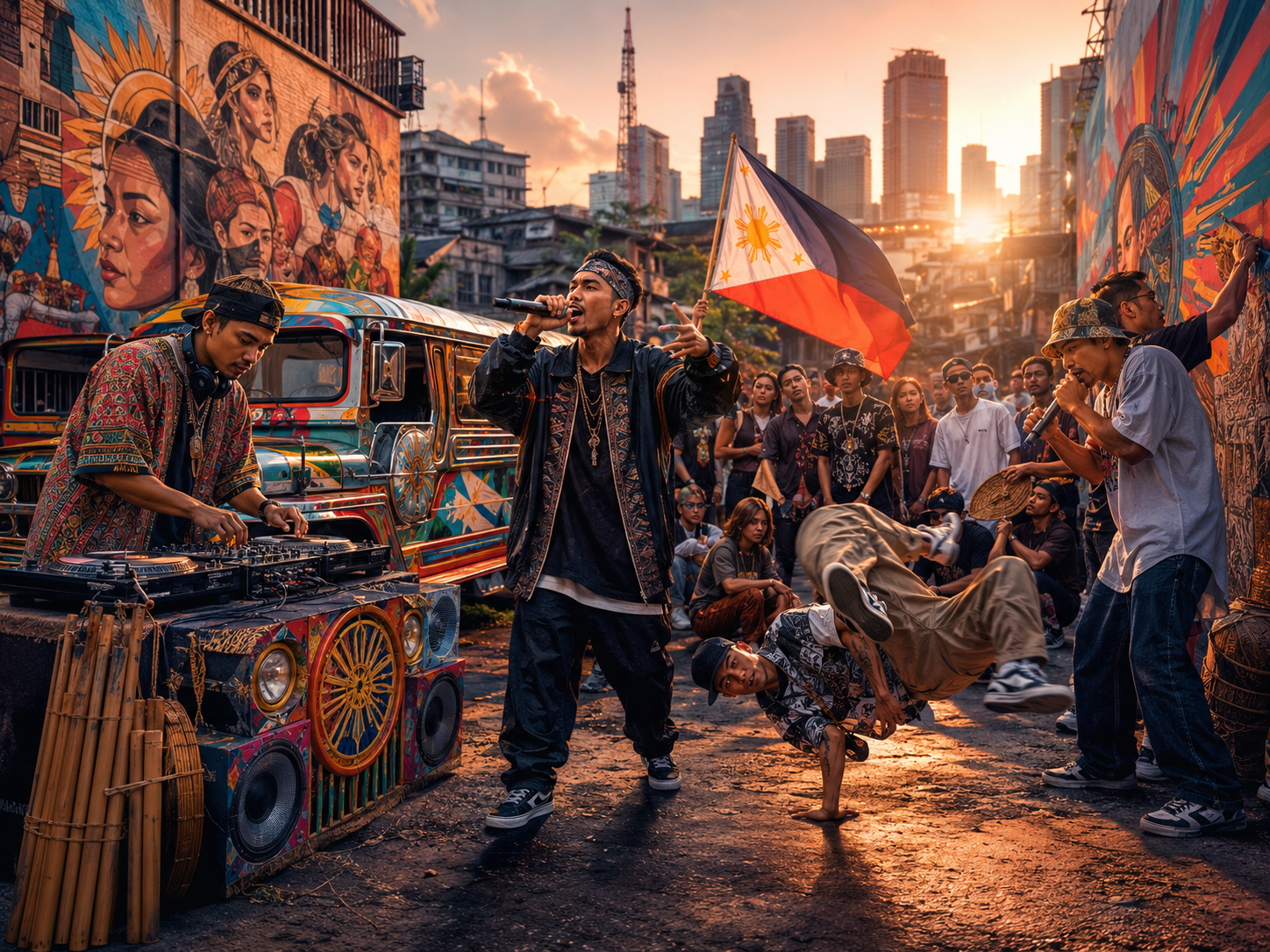
Hip hop’s journey in the Philippines began in the 1980s, when imported music and videos introduced urban youth to a fresh and rebellious sound. Quickly, the genre evolved beyond entertainment, becoming a vital medium for expression, cultural commentary, and musical innovation. Filipino musicians adapted hip hop’s core elements—rapping, DJing, beatboxing, and graffiti—to reflect local experiences and societal realities.
Among the trailblazers of Philippine hip hop, Francis Magalona stands out for his ability to merge social consciousness with catchy beats. His music addressed national pride, identity, and societal challenges, resonating with a generation eager to assert their cultural roots. Similarly, Andrew E. brought humor and accessibility into the mix, making hip hop appealing to mainstream audiences while maintaining street credibility. These pioneers proved that hip hop could carry weighty messages while remaining culturally relevant and entertaining.
One significant aspect of Philippine hip hop is its focus on storytelling. Unlike pop music, which often centers on romance or personal drama, hip hop provides a narrative about societal conditions, urban struggles, and marginalized communities. Through rap lyrics, Filipino artists communicate lived experiences, confront social inequalities, and reflect on political realities. This dimension of hip hop strengthens its cultural resonance and establishes it as a tool for social commentary.
Philippine hip hop also demonstrates linguistic and cultural versatility. Many rappers skillfully switch between English, Tagalog, and regional dialects, creating multilingual tracks that highlight the country’s diversity. Beyond music, hip hop influences fashion, dance, and street art, cultivating a comprehensive urban culture that is both visual and performative. This fusion of music and lifestyle underscores the genre’s broader cultural significance.
Musically, Filipino hip hop is known for innovation. Artists combine modern production techniques with traditional instruments, indigenous rhythms, and local musical motifs. Collaborations with pop, rock, or electronic artists have expanded the genre’s reach and reinforced its influence on the broader Philippine music scene. Such experimentation showcases hip hop’s adaptability and its role as a catalyst for creative fusion.
With the rise of digital platforms, Philippine hip hop has gained unprecedented visibility. Social media and streaming services enable artists from various regions to share their music and grow fanbases beyond urban centers. Festivals, rap battles, and competitions continue to foster community and encourage experimentation, nurturing new talent and sustaining the genre’s momentum.
Hip hop in the Philippines now stands as a symbol of cultural resilience, creativity, and social engagement. It empowers youth, provides a platform for expression, and bridges global musical trends with local narratives. Filipino hip hop has become an integral part of the national soundscape, continuously shaping and redefining contemporary music in the country.