
Plant-forward Filipino food is gaining attention because it offers something many modern diners want: recognizable comfort food made with more vegetables and fewer animal products.
The movement does not require Filipino cooks to abandon tradition. Many regional recipes already depend on coconut milk, legumes, tropical vegetables, vinegar, garlic, and rice. What is changing is the way chefs and home cooks handle ingredients such as pork broth, fish sauce, shrimp paste, and processed meat.
Traditional Food Provides the Foundation
Before imported meat products and restaurant-style excess became widely associated with Filipino celebrations, many daily meals depended heavily on seasonal produce.
Mung bean stews stretched affordable ingredients across a household. Coconut milk enriched taro leaves, squash, banana blossoms, and jackfruit. Eggplant was grilled, fried, mixed into salads, or cooked in vinegar-based sauces.
These practices remain relevant for people seeking meals that are economical, flavorful, and centered on locally available crops.
How Classic Dishes Are Being Adapted
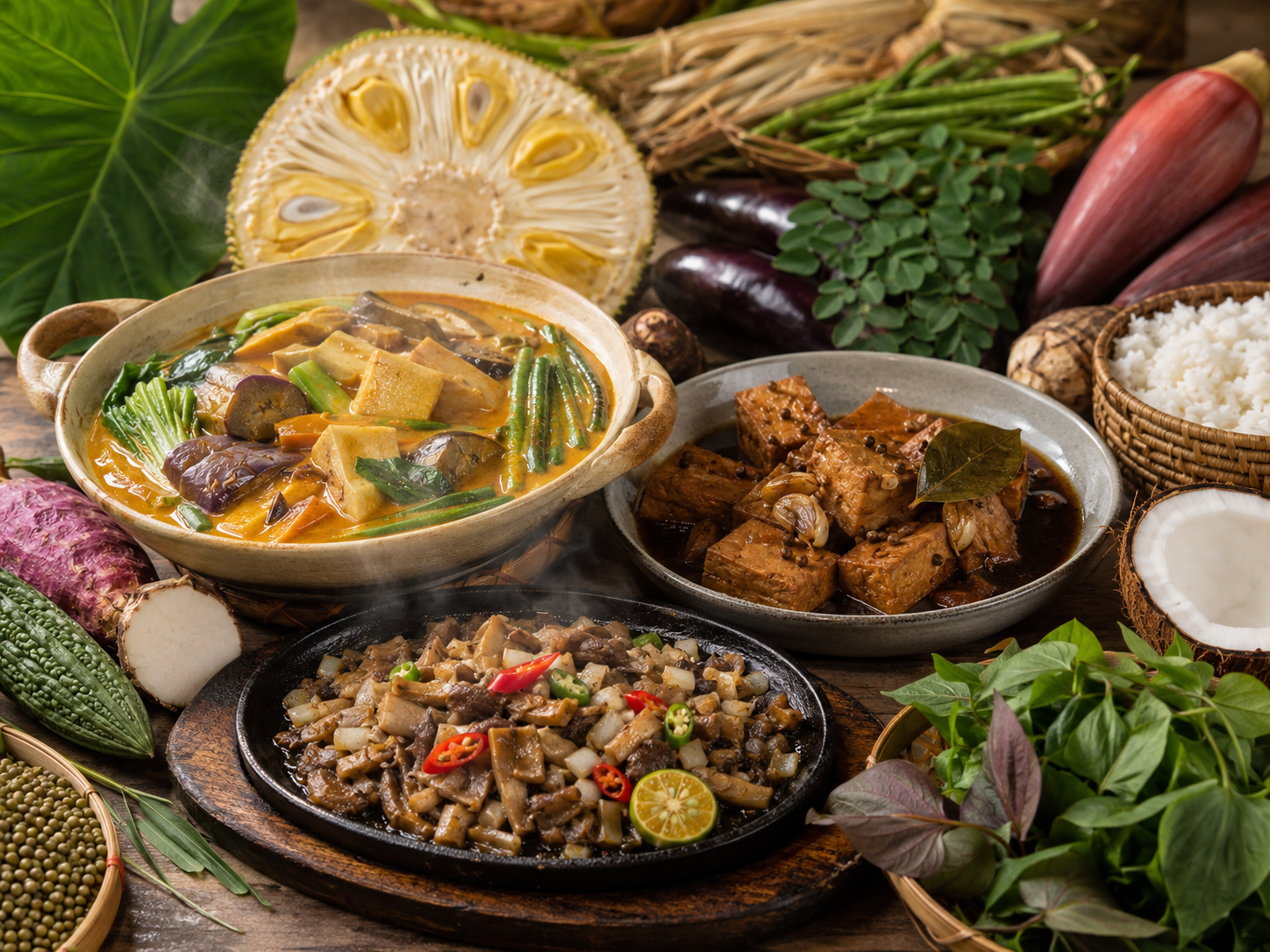
Mushroom Sisig
Traditional sisig is closely linked with chopped pork and sizzling presentation. Modern plant-based versions use oyster mushrooms, tofu, or a combination of both.
The success of mushroom sisig depends on texture. Mushrooms should be browned rather than steamed, while calamansi, onions, chilies, and black pepper preserve the dish’s sharp and savory identity.
Tofu Adobo
Adobo can be prepared with tofu, eggplant, mushrooms, potatoes, or water spinach. Vinegar, garlic, soy sauce, bay leaves, and pepper remain the defining elements.
Firm tofu works particularly well because it absorbs the sauce while maintaining its shape. Frying or baking the tofu before simmering gives the dish a more satisfying texture.
Vegan Kare-Kare
Kare-kare is a thick peanut stew traditionally served with meat and fermented shrimp paste. Plant-based versions can feature eggplant, string beans, banana blossom, bok choy, mushrooms, and tofu.
The most important adjustment is the condiment. Standard bagoong is not vegetarian. A substitute made with fermented soybeans, mushrooms, seaweed, or salted black beans can provide a similar savory contrast.
Why Clear Labeling Matters
A dish labeled “vegetable” is not automatically vegetarian. This remains one of the most important issues in Filipino dining.
Restaurants can improve trust by identifying fish sauce, shrimp paste, oyster sauce, eggs, dairy, and meat-based stock directly on the menu. Separate labels for vegetarian and vegan dishes are also more useful than placing every meat-free option in a general “healthy” category.
This is particularly relevant as restaurants serve a wider mix of local diners, international visitors, people with seafood allergies, and customers following religious or ethical dietary restrictions.
Local Produce Creates a Stronger Identity
Plant-forward Filipino cuisine is most convincing when it uses ingredients connected to the country’s agricultural landscape. Taro leaves, coconut, jackfruit, bitter melon, moringa, eggplant, banana blossom, cassava, sweet potato leaves, and mung beans provide a more distinctive experience than imported meat substitutes alone.
The Food and Agriculture Organization’s overview of Philippine dietary guidelines emphasizes variety across food groups and supports the broader value of balanced meals. The reference is available on the FAO Food-Based Dietary Guidelines for the Philippines.
For chefs, the strongest opportunity is not simply to remove meat. It is to rebuild flavor through browning, fermentation, acidity, coconut richness, fresh herbs, and regional vegetables.
For diners, this approach creates meals that feel unmistakably Filipino while responding to contemporary interest in vegetable-centered eating. A well-made tofu adobo, mushroom sisig, or vegan kare-kare should not taste like a compromise. It should stand confidently beside the original as a carefully developed dish in its own right.