

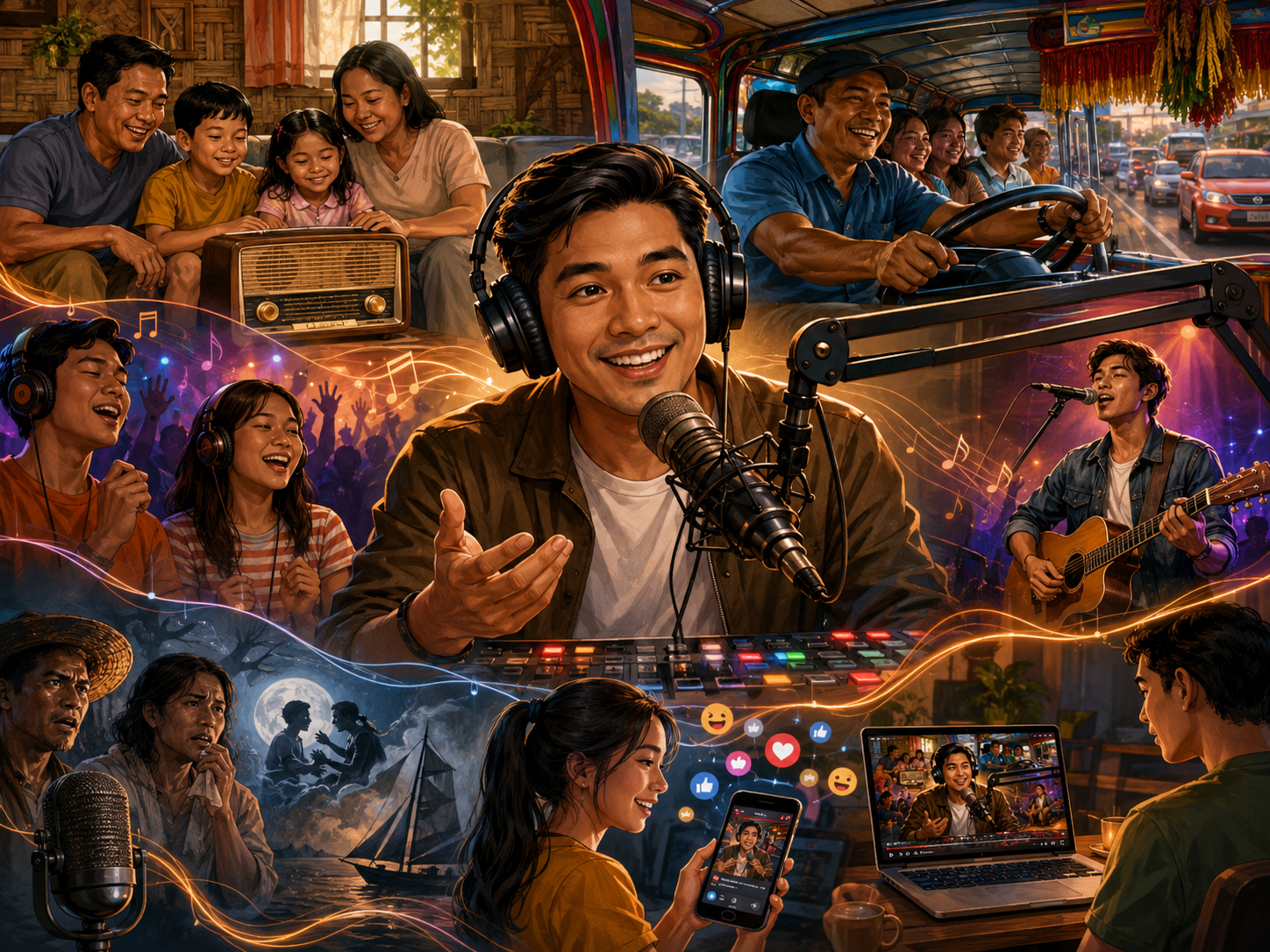
Radio continues to be an important force in Philippine entertainment because it combines reach, personality, culture, and accessibility. While many people now use smartphones, streaming platforms, and social media for entertainment, radio still maintains a strong audience. Its long history and ability to adapt have allowed it to remain relevant in a fast-changing media environment.
In the Philippines, radio became a common household medium because it was practical and affordable. Families could listen together at home, workers could tune in during breaks, and drivers could enjoy programs while on the road. This made radio part of daily life rather than a special activity. Entertainment through radio was not limited to one place or one social class. It could travel with people and fit into their routines.
Music is one of the main reasons Filipinos listen to radio. Stations introduce audiences to love songs, dance tracks, rock anthems, novelty songs, religious music, and regional hits. They also help promote Filipino artists by giving their work exposure. For many listeners, radio is where they first hear a song that later becomes popular. DJs influence music culture by choosing playlists, presenting countdowns, and responding to listener requests.
Radio has also been important in developing Filipino storytelling. Radio dramas gave audiences emotional and suspenseful narratives long before television series became widely available. These dramas used expressive voices and creative sound design to build scenes. A listener could hear a crying child, a closing door, a storm, or dramatic music and immediately imagine the setting. This format proved that entertainment does not always need visuals to be powerful.
Another major feature of Philippine radio entertainment is the strong personality of hosts. DJs and announcers are not only presenters; they are entertainers. They tell jokes, give advice, react to messages, interview guests, and create a lively atmosphere. Their speaking style often reflects Filipino warmth, humor, and conversational energy. Because listeners hear them regularly, they become familiar and trusted voices.
Radio also provides a space for audience participation. Song requests, dedications, contests, greetings, and opinion segments make listeners feel involved. This interaction creates a sense of community. A person listening alone may still feel connected to thousands of others who are tuned in at the same time. This shared experience is one of radio’s unique strengths.
The entertainment industry benefits from radio promotion. Movies, concerts, albums, television programs, festivals, and public events are often advertised or discussed on air. Celebrities use radio interviews to reach fans in a direct and informal way. These appearances help build excitement and strengthen fan engagement.
Even in the digital age, radio has found new ways to survive. Many Philippine stations now offer online livestreams, social media updates, podcasts, and video clips of studio interviews. This allows radio content to move beyond traditional airwaves. Filipinos overseas can listen from other countries, keeping them connected to local language, music, humor, and culture.