Western fashion is now deeply present in the everyday clothing choices of many Filipinos. From school campuses and offices to malls, weddings, pageants, and online fashion spaces, Western-inspired clothing has become part of ordinary life in the Philippines. This influence is the result of history, media, globalization, migration, and consumer culture. Yet Filipino fashion remains unique because Western styles are constantly adjusted to local climate, values, and identity.
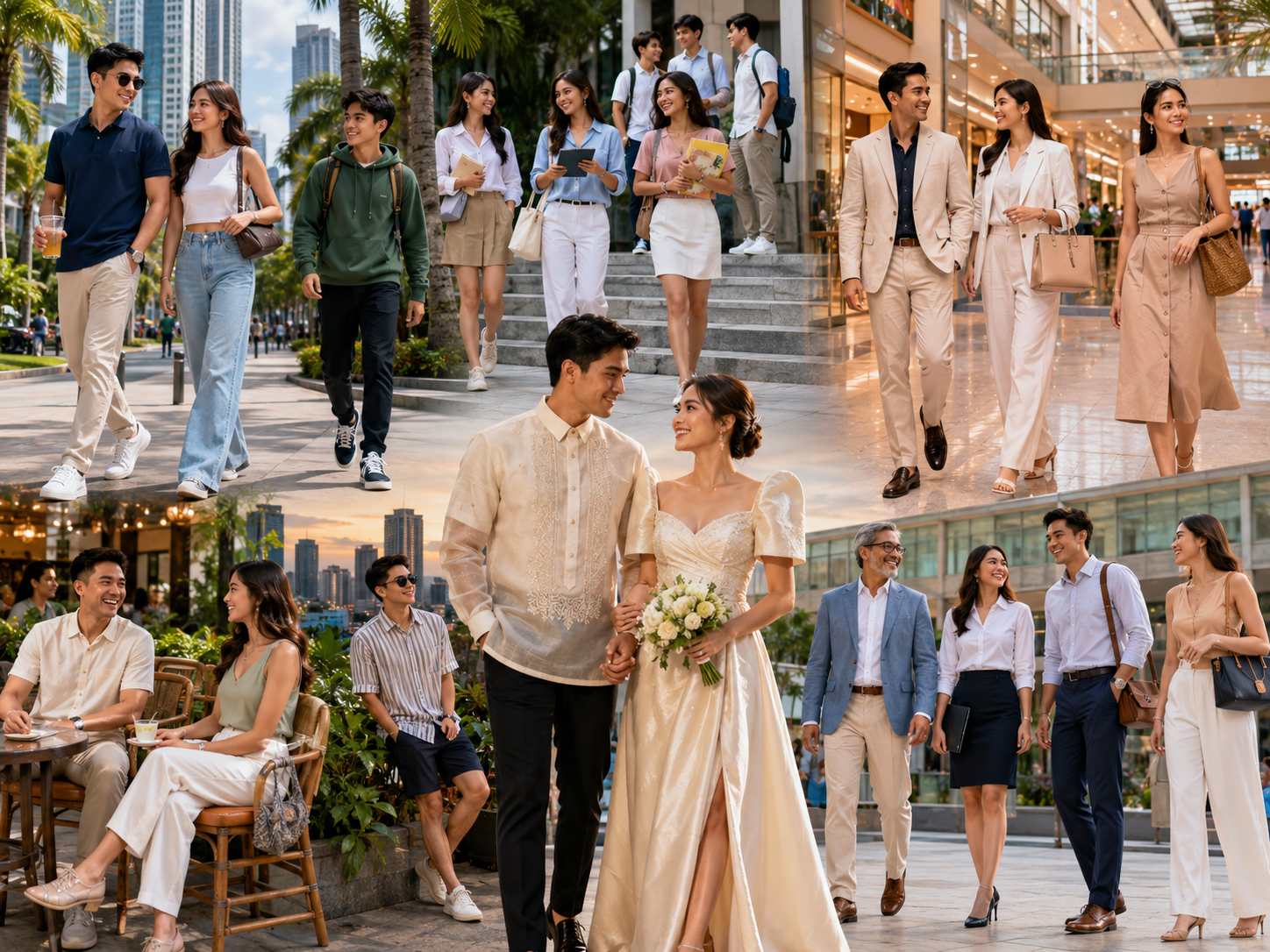
In daily life, the most visible Western influence appears in casual clothing. Jeans, T-shirts, sneakers, hoodies, polo shirts, jackets, and dresses are common among Filipinos of different ages. These garments are practical, widely available, and easy to combine with other pieces. Denim, in particular, became popular because of American influence and remains a staple in Filipino wardrobes. Even though the Philippines has a tropical climate, many people still wear Western-inspired outfits because they are associated with comfort, youthfulness, and global style.
Workplace fashion also shows strong Western influence. In offices, banks, hotels, schools, and government institutions, professional clothing often follows Western standards. Men commonly wear collared shirts, slacks, blazers, and leather shoes. Women wear blouses, skirts, trousers, blazers, dresses, and heels. These styles communicate professionalism and discipline. However, Filipino workers often adapt them by choosing lighter fabrics, short sleeves, or less layered outfits due to heat and humidity.
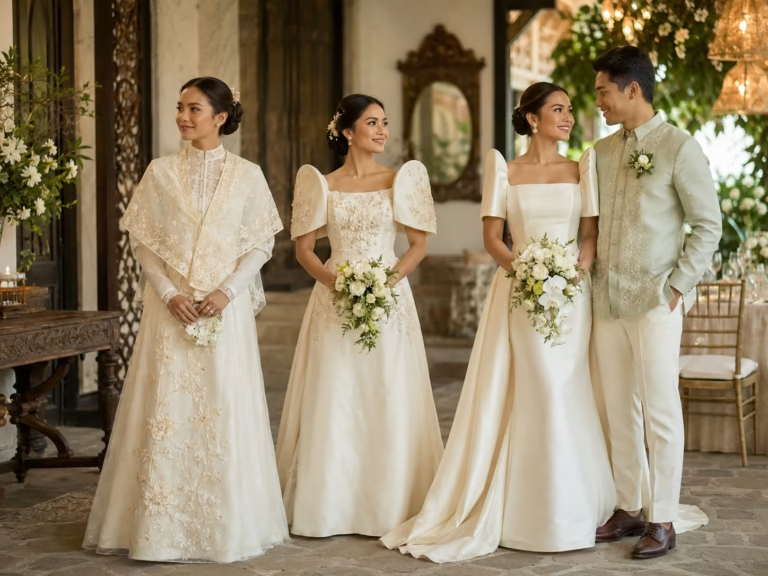
Formal events reveal another major area of influence. Filipino weddings, debuts, graduations, and pageants often feature Western-style gowns, tuxedos, cocktail dresses, and suits. Bridal fashion in the Philippines is especially influenced by Western designs such as white gowns, veils, lace, trains, and fitted silhouettes. At the same time, many couples incorporate Filipino elements, such as barong Tagalog for men or modern ternos for women. This mixture shows how Western fashion can coexist with local tradition.
Media and technology have increased the speed of fashion influence. Social media platforms allow Filipino consumers to follow global celebrities, fashion influencers, luxury brands, and streetwear trends. A style seen in Los Angeles, London, or Paris can quickly appear in Manila, Cebu, Davao, and other cities. Online shopping also makes Western-inspired clothing more accessible. Young Filipinos often use fashion to express individuality, confidence, and connection to global youth culture.
Western fashion has also shaped beauty standards. Slim silhouettes, branded clothing, minimalist aesthetics, athleisure, and luxury accessories are often promoted through advertising and social media. This can create pressure to follow foreign trends, especially among young consumers. However, many Filipino fashion communities are also becoming more aware of cultural pride, body diversity, sustainability, and ethical production.
One important Filipino response to Western fashion is adaptation. Because the Philippines is hot and humid, heavy coats, thick fabrics, and layered outfits are often impractical. Filipinos reinterpret Western looks using breathable materials, relaxed fits, sandals, short sleeves, and lighter colors. This practical creativity makes foreign fashion more suitable for local life.
Contemporary Filipino fashion is therefore not a simple copy of Western style. It is a living blend of global influence and local experience. Western fashion provides many forms, from streetwear to formalwear, but Filipino culture gives these forms new meaning. Through adaptation, Filipinos turn outside influence into personal, social, and national expression.