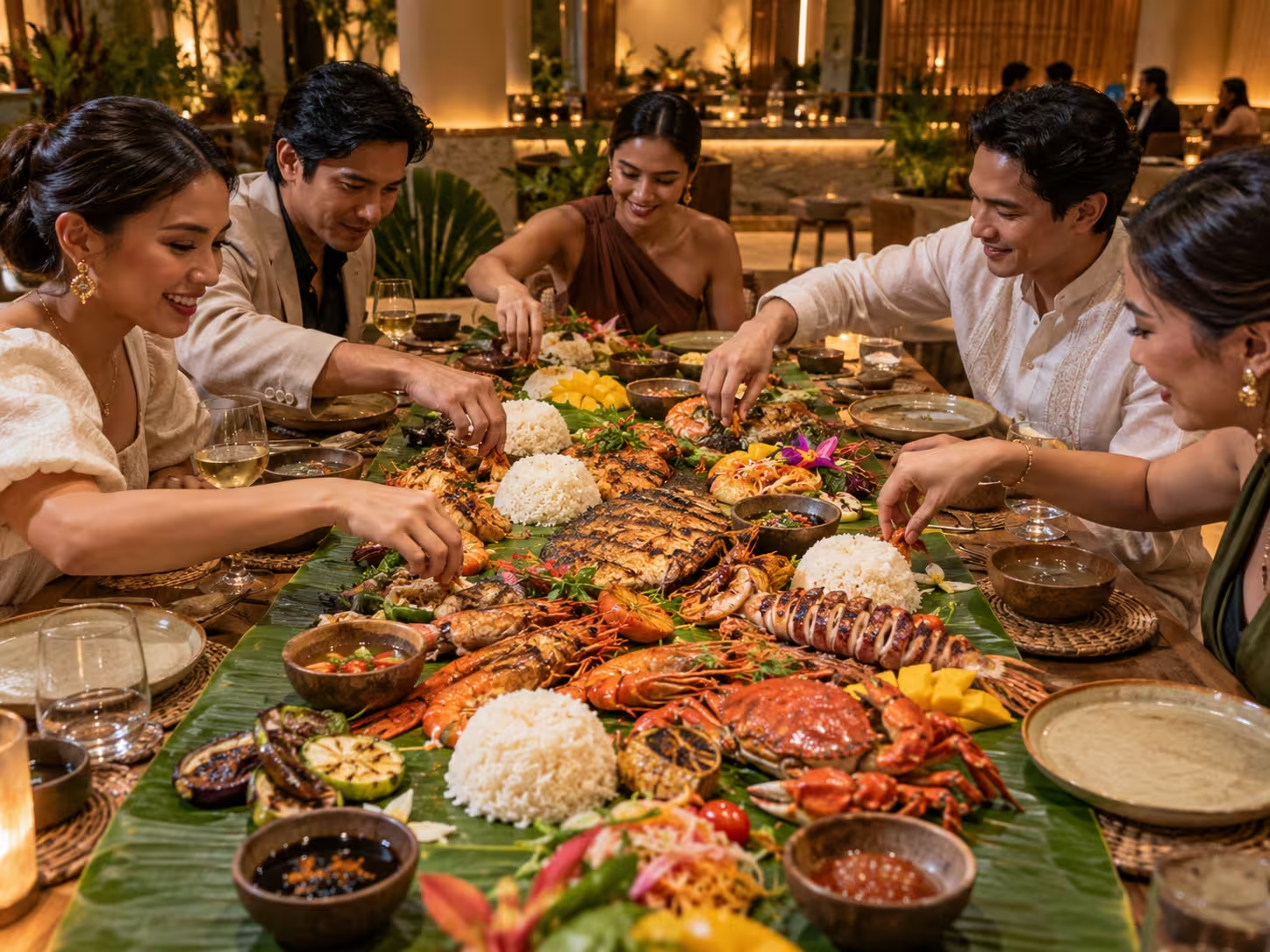
Filipino weddings are colorful, emotional, and deeply family-centered. One of the most memorable parts of these celebrations is the food. A wedding feast in the Philippines is not chosen randomly; many dishes are connected to cultural values, family history, and traditional wishes for the couple. Through food, families express generosity, respect, happiness, and the hope that the marriage will be blessed with stability and abundance.
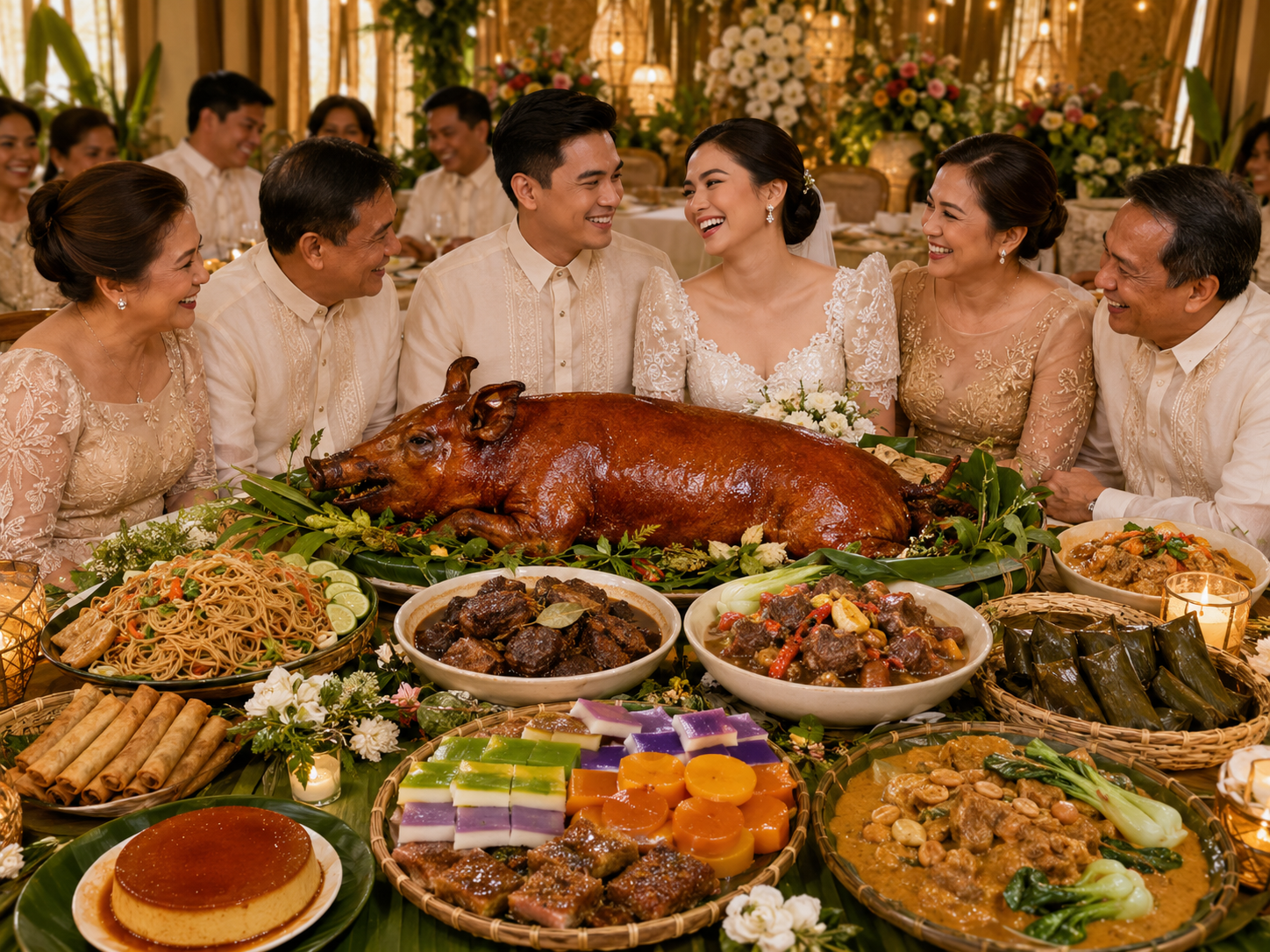
Lechon is often the star of a Filipino wedding banquet. This whole roasted pig is famous for its crispy skin and flavorful meat. In many Filipino gatherings, lechon signals that the occasion is important. At a wedding, it represents prosperity and the family’s desire to share their blessings with guests. Because lechon is large and visually impressive, it also becomes a symbol of celebration. Its place at the center of the table shows how much Filipinos value hospitality.
Pancit is another essential dish because of its symbolic meaning. Filipino families commonly associate noodles with long life. When served at weddings, pancit becomes a wish for a lasting and harmonious marriage. The dish may be prepared in different styles, including Pancit Canton, Pancit Bihon, Pancit Palabok, or Pancit Malabon. These variations may differ in ingredients and sauce, but all of them carry the same general message of continuity and good fortune.
Adobo is frequently served because it represents the heart of Filipino cooking. It is usually prepared with chicken, pork, or a combination of both, cooked slowly in vinegar, soy sauce, garlic, bay leaves, and pepper. The taste is bold, savory, and comforting. At weddings, adobo adds a homestyle element to the menu. It reminds guests that marriage is not only about ceremony and elegance, but also about shared meals, patience, and daily partnership.
Several other dishes are commonly found at Filipino wedding receptions. Lumpia, or fried spring rolls, is popular as an appetizer because it is crisp, flavorful, and easy to serve. Kare-kare, a rich peanut stew, brings a traditional taste that many families enjoy during special gatherings. Caldereta, menudo, morcon, embutido, and chicken pastel may also be included, especially when the family wants a varied and festive menu. These dishes show the influence of Spanish, Chinese, Malay, and local Filipino culinary traditions.
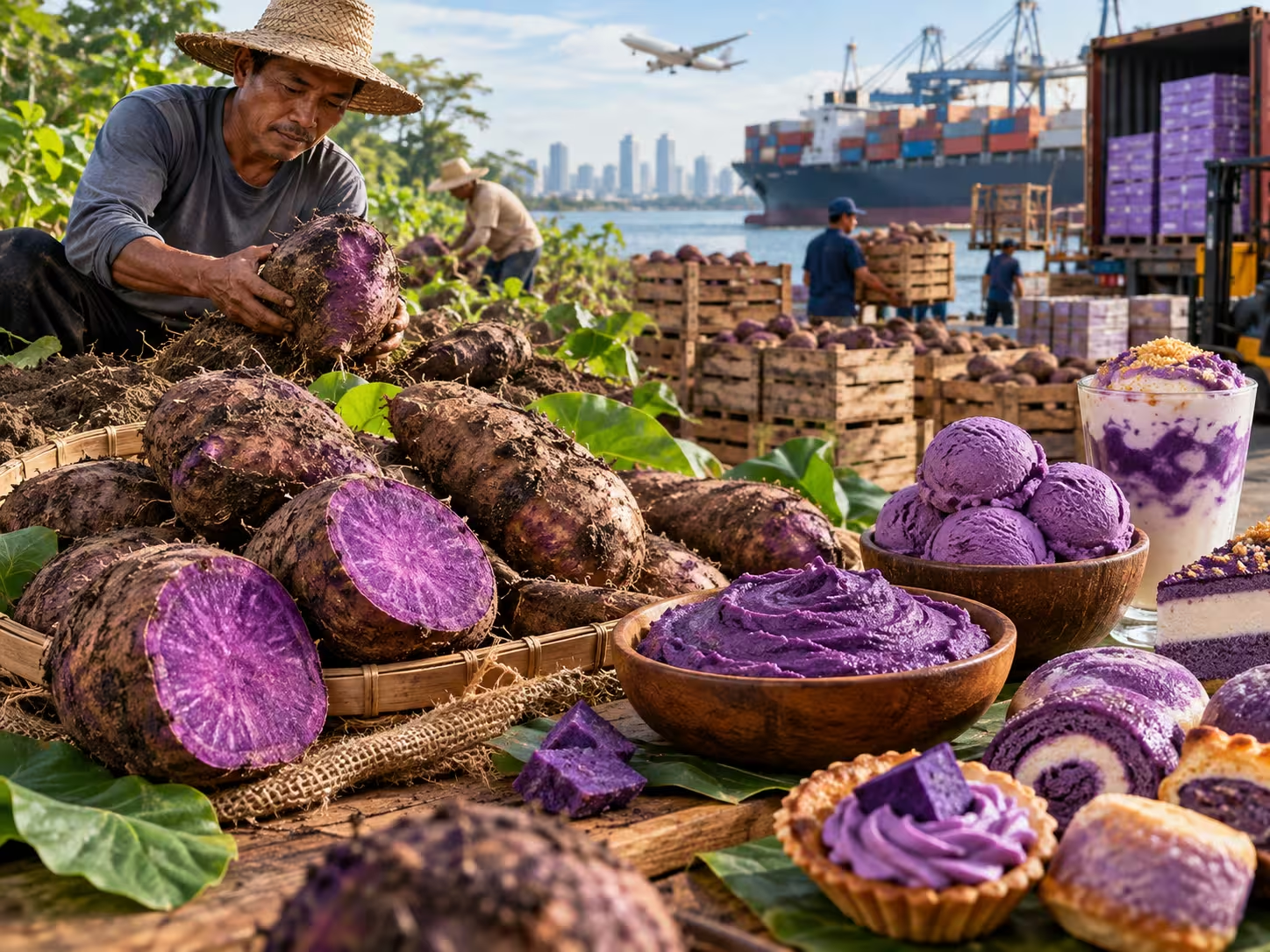
Desserts are equally meaningful. Filipino celebrations often include leche flan, a creamy caramel custard that adds sweetness to the meal. Kakanin, or native rice delicacies, is also important. Biko, sapin-sapin, puto, kutsinta, and suman are examples of rice-based treats commonly enjoyed during special occasions. Their sticky texture can symbolize unity, while their sweetness reflects the wish for a pleasant married life. In some weddings, these desserts are arranged beautifully beside modern cakes and pastries, blending tradition with contemporary style.
The importance of food begins even before the wedding day. During pamamanhikan, the groom’s family formally visits the bride’s family to discuss marriage plans. Food is often served to make the meeting warm and respectful. At the reception, the wedding meal allows both families to welcome guests and celebrate their new relationship. Whether the event is simple or luxurious, traditional Filipino wedding food remains a powerful expression of love, family connection, and cultural pride.