

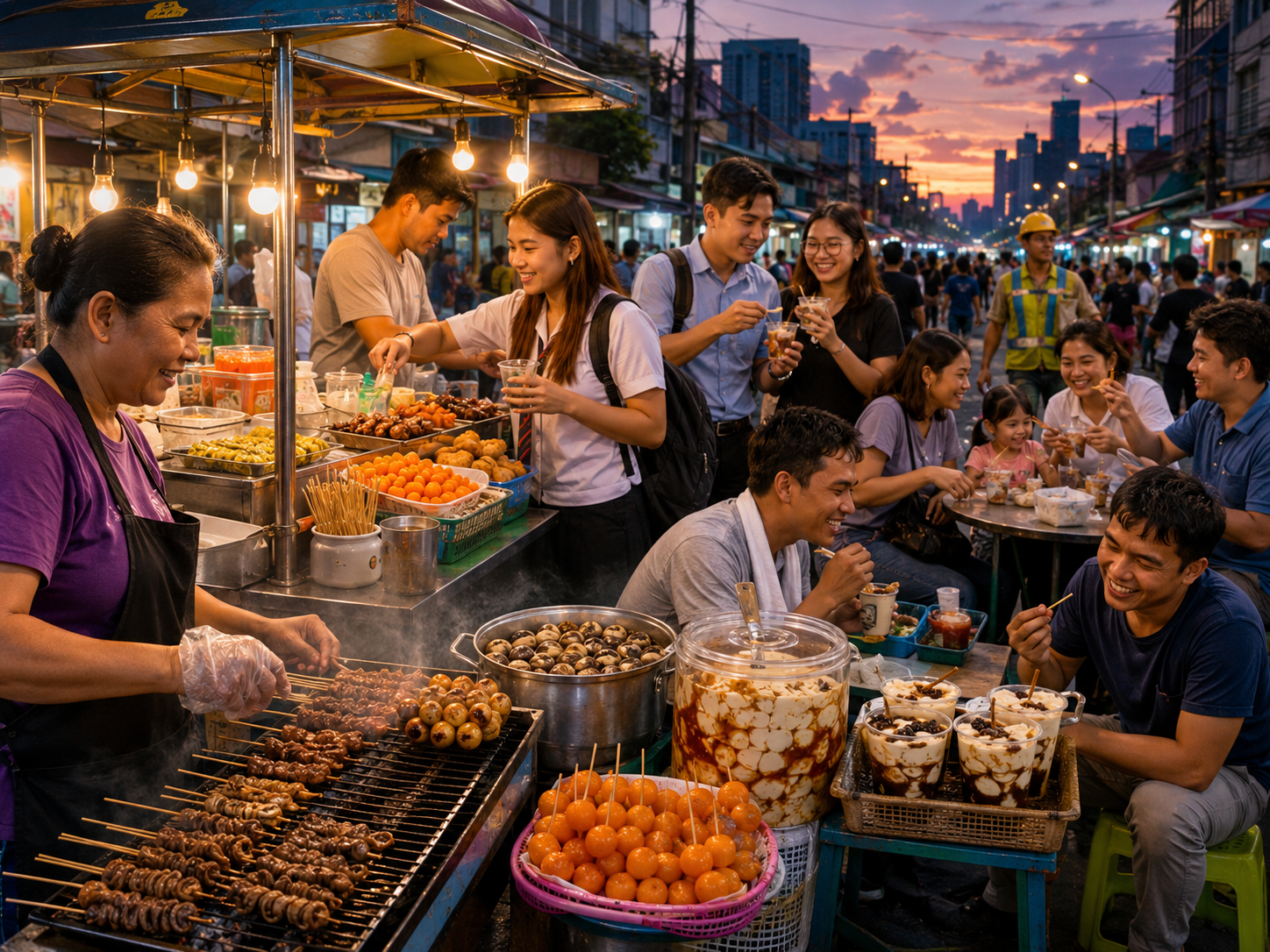
In the Philippines, street food is more than just a quick meal; it is a vibrant reflection of the nation’s culture, history, and social habits. Across bustling cities and tranquil provinces, street vendors can be found on almost every corner, offering a diverse array of snacks and dishes that cater to all tastes. From savory treats like isaw (grilled chicken intestines) and balut (fertilized duck egg) to sweet delicacies such as taho (silken tofu with syrup and pearls), street food serves as a culinary bridge connecting people from different walks of life.
One of the most significant roles of street food in Filipino society is its accessibility. For students, office workers, and laborers, it provides a convenient and affordable way to satisfy hunger between meals. Street vendors often position themselves near schools, transportation hubs, and commercial areas, ensuring that a wide range of individuals can enjoy their offerings. This accessibility also supports local economies by providing income to vendors, many of whom rely on daily sales for their livelihood.
Beyond convenience, street food plays a cultural role in everyday life. Filipino street foods are often tied to local traditions and festivals, reflecting regional flavors and cooking styles. For instance, in Cebu, vendors sell chicharon bulaklak (fried pork intestines) as a popular snack during town fiestas, while in Manila, kwek-kwek (quail eggs in orange batter) has become an iconic urban treat. These foods not only satisfy appetites but also connect generations, with recipes often passed down from parents to children, preserving culinary heritage.
Street food also serves as a social platform, fostering interaction among people. Food stalls are often gathering points where friends meet after school, office workers grab lunch, or families enjoy a casual evening snack. The informal and communal nature of street dining creates a sense of camaraderie and belonging, reinforcing the social fabric of communities. In this way, street food is not only nourishment for the body but also nourishment for social connections.
Health and hygiene have become increasingly important concerns in recent years. While traditional street food practices have faced scrutiny, many vendors have adapted by implementing safer cooking methods, maintaining cleaner setups, and adhering to basic food safety standards. Local governments have also initiated programs to educate vendors about proper hygiene practices, aiming to ensure that the consumption of street food remains safe and sustainable.
The diversity of Filipino street food also highlights the creativity and resourcefulness of local culinary culture. Vendors often innovate, blending traditional recipes with modern flavors to cater to evolving tastes. This adaptability ensures that street food remains relevant, appealing to both younger generations and tourists eager to experience authentic local cuisine.
Ultimately, street food in the Philippines embodies much more than its immediate role as a snack or meal. It functions as an economic lifeline for vendors, a cultural ambassador for regional culinary heritage, and a social catalyst for community interactions. Its continued presence in daily life underscores its enduring significance in shaping Filipino identity and lifestyle.