The Chinese contribution to Philippine cuisine is not merely a historical legacy preserved in old restaurants. It continues to influence how Filipinos eat, celebrate, operate food businesses, and present national cuisine to new audiences.
In the modern food landscape, Chinese-Filipino cuisine connects several worlds. It links family recipes with commercial restaurants, traditional markets with delivery platforms, and Binondo’s historic establishments with younger consumers discovering heritage food through social media.
Chinoy Cuisine as a Distinct Cultural Category
The term “Chinoy,” combining Chinese and Pinoy, is commonly associated with Chinese Filipinos and their hybrid cultural identity. Chinoy cuisine reflects this blended experience.
A traditional Chinese dish may be adjusted according to Filipino preferences, religious practices, available ingredients, or family history. The result can differ considerably from food served in mainland China, yet it still preserves Chinese techniques and symbolic meanings.
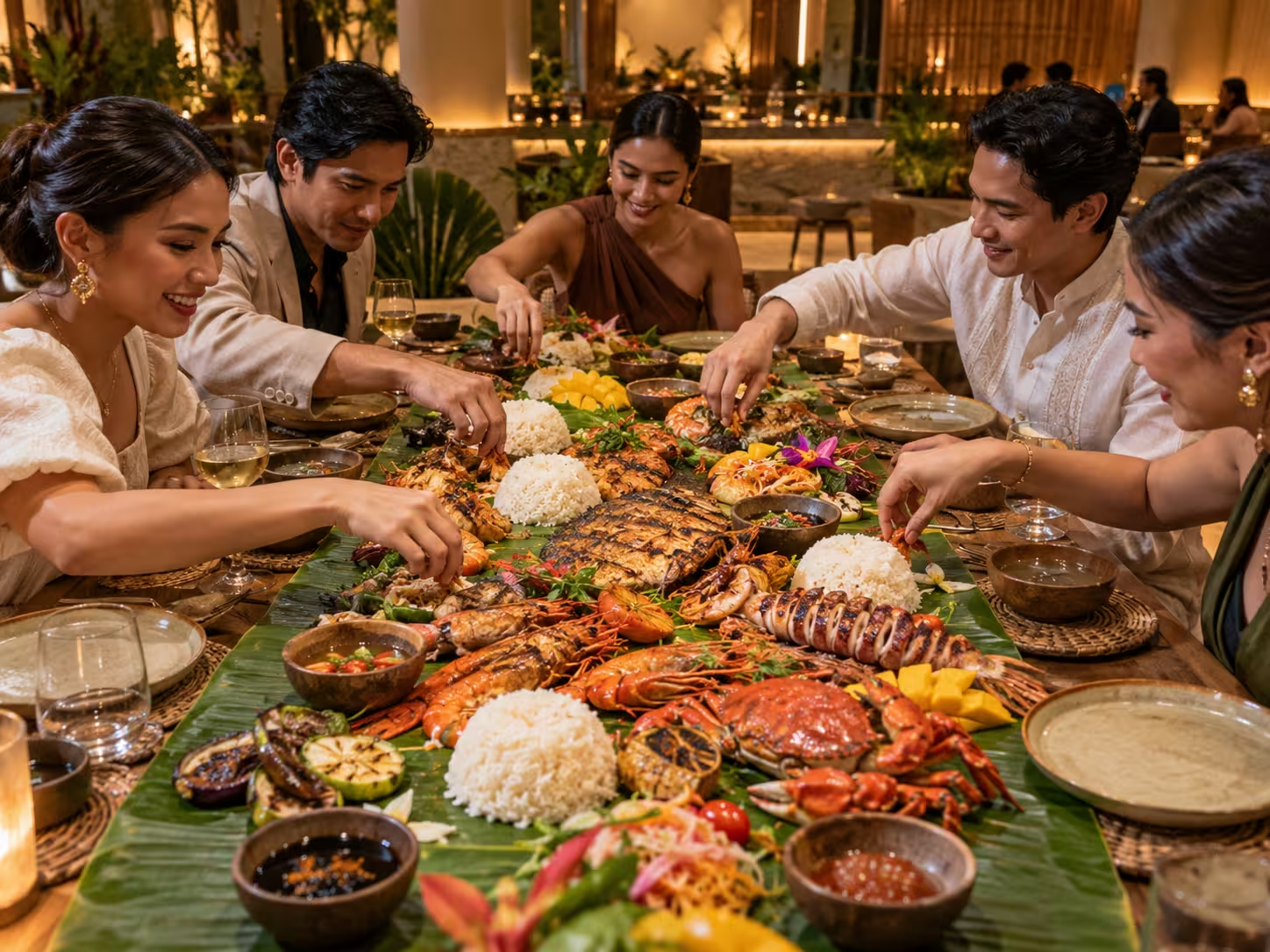
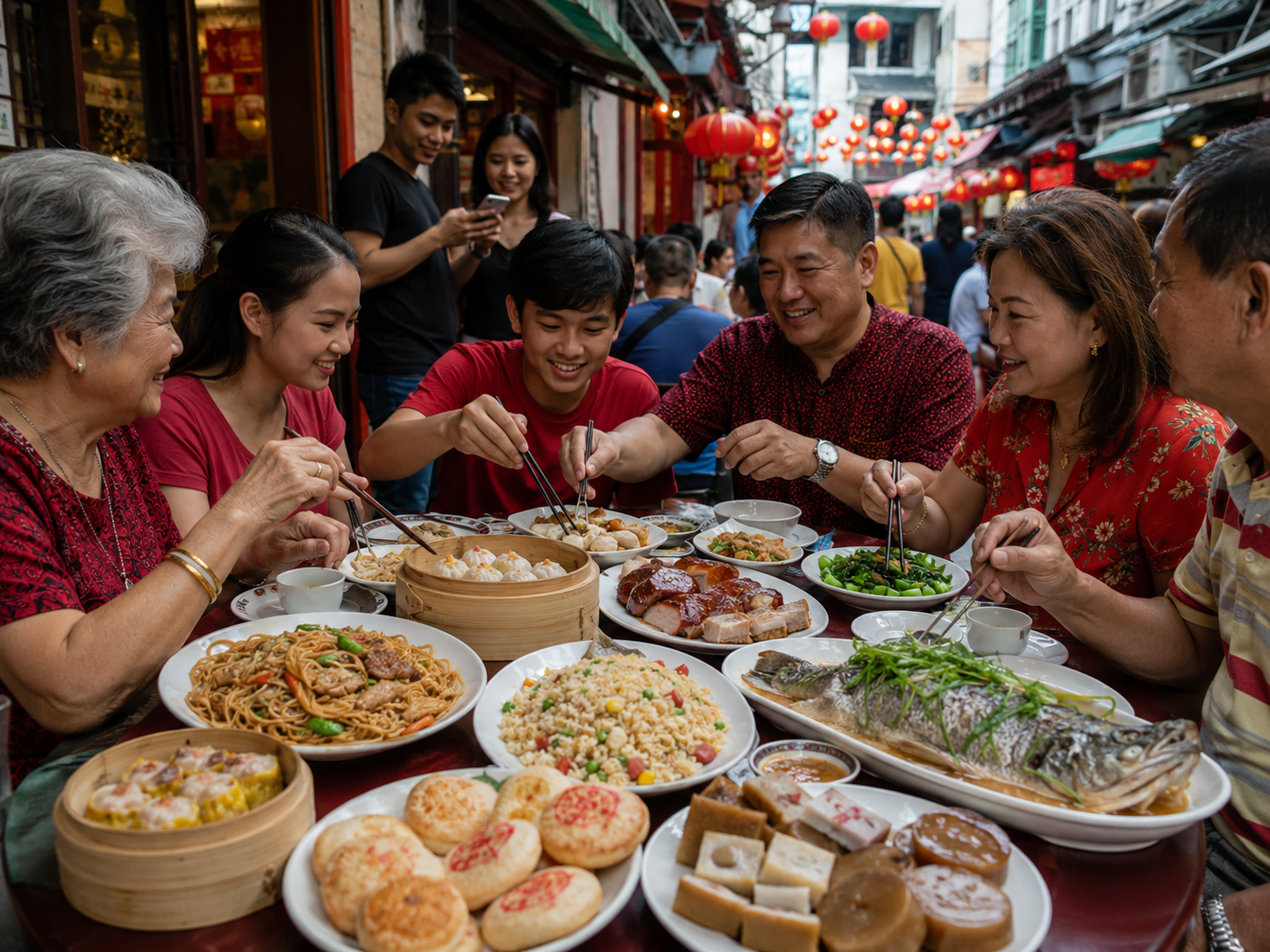
Chinese-style roast meats, noodle dishes, dumplings, fried rice, steamed fish, and vegetable preparations appear in both Chinese-Filipino households and mainstream Filipino restaurants. Soy sauce, sesame oil, tofu, dried mushrooms, and fermented ingredients have also become familiar components of the wider Philippine pantry.
Family Restaurants Preserve Migration Stories
Many Filipino-Chinese food businesses began as small family operations. Recipes, supplier relationships, and cooking responsibilities were passed from one generation to another.
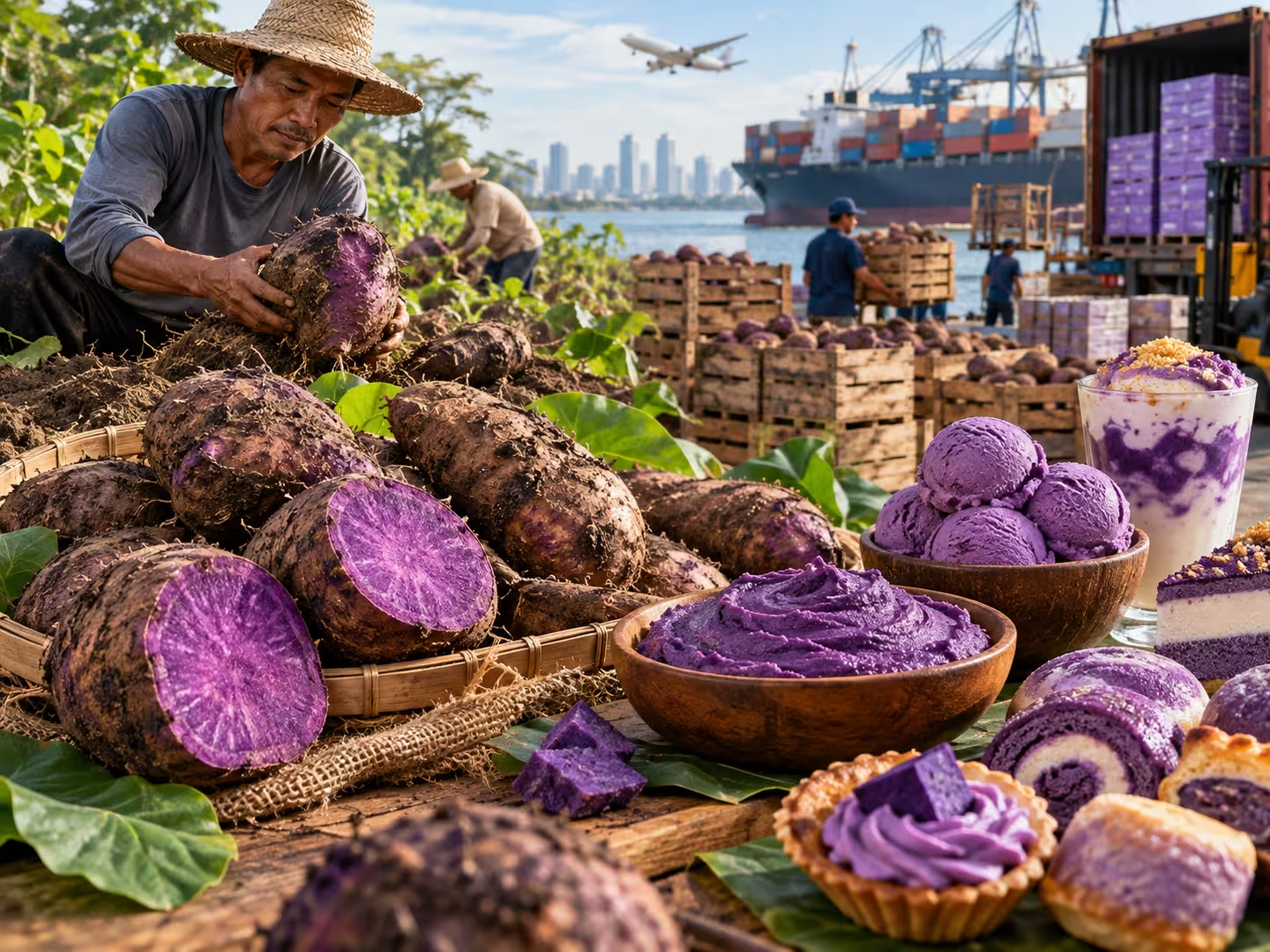
These restaurants often tell stories that formal historical records overlook. A noodle recipe may document a family’s Fujianese background, while a bakery’s hopia filling may reveal how Chinese pastry techniques were adapted to Philippine mung beans, purple yam, or local sweetness preferences.
Binondo remains the most visible center of this heritage. Its food establishments attract residents, domestic travelers, international tourists, and content creators searching for dumplings, fresh lumpia, noodles, hopia, and traditional herbal products.
Digital Discovery Is Changing Heritage Tourism
In the mid-2020s, digital platforms have given historic food districts a new kind of visibility. Diners frequently plan Binondo food crawls through maps, restaurant reviews, short-form videos, and creator recommendations.
This attention can support small businesses and introduce younger consumers to traditional dishes. It can also create challenges. Viral popularity may produce long queues, encourage restaurants to simplify menus, or reduce complex culinary histories to a list of photogenic foods.
Professional food reporting therefore has an important role. Coverage should explain who created the dishes, how recipes changed, and why particular businesses matter to their communities.
Lunar New Year Food Enters Mainstream Commerce
Lunar New Year provides another example of Chinese-Filipino food entering mainstream culture. Tikoy, a sticky rice cake associated with unity and prosperity, is now promoted by bakeries, supermarkets, hotels, and online sellers beyond traditional Chinese neighborhoods.
Noodles, dumplings, oranges, and whole fish are also marketed through their symbolic associations with longevity, wealth, good fortune, and abundance. These practices show how Chinese cultural traditions have become commercially and socially visible to the wider Filipino public.
Britannica’s overview of Philippine cultural life places this exchange within the country’s broader history of Asian and Western interaction. The source provides useful context for understanding why hybrid cuisines play such a central role in Filipino identity: Britannica – Philippines: Cultural Life.
The Future of Chinese-Filipino Food
The next phase of Chinese-Filipino cuisine will likely balance preservation with reinvention. Younger chefs are revisiting family recipes, improving ingredient sourcing, modernizing restaurant design, and documenting food histories online.
At the same time, affordable siomai stalls, neighborhood panciterias, bakeries, and family dining rooms continue to carry the tradition forward. This combination of heritage and accessibility explains why Chinese influence remains unusually powerful.
Chinese-Filipino cuisine endures because it is not treated as a museum artifact. It changes alongside the people who cook and eat it, allowing centuries-old migration stories to remain active in contemporary Philippine life.