
The Real Story Behind Filipino Flavor
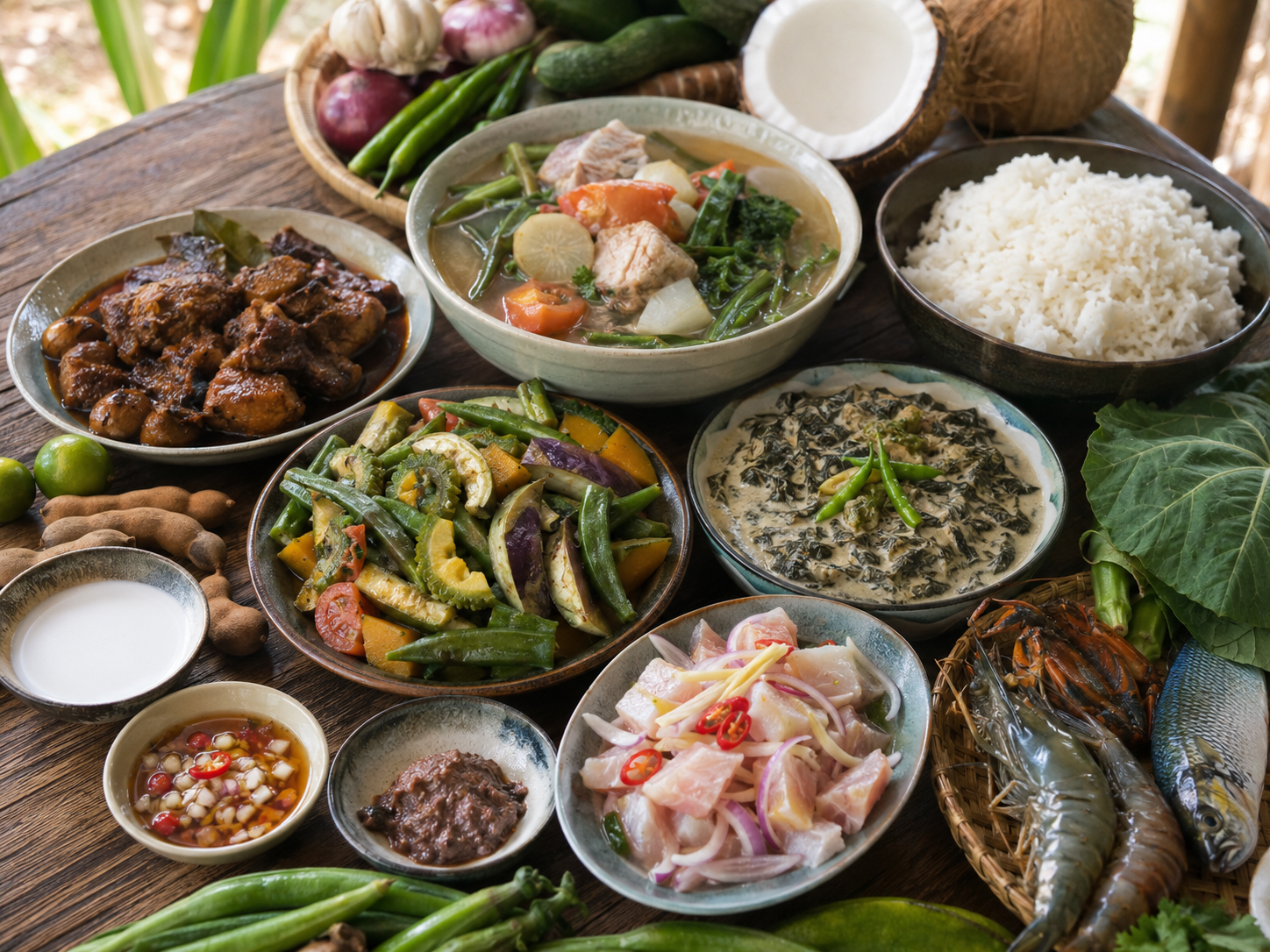
Filipino dishes are often known for strong seasoning, generous portions, and family-style serving. But behind every memorable plate is a local ingredient story. The sour broth of sinigang, the coconut richness of laing, the vinegar bite of adobo, and the freshness of kinilaw all come from ingredients that are closely connected to the Philippine environment.
In the current food landscape, this matters more than ever. Diners are not only asking what a dish tastes like. They want to know where it comes from, why it is cooked that way, and what it says about the community behind it.
For a data-based look at the agricultural products that support Philippine food culture, the Philippine Statistics Authority OpenSTAT portal is an official source worth checking: https://openstat.psa.gov.ph/. It provides access to statistics on crops and commodities relevant to Filipino cooking.
Coconut Milk Turns Local Produce Into Comfort Food
Creamy, Spicy, and Deeply Regional
Coconut milk is one of the most important ingredients in the Filipino pantry. It is used in savory dishes, desserts, rice cakes, and regional specialties. In vegetable dishes, it adds body and richness. In spicy recipes, it softens heat while allowing aromatics to shine.
Laing is a standout dish because it uses taro leaves, coconut milk, chili, and fermented seafood to create a flavor that is both rustic and complex. Ginataang gulay follows a similar logic, turning squash, beans, greens, and seafood into a filling everyday meal.
Sourness Gives Filipino Food Its Energy
The Power of Calamansi, Vinegar, and Tamarind
One reason Filipino dishes stay memorable is their use of sour ingredients. Calamansi gives brightness to sauces and marinades. Vinegar is essential in adobo and paksiw. Tamarind creates the comforting sharpness of sinigang.
This sourness is not just about taste. It balances fat, cuts through fried textures, and makes dishes feel lighter in a warm climate. It also gives Filipino cuisine a signature rhythm: rich, salty, sour, and sometimes sweet, all working together.
Seafood Connects the Kitchen to the Coast
Freshness as a Cooking Principle
Because the Philippines is made up of thousands of islands, seafood naturally plays a major role. Fish, shrimp, squid, crab, and shellfish appear in soups, grilled dishes, stews, and raw preparations.
Kinilaw is especially important because it shows how Filipino cooks respect freshness. Raw fish is combined with vinegar, calamansi, ginger, onion, chili, and salt. The dish is simple, but it requires good ingredients and careful balance.
Rice, Vegetables, and Fermentation Complete the Filipino Table
Rice is not merely a side dish. It is the foundation of the meal. It absorbs the sauce of adobo, the broth of sinigang, and the coconut milk of ginataan. Without rice, many Filipino dishes feel incomplete.
Vegetables add another layer of local identity. Pinakbet, for example, uses bitter melon, eggplant, squash, okra, and shrimp paste. These ingredients produce a dish that is earthy, salty, and deeply connected to rural cooking.
Fermented seasonings such as bagoong and patis give Filipino food its savory depth. They prove that local cuisine is not simple because it lacks technique. It is simple because it knows how to make strong ingredients work together.