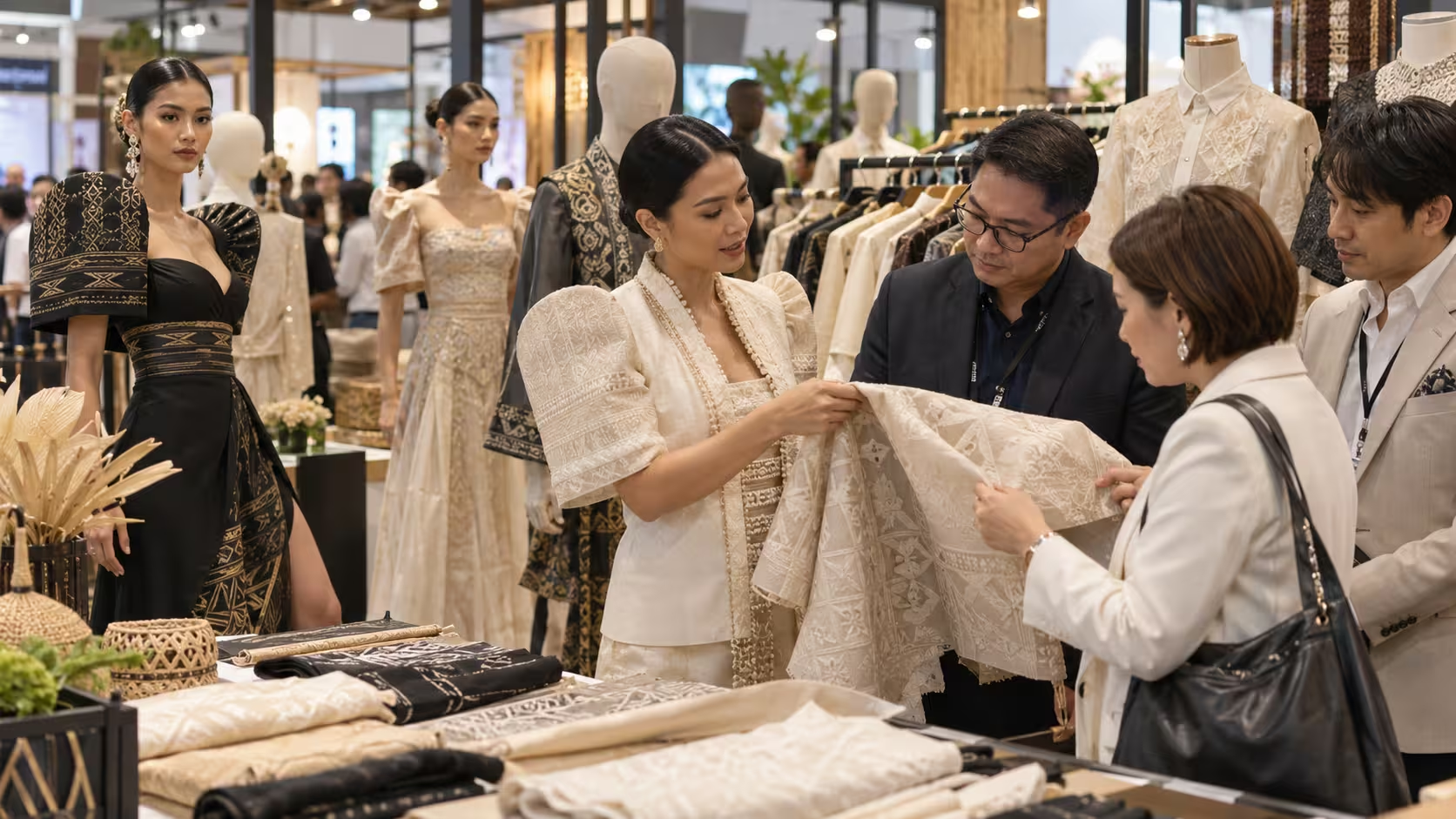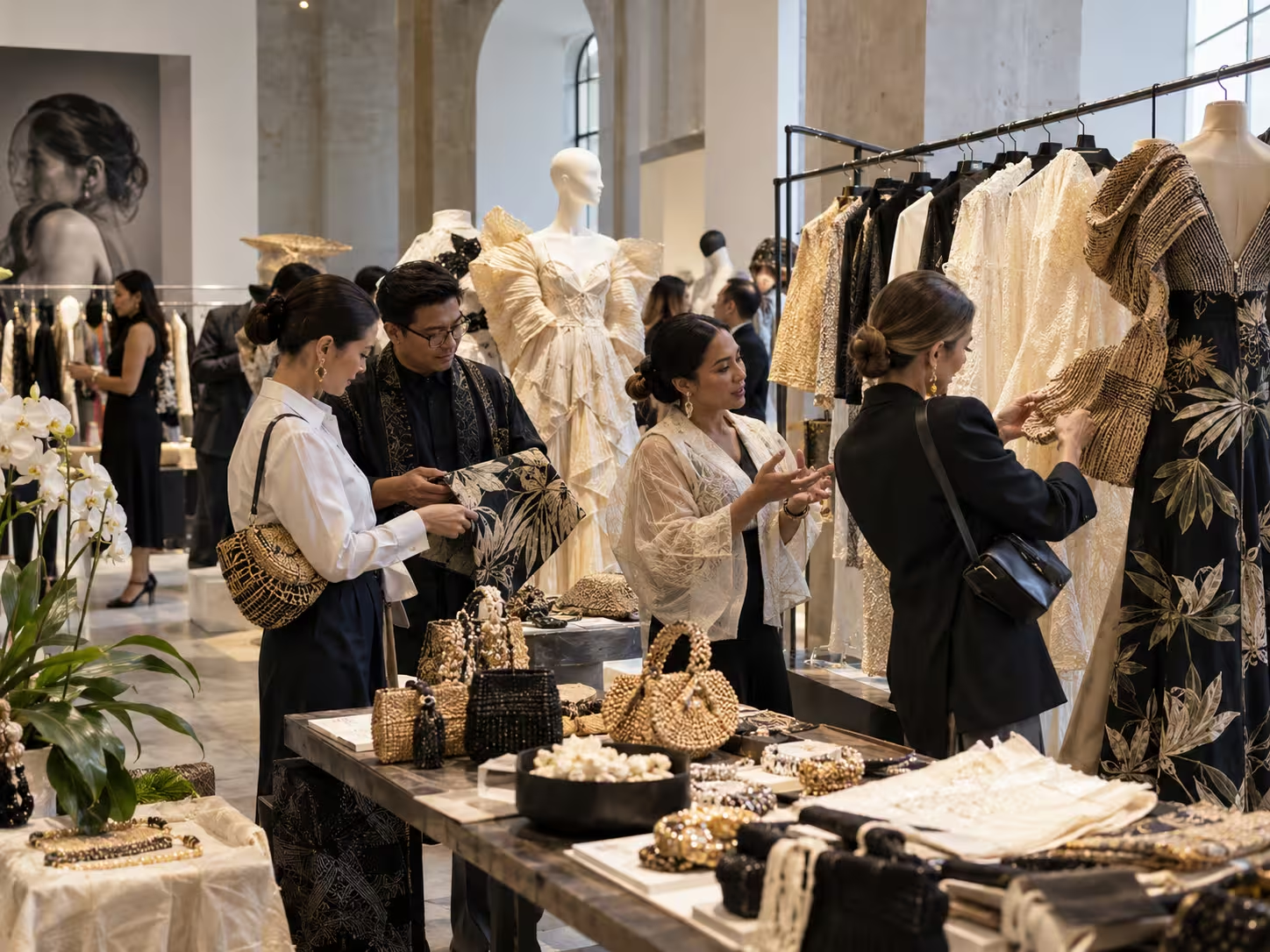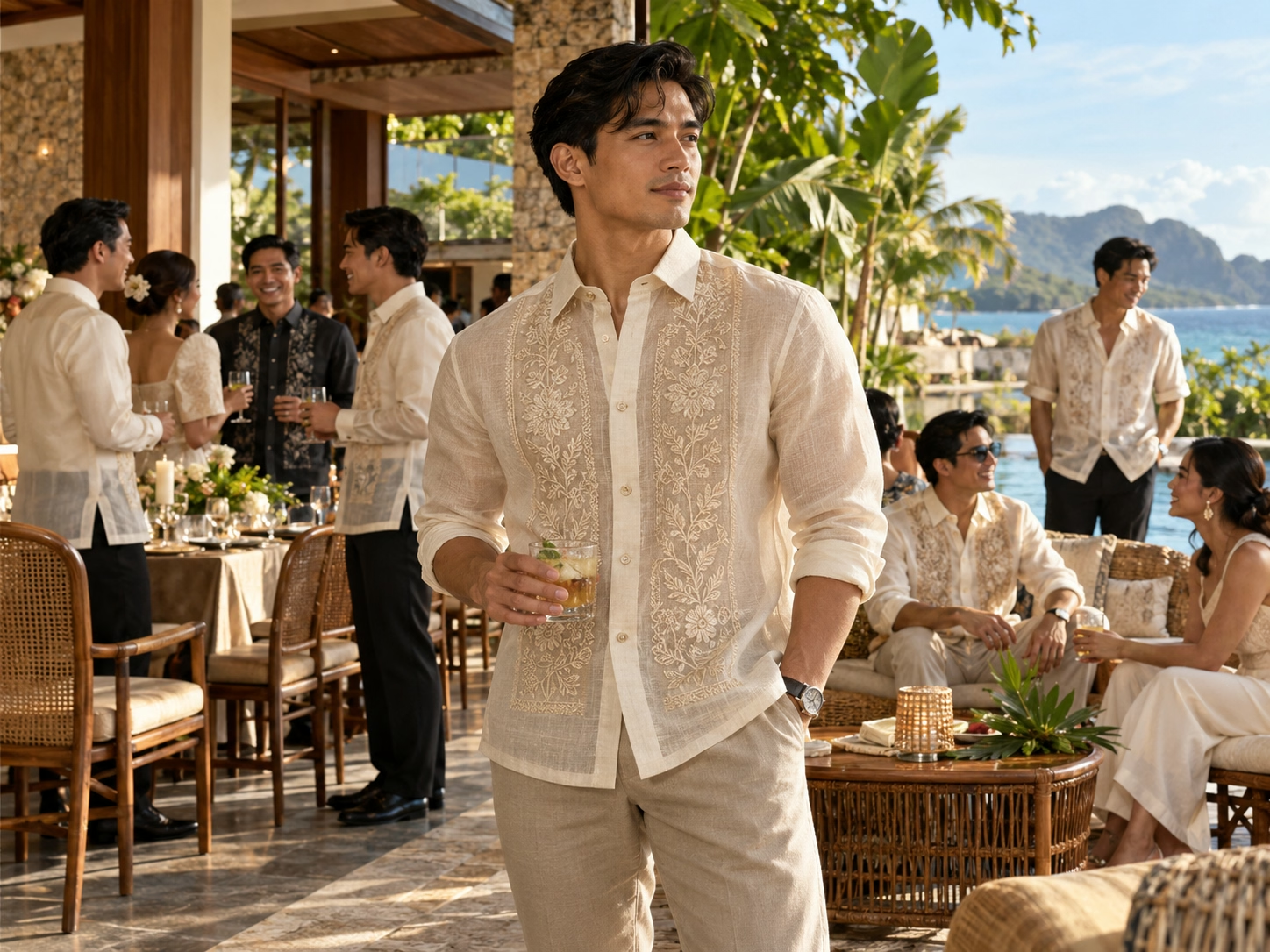
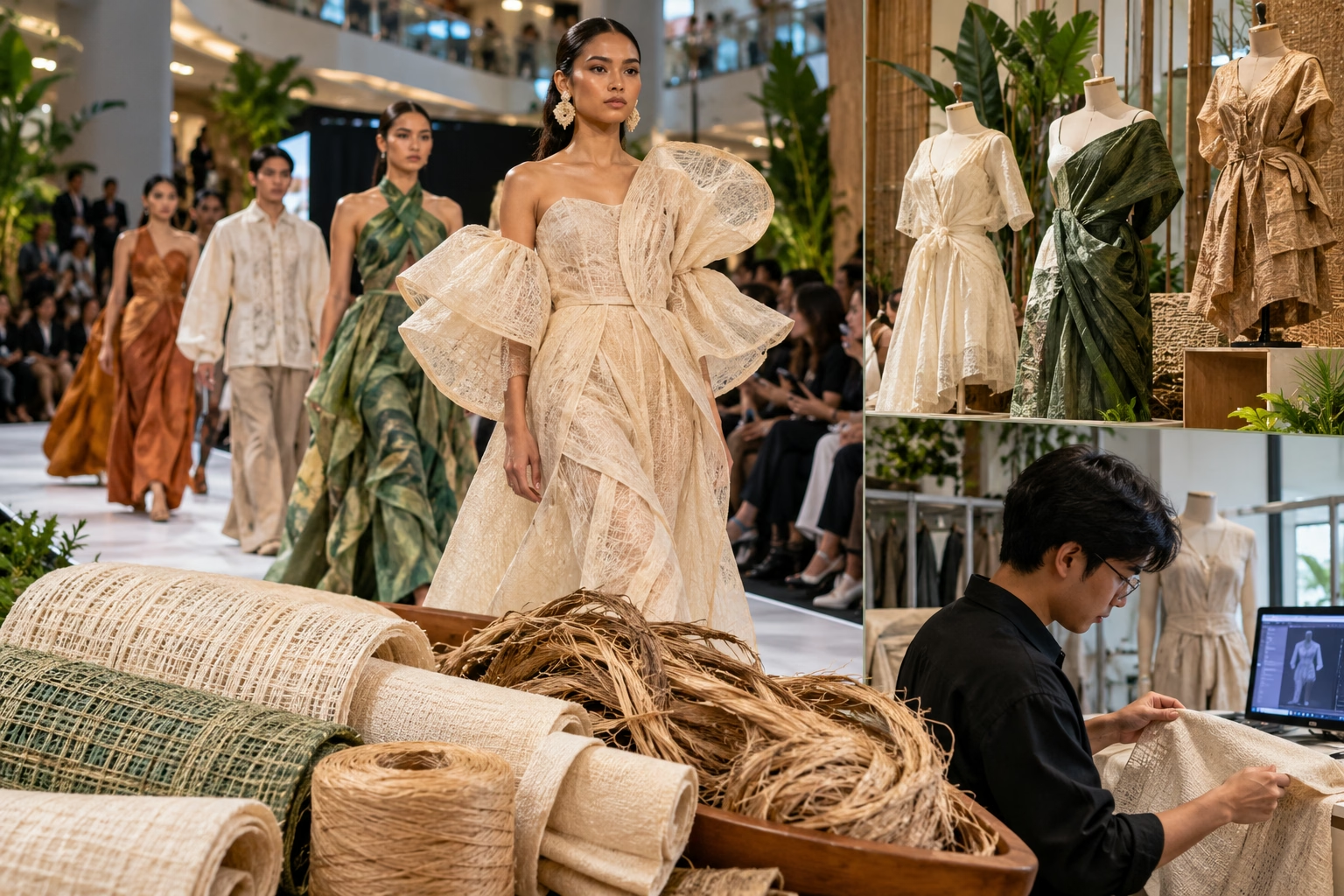
The emerging designers at MNL Fashion Week 2026 generated the loudest headlines, but the week’s emotional architecture was built by returning voices. Designers such as Randolf, Nicolò, Jerome Lorico, Antonina, Proudrace, and HA.MÜ used the sophomore edition to test whether a fashion week runway could hold interiority as comfortably as spectacle.
Randolf’s Waiting Room
RJ Santos of Randolf had planned a different collection. Then his grandfather died, and four days later his niece was born. The Waiting Room emerged from that compressed passage between loss and arrival, imagined as “a meeting between two souls; one going to heaven, one going to Earth”. Flowers printed onto oversized babydoll dresses and sculptural coats gave the garments a childlike scale, as if grief and new life were being dressed in the same wardrobe. The collection was personal without becoming diaristic, specific without becoming inaccessible.
Nicolò’s Flow State
Nicolò opened the week with Flow State, a three-part meditation on ambition loosely structured around Sisyphus, Narcissus, and Icarus. Perez deliberately resisted literal mythology, using the figures as starting points rather than costumes: concentric sheer panels evoked Narcissus’s lake, avian appliqué nodded to Icarus, and hibiscus prints and nautical shirts introduced a “slightly surreal seaside”. The collection also marked a structural expansion, bringing womenswear into a label previously centered on menswear. The result was a study of absorption in process — the moment when effort becomes instinctive.
Jerome Lorico’s Light and Salt
Lorico returned to the runway after several years away with Lux et Sal, or Light and Salt, a collection rooted in the coastal landscapes of his childhood. Knitwear became the primary vehicle: symmetrical noir pieces gave way to draped navy pinstriped sets, with muted hues finding 51 iterations across the collection. Lorico approached knitwear instinctually rather than conventionally, allowing sculptural silhouettes and fluid constructions to move almost like water. In a week crowded with narrative, his collection argued that material and motion can carry emotional weight without explanation.
Proudrace, Antonina, and HA.MÜ
Rik Rasos of Proudrace anchored his closing collection in kukur, a Filipino slang term used by older relatives to describe something unusual or out of the norm. The collection pushed deconstruction and reworking further, adding tailoring, draping, and unconventional silhouettes while drawing on relationships, memories, and Filipino references. Antonina’s Not Here offered a softer shift, built around pause and reflection rather than statement. HA.MÜ marked its tenth anniversary with HA? HA.MU, a three-act collection about the invisible forces that shape identity, ending with a chapter that turned commitment inward toward creativity and community.
L’Officiel Malaysia noted that the second edition had evolved into “a larger and more inclusive celebration of Filipino style, creativity, and identity”. The returning designers were central to that evolution. They gave the week a sense of continuity — not the continuity of a house style, but the continuity of artists willing to bring private experience into a public industry.