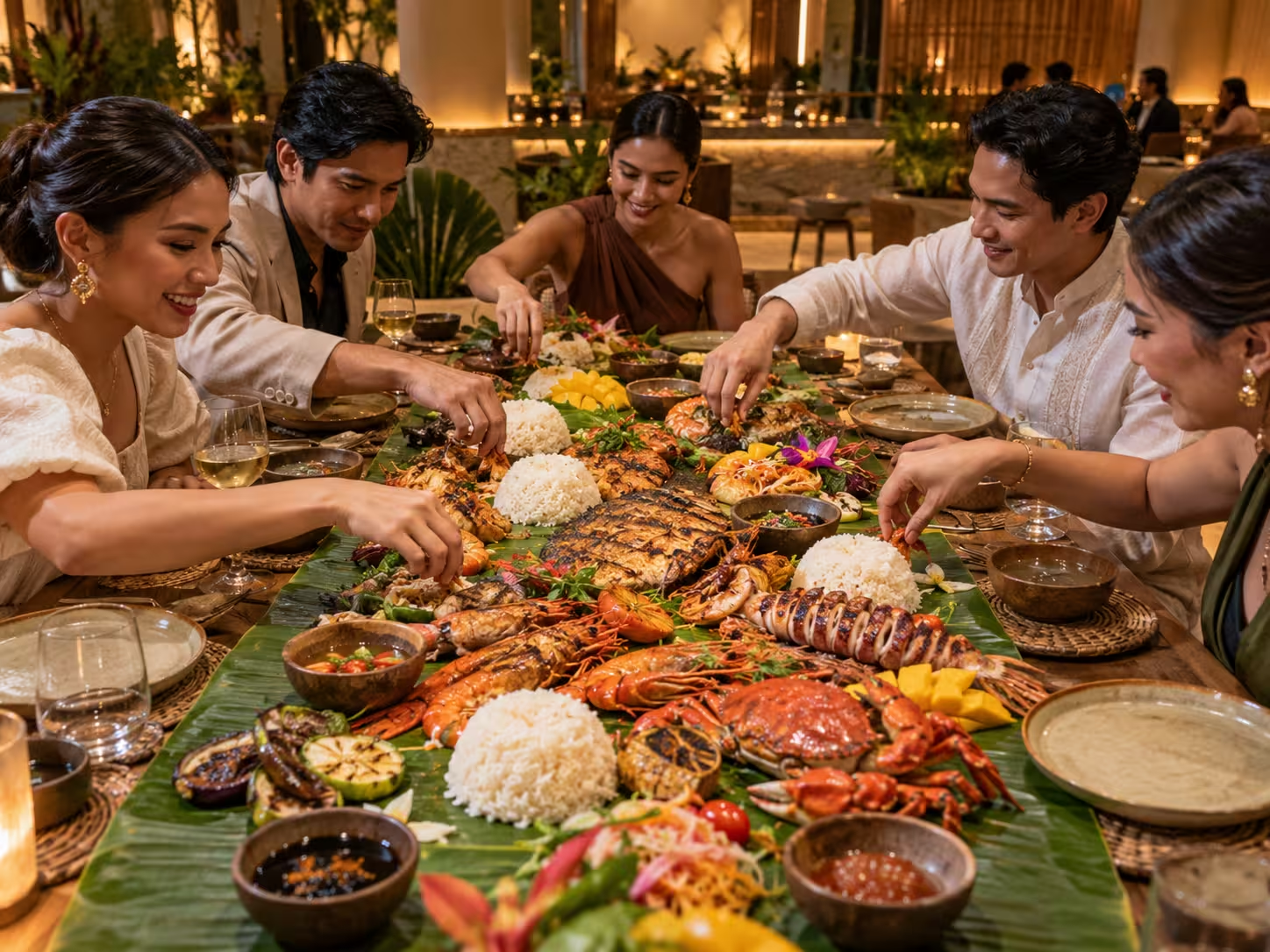

The Philippines, a tropical archipelago in Southeast Asia, boasts a rich and diverse culinary tradition that reflects its varied geography, history, and culture. From the bustling streets of Manila to the tranquil towns of the Visayas, each region offers unique dishes that tell a story of the people and their local ingredients. Filipino food combines influences from Spanish, Chinese, Malay, and American cuisines, resulting in a dynamic food scene where each dish is an experience in itself.
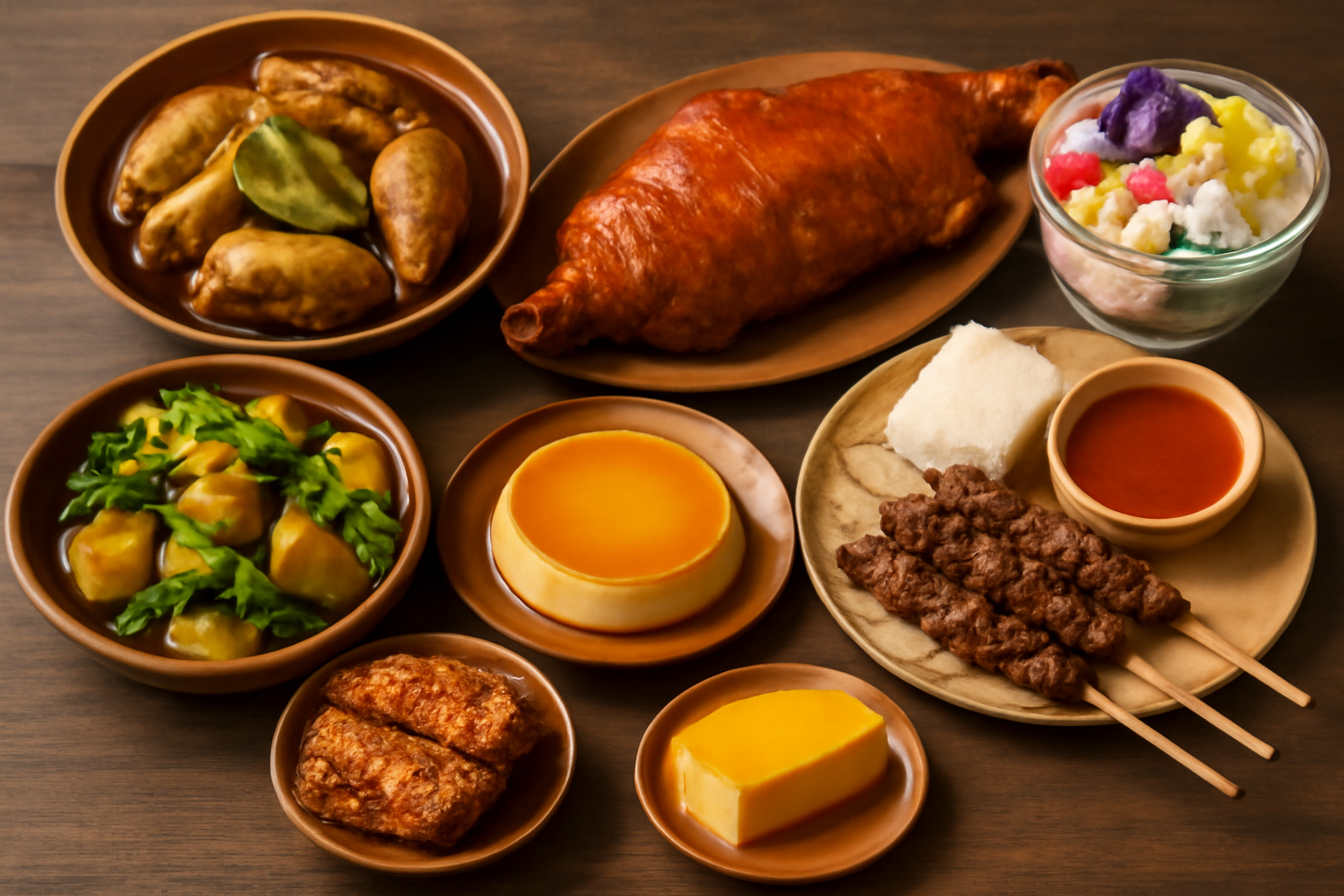
In Luzon, the northernmost island, one of the most famous dishes is Adobo—a savory stew made from chicken or pork simmered in vinegar, soy sauce, garlic, and bay leaves. This dish is often considered the national food of the Philippines. A variation of adobo can be found in nearly every household, with each region adding its twist based on available ingredients.
Moving to the north, the province of Ilocos is known for its Empanada and Longganisa. The Ilocos Empanada is a deep-fried pastry filled with a savory mixture of pork, vegetables, and egg. It’s a beloved snack that offers a delightful crunch and is often paired with a vinegar dipping sauce. The region’s Longganisa, a type of Filipino sausage, comes in various flavors, from sweet to garlicky, depending on the area.
Heading to the Visayas, the city of Cebu is home to Lechon, a whole roasted pig that is considered a centerpiece for any festive occasion. The crispy skin and tender meat of Lechon have made it famous far beyond Cebu, with people traveling to the region just to taste this iconic dish. Many consider Cebu’s Lechon to be the best in the country due to its distinct seasoning and cooking method.
In the Mindanao region, the southernmost part of the Philippines, you’ll find a rich diversity of flavors. The province of Zamboanga is known for its Satti, a skewered meat dish served with a spiced rice cake and a flavorful dipping sauce. This dish is heavily influenced by both Muslim and indigenous flavors, creating a unique and tantalizing taste that represents the fusion of cultures in the region.
Philippine cuisine is not just about the main dishes; it’s also about the sweet treats that complete a meal. In Bicol, for example, Bicol Express is a popular dish made from pork, coconut milk, shrimp paste, and chili. This fiery dish is often served with rice, balancing the rich, spicy flavors with a creamy coconut undertone. In addition to savory dishes, sweet desserts like Leche Flan and Halo-Halo are enjoyed across the country. Halo-Halo, a colorful mix of shaved ice, fruits, jellies, and sweetened beans, is especially refreshing during the hot summer months.
The Philippines is a food lover’s paradise, where each region offers its own take on traditional ingredients, methods of cooking, and unique flavor combinations. With every dish telling a story, Filipino cuisine invites travelers to explore not only the country’s diverse landscapes but also its rich cultural heritage.