
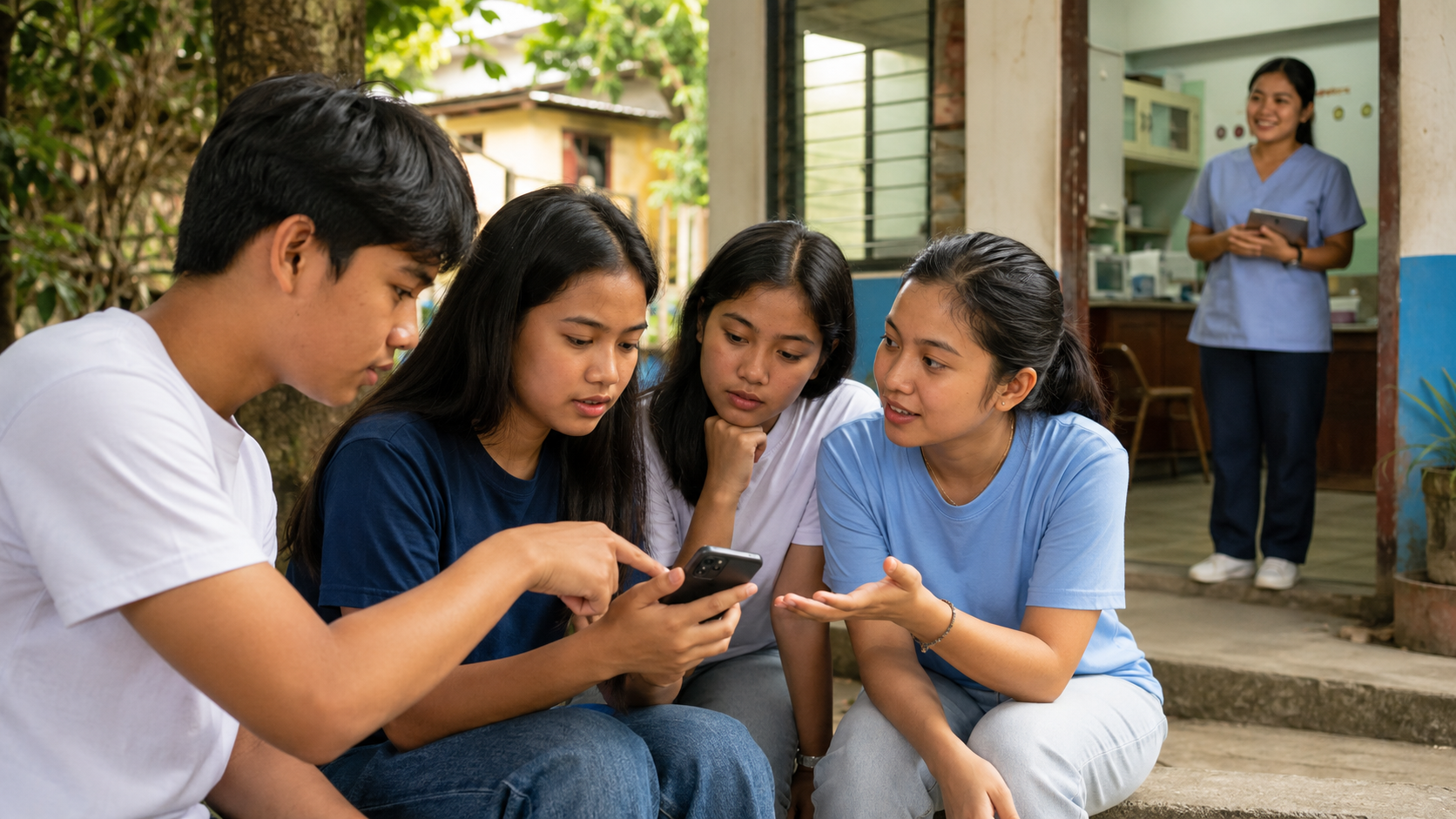
For many Filipino teenagers, the first source of health information is no longer a doctor, teacher, or parent. It is a search engine, short-form video, group chat, or social-media influencer. This shift creates opportunities for health agencies to reach young audiences quickly, but it also allows misinformation to spread at extraordinary speed.
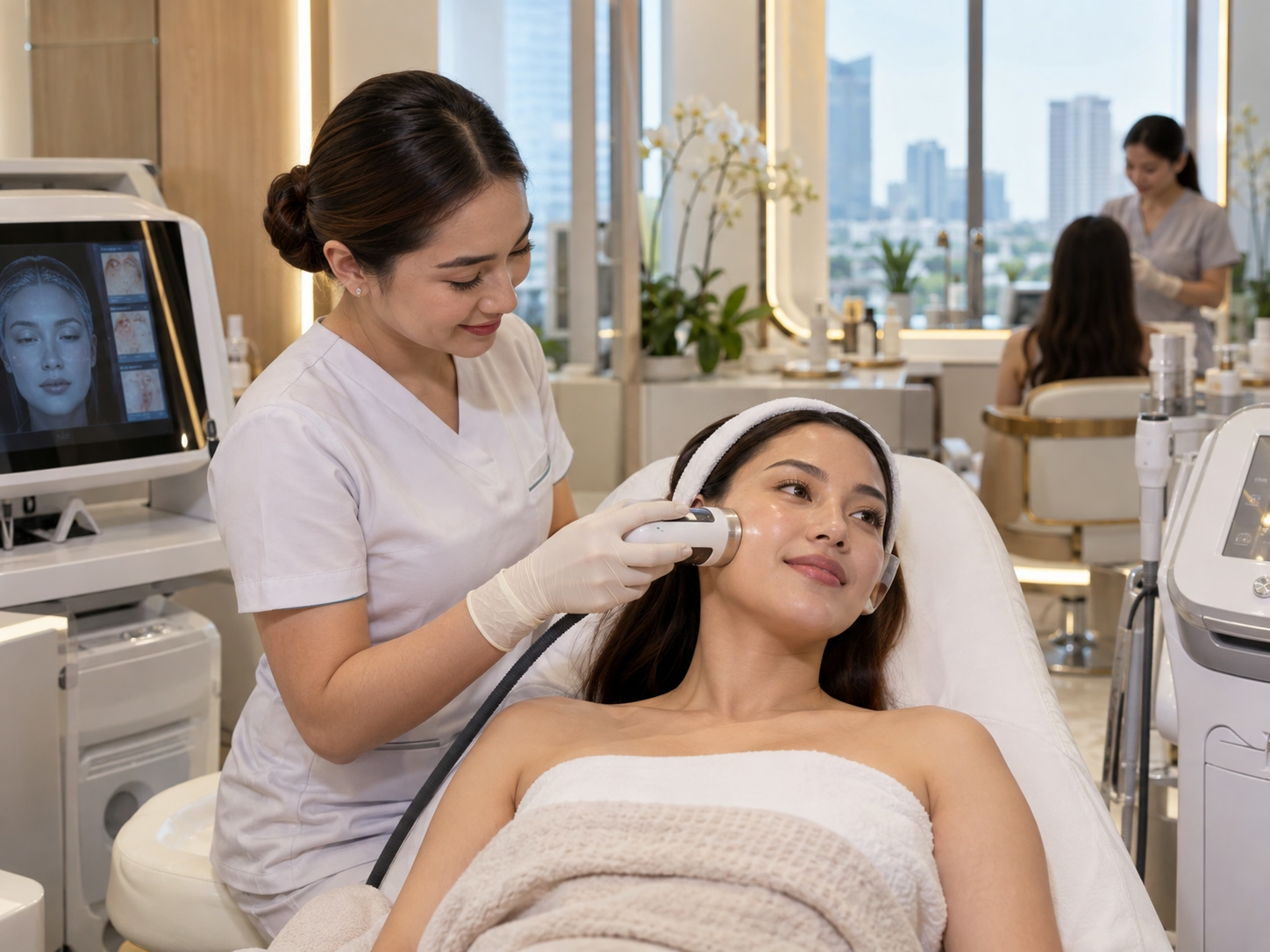
Teenagers may encounter false claims about vaccines, skin treatments, supplements, reproductive health, vaping, weight loss, and mental illness. Content can appear trustworthy because it is presented confidently, supported by personal testimonials, or repeated by popular creators.
The Philippines is responding by treating health literacy as more than the ability to read a brochure. Young people need skills to assess sources, identify commercial motives, compare claims, and know when online advice requires professional confirmation.
Health Campaigns Must Compete for Attention
Traditional public-service announcements often use formal language and one-way communication. Social-media platforms reward content that is emotional, visual, brief, and interactive. Health agencies therefore need messages that remain accurate while fitting the way teenagers consume information.
Effective digital campaigns may use short videos, question-and-answer sessions, local languages, youth ambassadors, and myth-versus-fact formats. However, popularity should not replace medical accuracy. Content creators working with public agencies need clear review standards, especially when discussing medication, contraception, vaccines, or mental health crises.
The World Health Organization’s adolescent health information stresses that adolescents require age-appropriate information and services covering physical, mental, sexual, and social well-being.
Peer Educators Can Translate Complex Information
Teenagers often respond more openly to people close to their own age. Peer educators can explain where to obtain reliable services, challenge stigma, and encourage classmates to seek professional advice.
Their training should include clear boundaries. Peer educators are not doctors, nurses, therapists, or emergency responders. They need referral directories, supervision, and instructions for situations involving abuse, self-harm, pregnancy, HIV exposure, or serious illness.
Sangguniang Kabataan councils, student organizations, and community youth groups can support this work by organizing forums and sharing verified materials. Their local knowledge helps health messages reflect the actual concerns of young people in a particular barangay.
Barangay Services Connect Online Awareness with Real Care
Digital awareness has limited value when adolescents do not know where to obtain treatment. Barangay health centers can serve as the bridge between online information and professional care.
Youth-friendly services may include vaccination, nutrition screening, reproductive health counseling, mental health referrals, substance-use prevention, and education about dengue or other locally relevant diseases. Clear information about clinic hours, confidentiality, cost, and available services can reduce uncertainty.
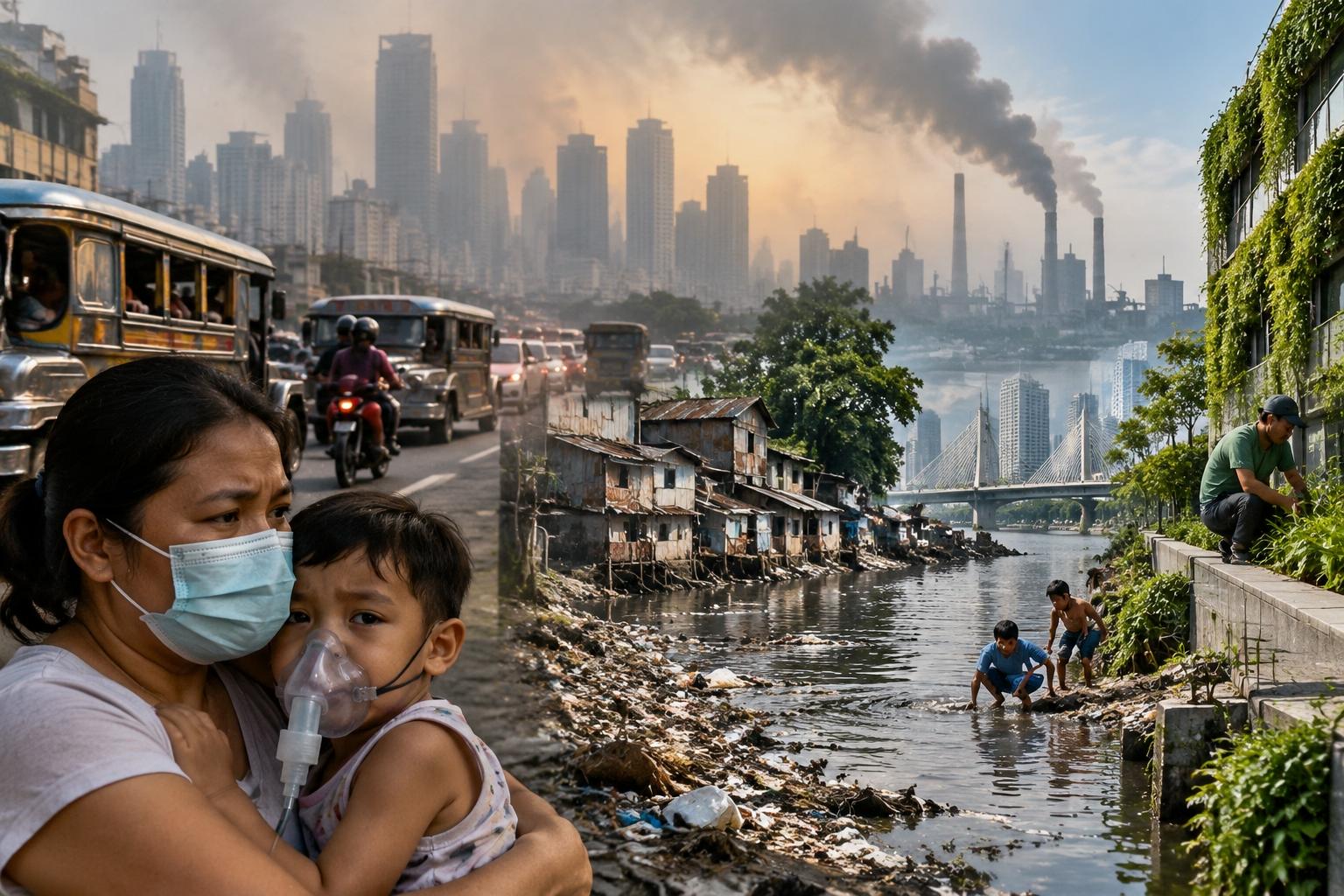
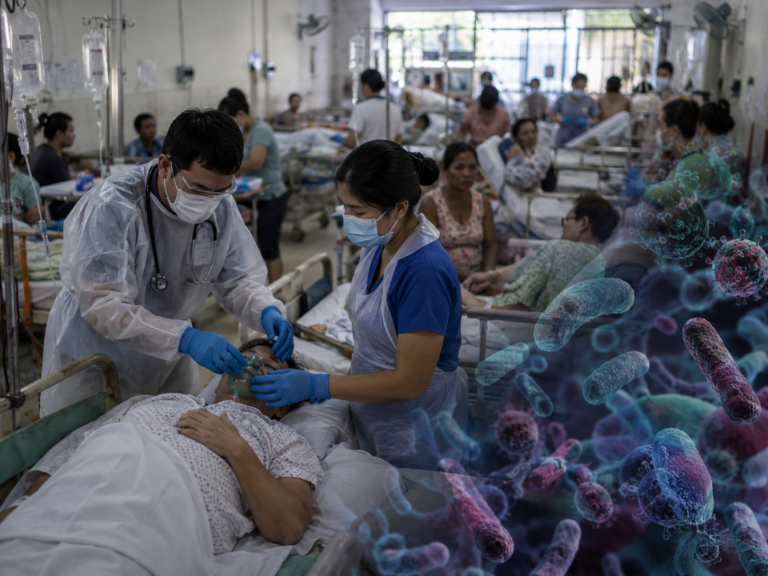
Geographic inequality remains a major obstacle. Teenagers in urban areas may have access to hospitals and private clinics, while those in remote islands or mountainous communities depend on limited local facilities. Mobile health teams, telehealth, and coordinated referral systems can reduce this gap when connectivity and staffing are available.
Vaping and Self-Medication Show Why Literacy Matters
Vaping products are sometimes presented online as harmless, fashionable, or safer than cigarettes. Teenagers may also purchase supplements, antibiotics, skin products, or weight-loss substances without understanding the risks.
Health literacy helps adolescents ask practical questions: Who produced this information? Is the person qualified? Is the content selling something? Does the claim appear on an official health website? Could the product interact with medication?
The Philippine effort to improve adolescent health awareness will be strongest when schools, families, clinics, and digital platforms reinforce the same message. Teenagers do not merely need more information. They need the ability to separate evidence from advertising, recognize dangerous advice, and connect reliable knowledge with appropriate healthcare.