Creating a children’s wardrobe in the Philippines often means balancing three priorities: cultural appropriateness, comfort in tropical weather, and budget-smart choices. Filipino kids’ fashion is inspiring because it shows how families can dress children beautifully without sacrificing movement, practicality, or identity.
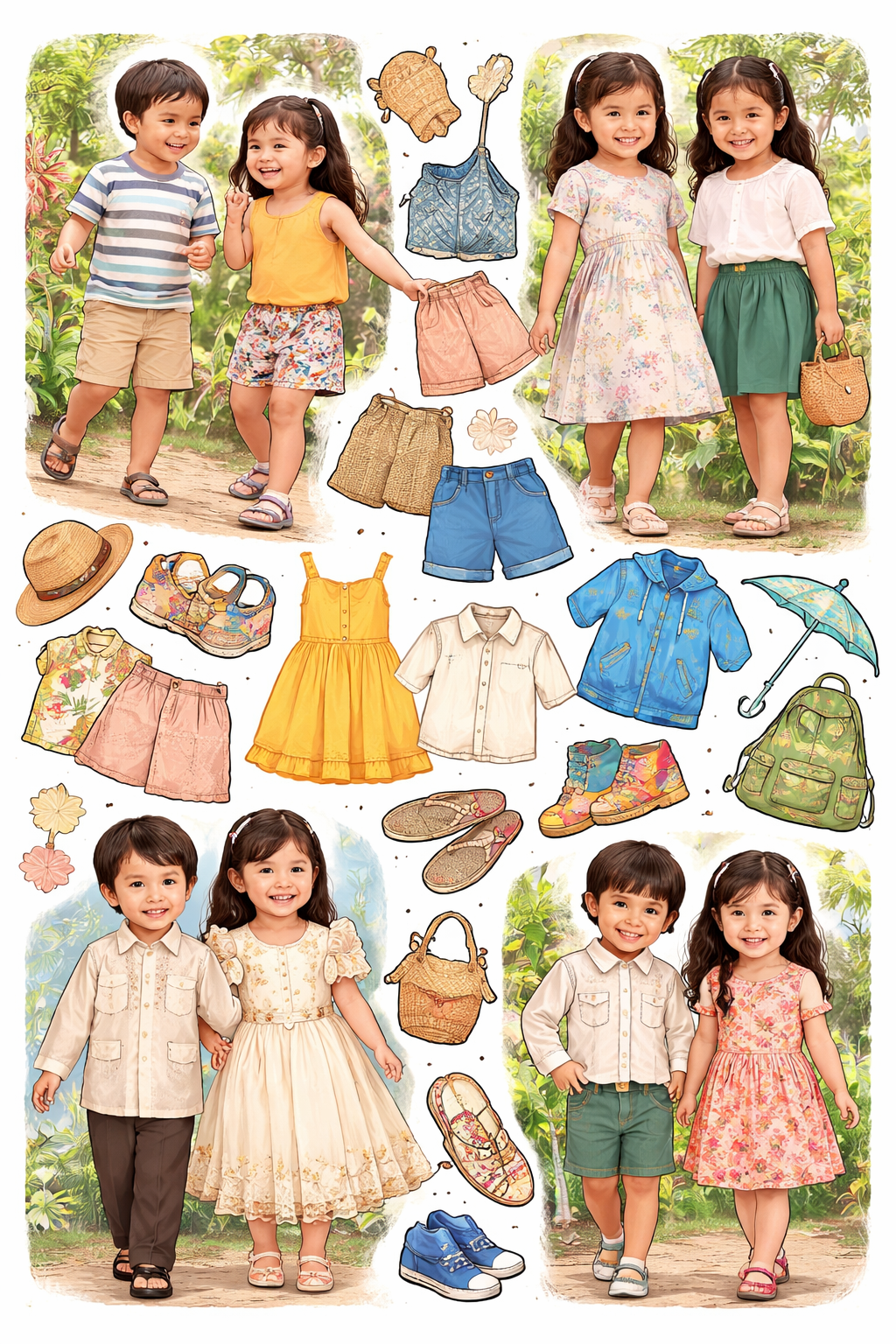
A helpful approach is to think in three wardrobe categories. First is “daily basics”: breathable tops, shorts, leggings, and simple dresses that handle heat and frequent washing. Second is “presentable casual”: outfits suitable for school activities, family visits, or church—such as collared shirts, blouses, midi-length dresses, or neat coordinated sets. Third is “special occasions,” where Filipino tradition and celebration often shine through.
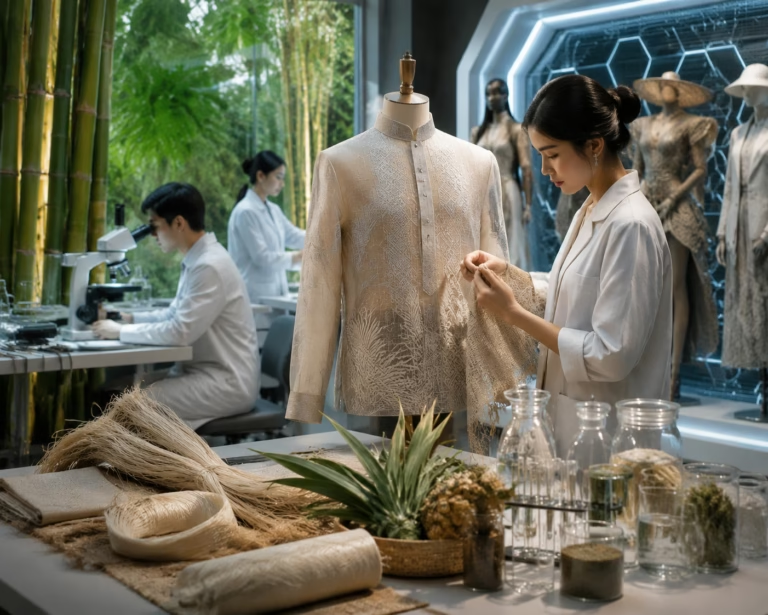
For special events, many families choose pieces influenced by Filipino formalwear. Boys may wear lightweight formal shirts inspired by the barong style, while girls may wear dresses with elegant sleeves or embroidered accents that echo traditional silhouettes. These outfits work best when they’re designed for kids—soft inner seams, light lining, and enough room to move. A child who can breathe and play confidently will look better than one who’s uncomfortable in a stiff outfit.
Climate-smart styling matters year-round. In hot months, loose silhouettes, airy fabrics, and light colors keep children comfortable. During rainy season, quick-dry materials and easy layers (a thin jacket, a compact umbrella) reduce stress. Parents often prefer shoes that can handle puddles and sudden downpours, plus bags that don’t get ruined easily. This practical mindset becomes part of the “Filipino kids’ fashion aesthetic”: realistic, resilient, and still cheerful.
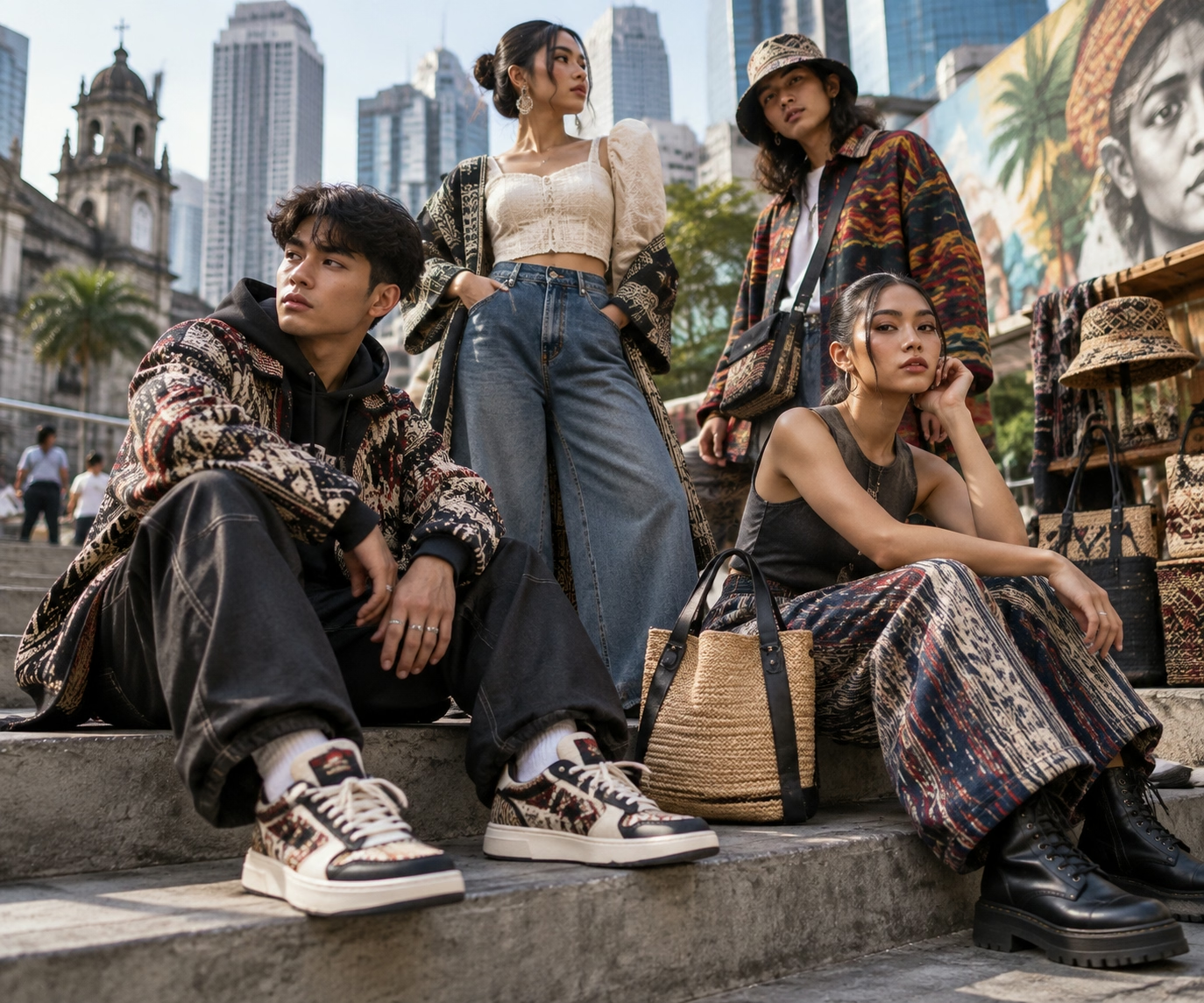
Cultural inspiration doesn’t have to mean expensive fabric. Many families incorporate Filipino identity through prints, colors, and details. A dress with woven-inspired patterns, a sash-like accessory, or a small embroidered element can give a Filipino feel without requiring delicate materials. For school cultural days, families sometimes combine modern basics with a single heritage-inspired piece to create an outfit that is both meaningful and wearable.
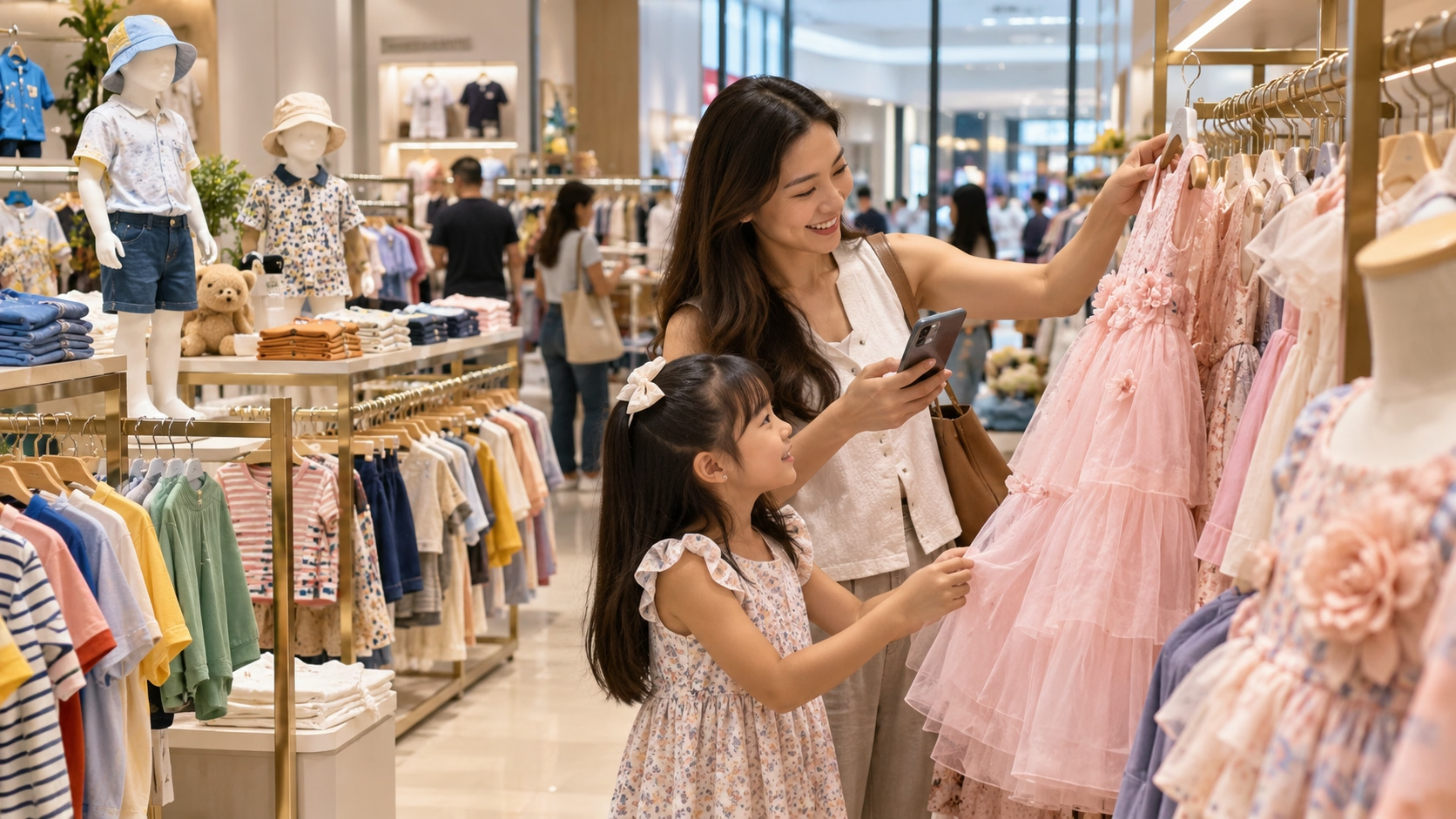
Budget strategies are also part of the style story. Many parents build wardrobes by mixing affordable basics with a few standout items for special moments. The key is versatility: choose pieces that can be restyled. A neutral pair of shorts can match multiple tops; a simple dress can be made festive with accessories; a collared shirt can work for photos, family gatherings, and school events. This mix-and-match approach makes children’s fashion more sustainable and less wasteful.
Personal expression matters too. Filipino kids’ fashion often embraces joyful colors and playful accessories, allowing children to show preferences—favorite hues, fun prints, or comfortable silhouettes. When kids feel involved, they’re more likely to wear outfits confidently, which is a big part of looking stylish.
An inspiring Filipino children’s wardrobe isn’t defined by how many clothes a child owns. It’s defined by thoughtful choices: culturally aware pieces, weather-friendly comfort, and flexible styling that suits real family life—celebrations included.