
Tofu has a special place in Filipino food because it is inexpensive, easy to prepare, and able to take on many flavors. In the Philippines, tofu is widely known as tokwa. It is commonly sold in markets and used in both home cooking and street food. Although tofu has Chinese roots, Filipinos have adapted it into dishes that reflect local taste: sour vinegar sauces, salty soy-based marinades, sweet syrups, spicy chilies, and fragrant garlic.
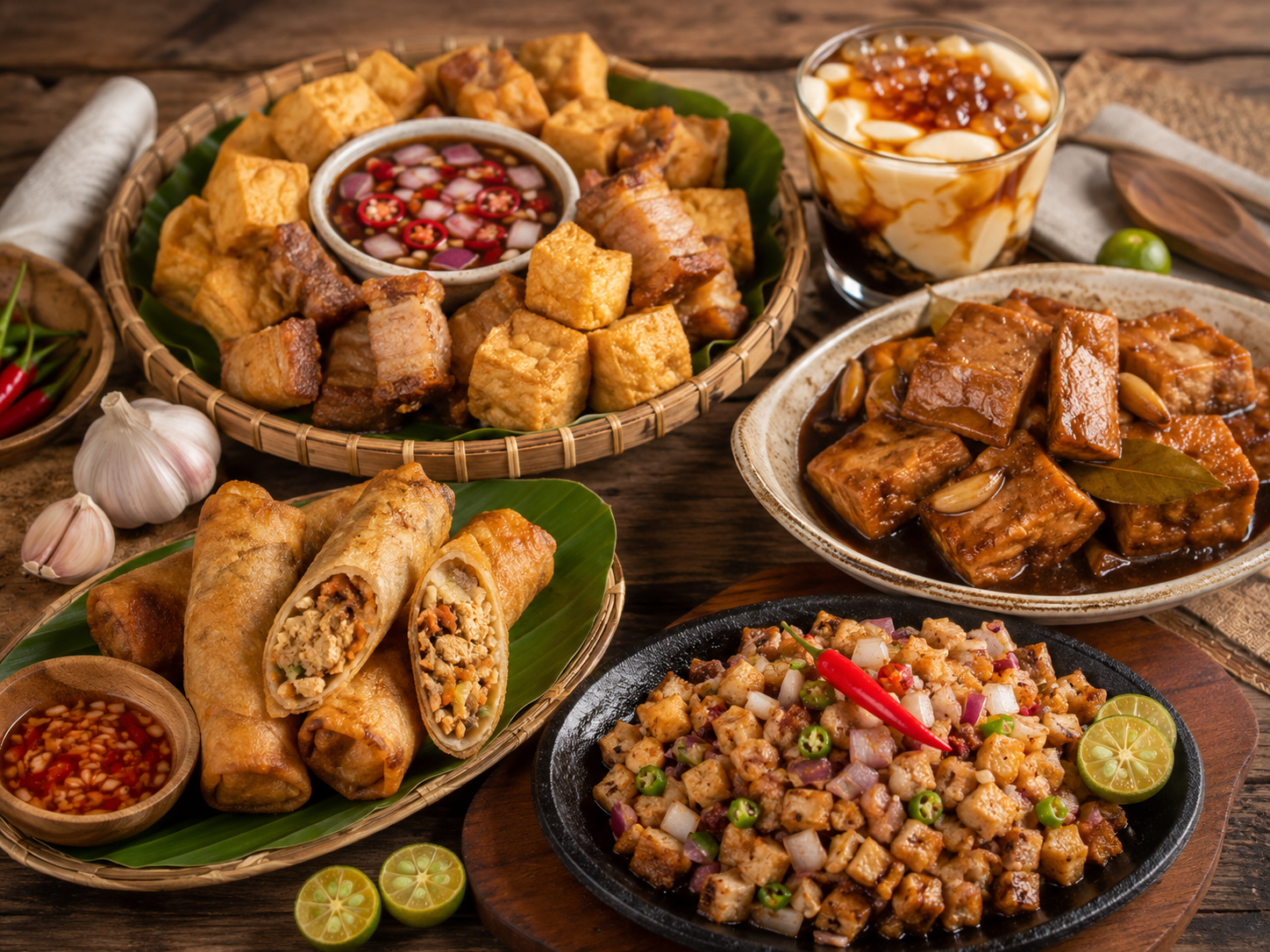
A popular Filipino dish made with tofu is Tokwa’t Baboy. This food is made with fried tofu and pork, usually served in a flavorful soy-vinegar sauce. The tofu is cut into cubes and fried until crispy on the outside. The pork, often pork belly or pig’s ears, gives the dish a rich and chewy quality. The sauce usually contains vinegar, soy sauce, onion, garlic, pepper, and chili. Tokwa’t Baboy is often served with lugaw, a warm rice porridge, but it is also enjoyed as a snack with drinks.
One of the sweetest and most comforting tofu foods in the Philippines is Taho. Unlike fried tofu dishes, taho uses very soft silken tofu. It is served warm with brown sugar syrup called arnibal and small tapioca pearls known as sago. Taho is usually sold by street vendors in the morning. The vendor’s call is a familiar sound in many Filipino neighborhoods. Its soft texture and sweet flavor make it popular among children and adults alike.
For savory meals, many families prepare Adobong Tokwa. This dish follows the basic style of Filipino adobo, one of the country’s most famous cooking traditions. Tofu pieces are fried first, then simmered with soy sauce, vinegar, garlic, bay leaves, and black pepper. The result is a dish that is salty, sour, aromatic, and satisfying. Some cooks add mushrooms, eggplant, potatoes, or green beans to make it more filling. It is usually served with plain steamed rice.
Another dish that has become popular is Tofu Sisig. It is based on sisig, a Filipino dish known for its sizzling presentation and bold flavor. In this version, tofu replaces pork. The tofu is fried, chopped, and mixed with onions, chili, calamansi juice, and seasonings. Some recipes add mayonnaise for a richer taste. Tofu sisig is often served on a hot plate, giving it a restaurant-style appeal. It is a good choice for people who want a lighter version of classic sisig.
Tofu is also used in Filipino spring rolls, such as Lumpiang Tokwa. In this dish, tofu is mixed with vegetables, wrapped in thin lumpia wrappers, and fried until golden. The filling may include cabbage, carrots, bean sprouts, garlic, and onions. It is commonly eaten with vinegar dip or sweet chili sauce.
Filipino tofu dishes are loved because they are simple yet full of character. Tofu can be crispy, silky, saucy, spicy, or sweet depending on the recipe. From the morning comfort of taho to the bold taste of Tokwa’t Baboy, tofu continues to be an important and versatile part of Filipino cuisine.