In Filipino cuisine, pork holds a significant cultural and culinary position. It is not only a favorite meat for its flavor and versatility but also plays a central role in family gatherings and festivals. Filipino dishes often showcase the rich, savory taste of pork, making it an essential element in the country’s food culture.
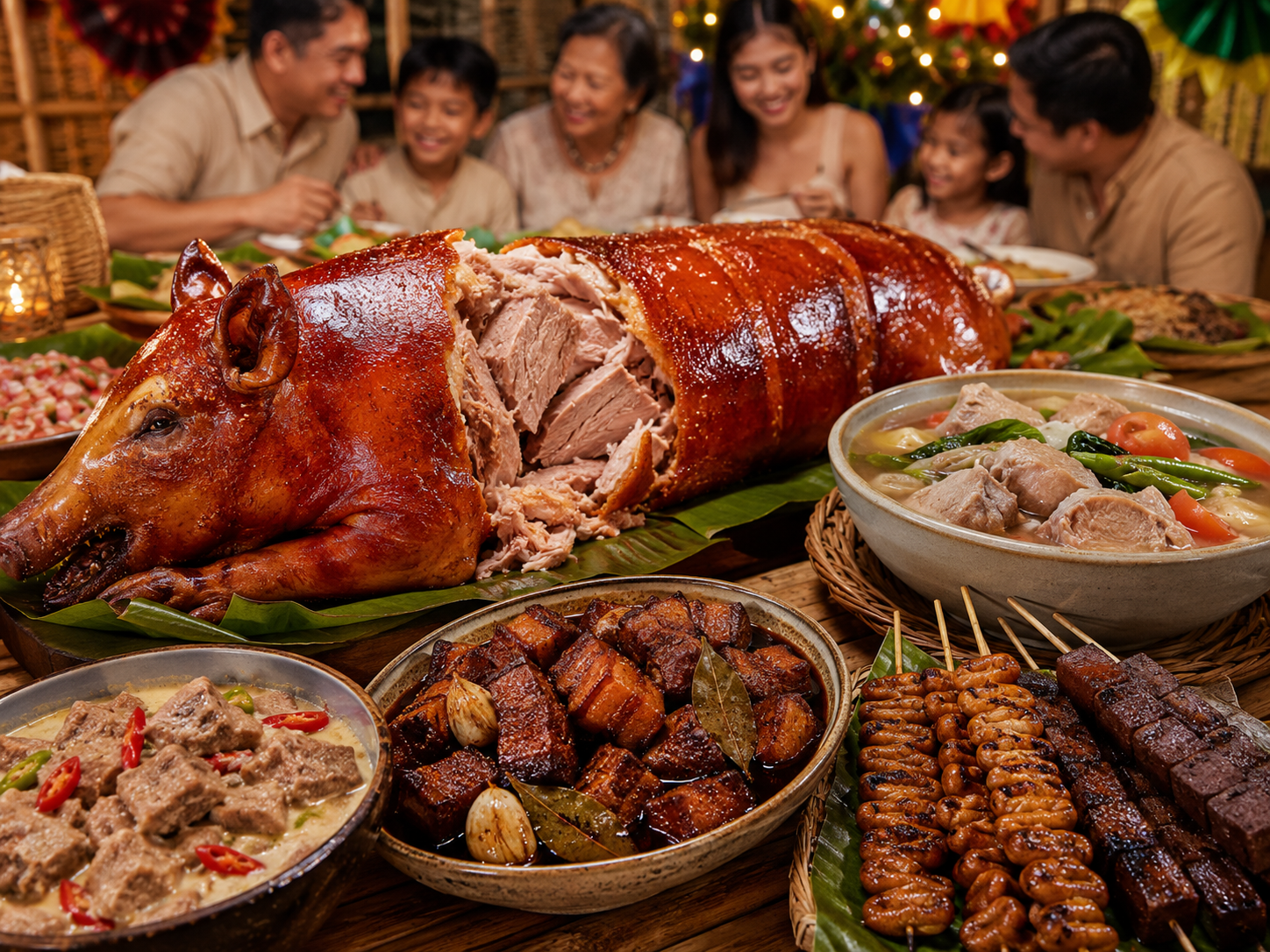
Among the many dishes that feature pork, lechon stands out as one of the most iconic. A whole pig is slowly roasted on a spit, producing tender, flavorful meat with a crispy, golden-brown skin. Lechon is typically reserved for special occasions, from weddings to large family celebrations, and is usually served with a rich liver-based sauce that adds a tangy contrast to the meat’s richness. Preparing lechon is an art, requiring both time and skill to achieve the perfect balance of crispy skin and juicy meat.
Adobo is another quintessential Filipino pork dish. The pork is marinated in soy sauce, vinegar, garlic, and bay leaves, and then simmered to absorb all the flavors. The result is a deeply savory, tangy dish that is often served with a side of rice. Adobo is known for its adaptability—some families add potatoes, while others may include hard-boiled eggs or coconut milk, showcasing the creativity in Filipino cooking.
Pork sinigang, or sour tamarind soup, is another beloved dish. The pork, often in the form of ribs or belly, is cooked with a variety of vegetables in a tangy tamarind broth. The resulting dish is refreshing and flavorful, offering a balance of sourness, saltiness, and the richness of pork. It is a dish that brings comfort during rainy days and is a favorite for family meals.
Pork also makes its way into street food culture, where offerings like isaw (grilled pork intestines) and betamax (grilled coagulated blood) can be found. These dishes highlight the Filipino knack for creating delicious street foods that are both affordable and flavorful. The use of pork in these street snacks reflects the resourcefulness of Filipino cooks in using every part of the animal, turning seemingly less desirable cuts into savory delights.
In addition to these dishes, pork is a key ingredient in regional specialties, such as bicol express, a spicy pork dish made with coconut milk and chili peppers. This dish captures the bold and fiery flavors of the Bicol region, where coconut milk and chili peppers are staples in many recipes.
Ultimately, pork is not just an ingredient in Filipino cuisine; it is a cultural symbol of hospitality, celebration, and family. Whether served at a festive gathering or as a comforting everyday dish, pork remains central to the Filipino culinary experience, with each dish offering a glimpse into the traditions and creativity of Filipino cooking.