
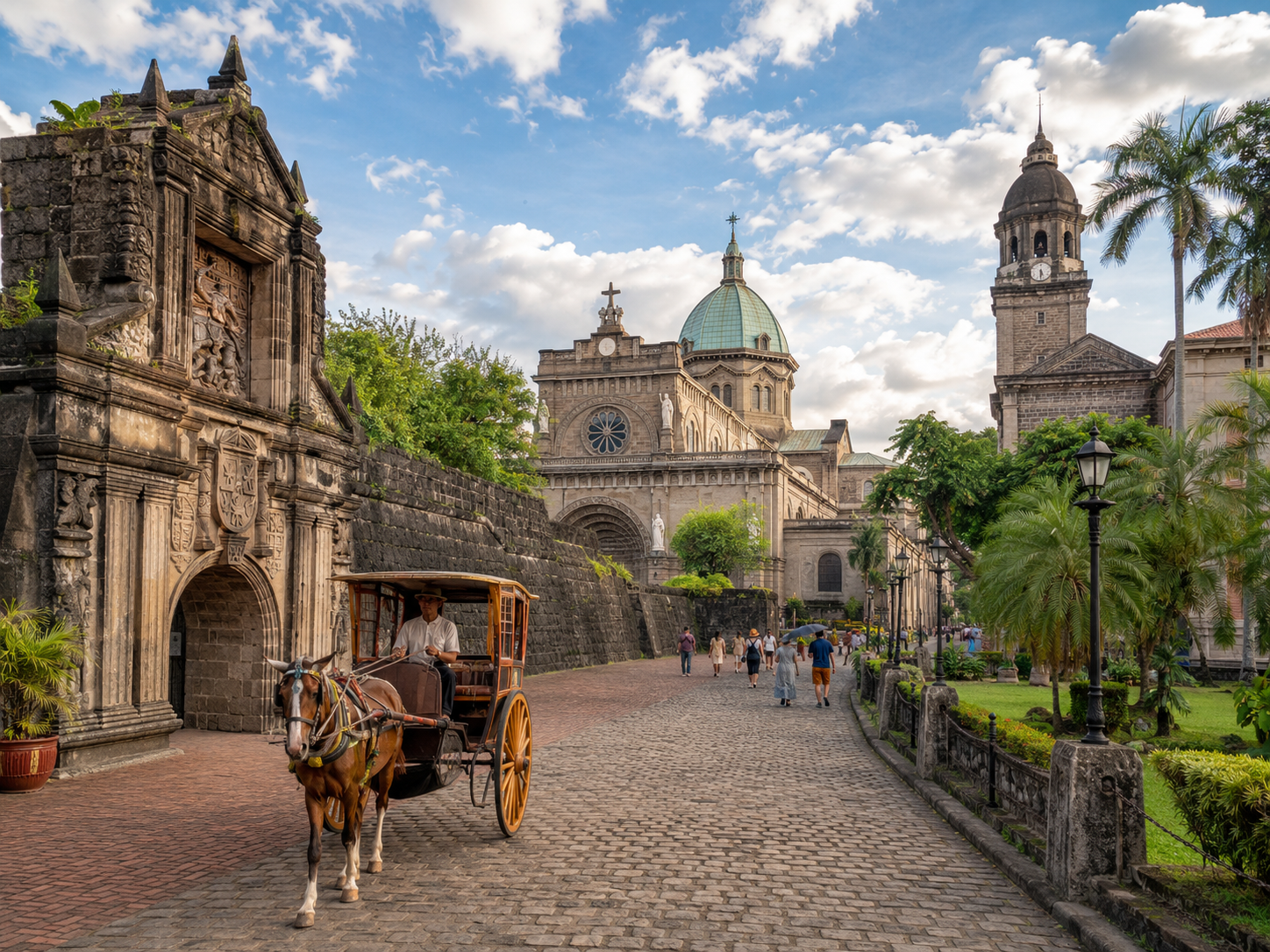
Intramuros, often called the “Walled City,” is a cornerstone of Manila’s historical and cultural identity. Established in the late 16th century by Spanish colonizers, it served as the epicenter of administration, religion, and defense for the capital. Today, it stands as a meticulously preserved area where cobblestone streets, colonial-era churches, and massive fortifications provide visitors with a vivid glimpse into the Philippines’ colonial past.
The defensive walls of Intramuros, made of thick adobe stones, were originally built to safeguard Manila against external threats and local uprisings. Fort Santiago remains one of the most visited historical sites within the walls. This fortress has a long history of military use and imprisonment, most famously housing José Rizal, the country’s national hero, prior to his execution in 1896. The fort’s museum showcases artifacts, historical documents, and personal effects, offering an intimate understanding of the struggles faced by those who fought for Philippine independence.
Intramuros is also home to remarkable religious monuments. San Agustin Church, the oldest stone church in the country, features baroque architecture, exquisite altarpieces, and intricately painted ceilings. Its designation as a UNESCO World Heritage Site underscores its architectural and historical significance. Manila Cathedral, with its neo-Romanesque façade and impressive stained-glass windows, exemplifies the city’s religious heritage and resilience, having been rebuilt multiple times following earthquakes and wars.
The walled city is more than its buildings; it is a cultural hub that immerses visitors in Filipino traditions. Casa Manila Museum replicates the lifestyle of the colonial elite, complete with period furniture and decorative pieces. Walking tours, kalesa rides, and traditional performances provide interactive ways to engage with history. Local shops selling handicrafts and souvenirs enhance the experience, allowing visitors to take a piece of Filipino culture home.
Plazas like Plaza de Roma anchor the community life of Intramuros. Historically, they served as centers of civic, religious, and social activity, and today they remain charming spaces for leisure and reflection. The blend of historic architecture, lush gardens, and cultural exhibits creates an environment that educates while entertaining, making every visit a journey into the past.
Intramuros represents a unique convergence of history, architecture, and culture. Its walls, churches, fortresses, and museums collectively tell the story of Manila’s colonial past, from Spanish conquest to modern-day preservation efforts. For travelers interested in exploring the Philippines’ rich heritage, Intramuros offers an immersive experience that brings history to life in a way that few other destinations can match.