

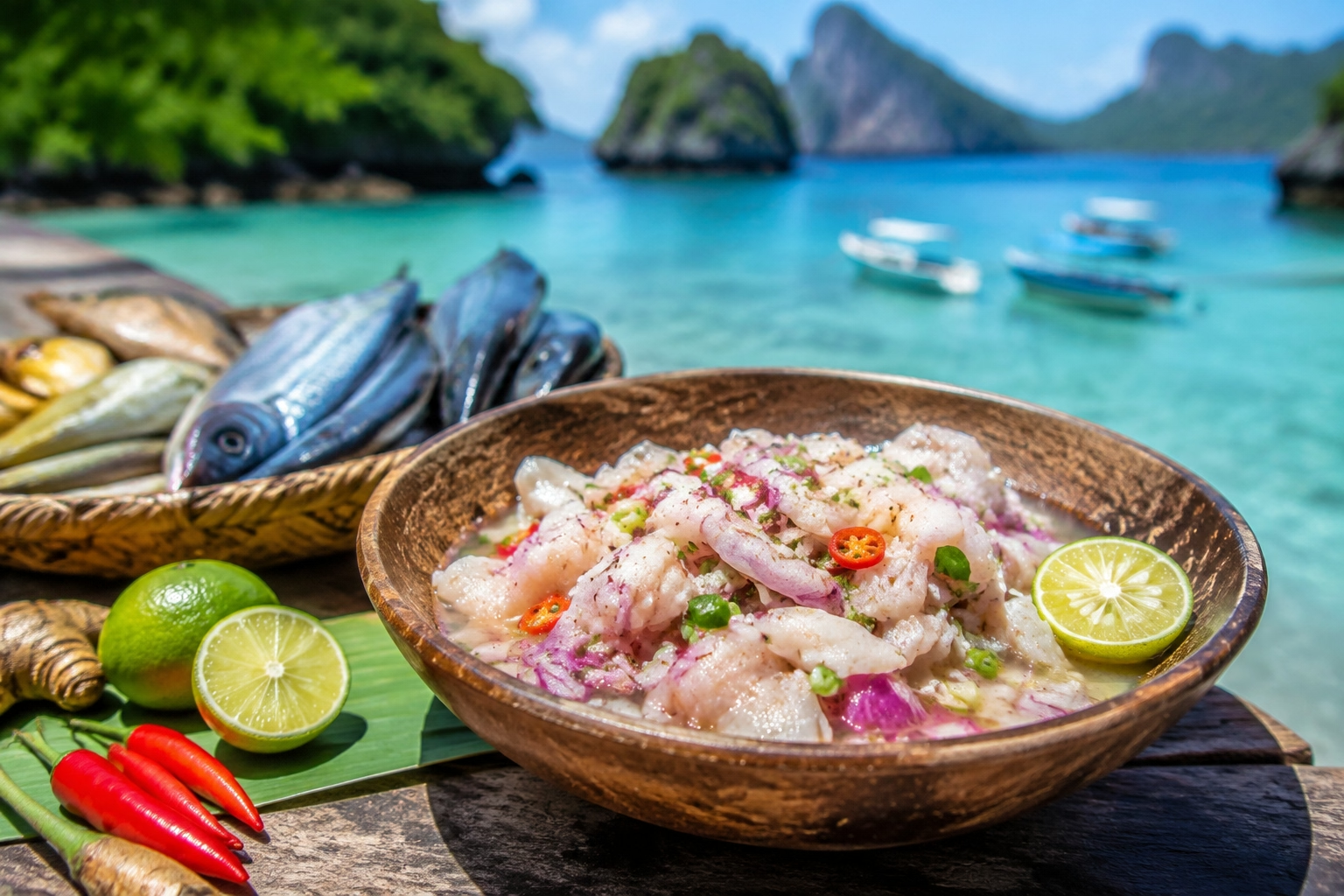
Kinilaw—raw fish “cooked” in vinegar and citrus—predates Spanish colonization by centuries. In 2026, this ancient dish is at the center of a national conversation about sustainable fishing, marine protected areas, and the future of Filipino coastal communities. Chefs, scientists, and policymakers are using kinilaw as a lens to examine what the Philippines’ oceans can still offer.
H2: The Science Behind Kinilaw’s Food Safety in 2026
Kinilaw relies on acid denaturation rather than heat, which raises questions about parasites and bacterial contamination. In 2026, the Bureau of Fisheries and Aquatic Resources (BFAR) released its first national kinilaw safety guidelines, recommending flash-freezing of fish at -20°C for at least 7 days before acid treatment. The BFAR 2026 seafood safety report notes that 92% of surveyed kinilaw vendors in coastal towns now source fish from registered landing sites with cold chain facilities, up from 57% in 2023. This has reduced reported cases of seafood-borne illness linked to kinilaw by 41% year-on-year.
H3: Visayan Chefs Champion Underutilized Species
Instead of popular but overfished species like tanigue (Spanish mackerel) and lapu-lapu (grouper), 2026’s kinilaw champions are turning to abundant, fast-reproducing fish such as tulingan (skipjack tuna), danggit (rabbitfish), and bolinao anchovies. In Cebu, the “Kinilaw ni Juan” initiative trains 200 coastal households to prepare kinilaw using invasive lionfish, which threatens native reef fish. Lionfish kinilaw has become a specialty in Moalboal and Malapascua, with restaurants paying fisherfolk ₱180 per kilogram—double the price of traditional catch—to encourage removal.
H3: Kinilaw Tourism and Marine Protected Areas
The Department of Tourism’s 2026 “Blue Economy Food Trails” program links 25 Marine Protected Areas (MPAs) with local kinilaw eateries. Tourists who book a kinilaw tasting tour in Apo Island, Panglao, or El Nido receive a digital pass that includes a reef conservation fee. Data from the program’s first six months shows that 18,000 tourists participated, generating ₱42 million for MPA management and local fishing families. Crucially, 84% of participants said the kinilaw experience made them more likely to support sustainable seafood choices at home.
Kinilaw in 2026 is no longer just a raw fish dish. It is a policy tool, a conservation incentive, and a gastronomic bridge between ocean health and human livelihood. As one BFAR officer put it, “Every kinilaw bowl is a vote for what kind of ocean we want in 2030.”