
The Beating Heart of Philippine Faith
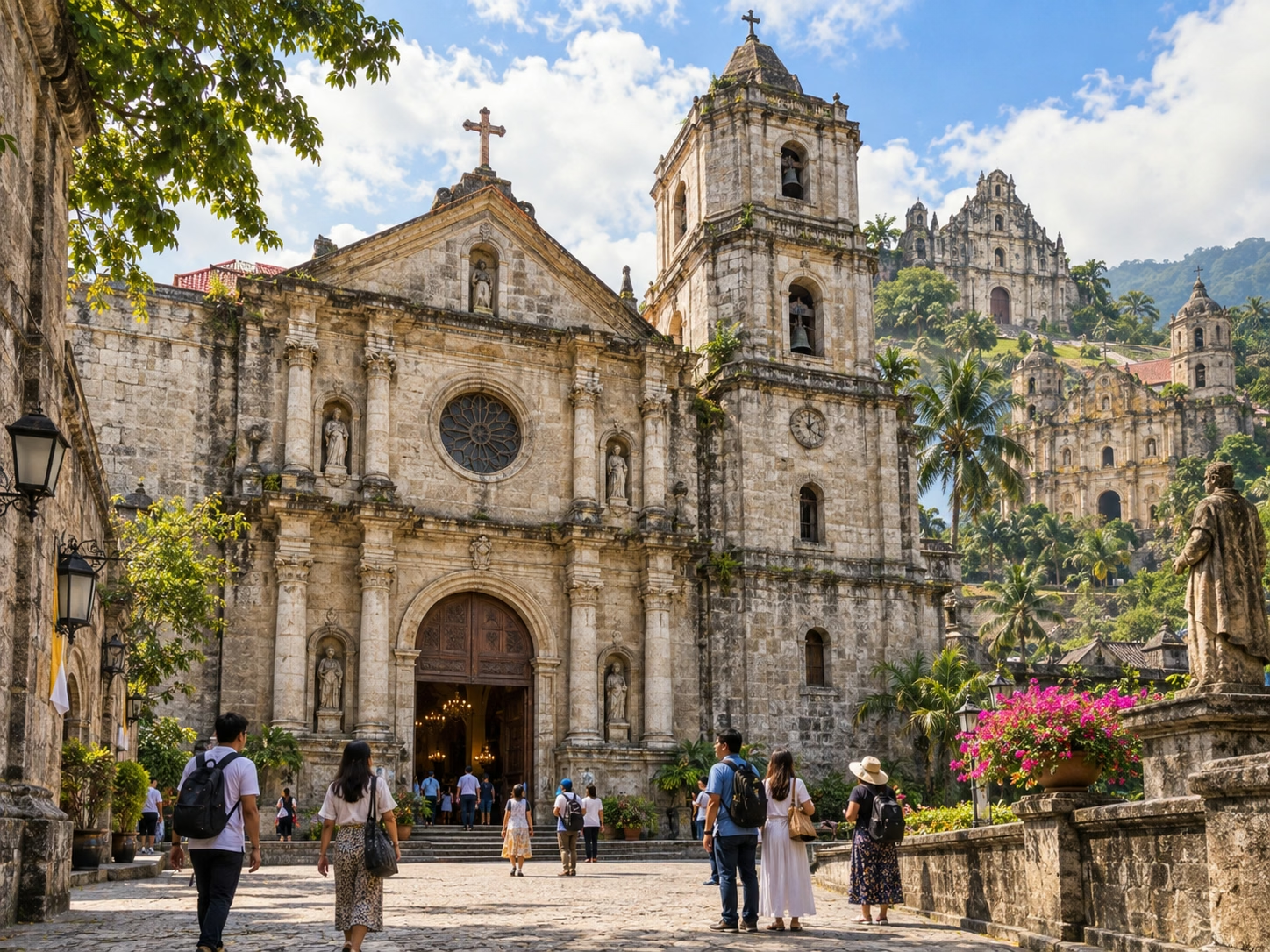
The Philippines is unique in Asia for its overwhelmingly Catholic population—approximately 80 percent of its citizens identify with the faith. This religious identity is not merely a demographic statistic; it is inscribed into the physical landscape through hundreds of churches, shrines, and cathedrals that have served as spiritual anchors for communities across generations. In 2026, these sacred spaces are experiencing a renaissance as faith tourism gains momentum, transforming historic places of worship into dynamic centers of cultural exchange.
Cebu: The Cradle of Christianity in Asia
Nowhere is the historical depth of Philippine Catholicism more palpable than in Cebu. The city government, under Mayor Nestor Archival, has announced plans to expand its heritage tour into a permanent program that integrates a faith-based component. “Imagine Magellan’s Cross—this is the cradle of Christianity in the whole of Asia,” Archival stated, emphasizing the city’s unique position in religious history.
The Basilica Minore del Santo Niño and the Cebu Metropolitan Cathedral have long been central to the annual Sinulog Festival, which draws millions of pilgrims and tourists. However, the new initiative aims to establish a regular, province-wide program showcasing not only these iconic sites but also other historic churches across Cebu. Two electric buses have been prepared as regular tour vehicles, reflecting a commitment to sustainable tourism infrastructure. The collaboration with the Archdiocese of Cebu and the Provincial Government signals a strategic alignment of civic, religious, and tourism objectives—a model that other regions are watching closely.
Iloilo: Where Marian Devotion Meets Multicultural Heritage
Iloilo City offers a different but equally compelling narrative. Often called the “City of Love,” Iloilo’s streets are lined with heritage buildings and centuries-old churches that stand as silent witnesses to the city’s evolving story. The San Jose Parish Church, located near Plaza Libertad, traces its origins back to the Spanish colonial period and remains an enduring symbol of the city’s religious and civic history.
The Santa Maria Parish Church holds a unique distinction as the only Chinese Catholic parish in Iloilo City. Established in 1953 by Chinese Jesuits who arrived from mainland China, the parish played a role in founding what is now the Ateneo de Iloilo–Santa Maria Catholic School. Its existence highlights the influence of the Chinese-Filipino community and demonstrates how faith and education have historically been intertwined in the city’s multicultural fabric.
Dapitan: Faith Expressed Through Festival and Heritage
In Mindanao, Dapitan City presents yet another dimension of Philippine religious life. The annual Kinabayo Festival, celebrated every July, transforms the historic Shrine City of the South into a vibrant tapestry of religious and cultural festivities. The festival culminates on July 25 with a street and unity dance depicting the victory of Christian crusaders through the intercession of St. James the Great.
The church also holds its annual fiesta activities during this period, including a Novena from July 16 to July 24, the sacrament of Confirmation on July 18, and Baptisms on July 23. As one tourist from Pagadian City remarked, “I only ever knew about Dapitan because of the museums and beach resorts, so it was a pleasant surprise to know that they also have really cool festivals like this”. This sentiment captures the essence of faith tourism in the Philippines—the discovery that spiritual heritage and cultural vibrancy are inseparable.
Leyte and Southern Leyte: The Pilgrimage Tradition Passed Down Through Generations
The tradition of visiting historic and miraculous churches in Leyte and Southern Leyte exemplifies how faith tourism has evolved organically over generations. Tour operator Maria Rochelle Alfonso’s “Sinugdan Pilgrimage” covers eight churches, including the St. John the Baptist Catholic Church in San Juan, the Sto. Niño de Malitbog Church, and the Diocesan Shrine of Our Lady of the Assumption in Maasin City.
Parish officials have reported a steady influx of pilgrims and tourists year-round, flocking to centuries-old churches and shrines known for their rich history and accounts of answered prayers and healing. Many pilgrims describe their visits as acts of thanksgiving for both faith and journey, and an opportunity to learn more about religious and cultural heritage. Local tourism offices note that this tradition has been passed down through generations, blending religious devotion with cultural heritage and evolving into faith tourism of the locality.
The Economic and Cultural Ripple Effects
The growth of faith tourism in the Philippines has tangible economic consequences. During Holy Week 2026, Bulacan recorded 1,958,287 pilgrims and travelers, with overnight visitors and same-day travelers contributing to local businesses. The Black Nazarene procession in January 2026 drew 9.6 million devotees, a significant increase from the 8.1 million recorded in 2025. These figures underscore the scale of religious tourism and its potential to drive community development.
Yet the true value of these sacred spaces cannot be measured in economic terms alone. They are repositories of memory, identity, and faith—places where the past and present converge, where the prayers of ancestors echo alongside those of contemporary pilgrims. For travelers in 2026, the opportunity to witness this living heritage is not merely a tourism experience; it is an invitation to participate in a story that spans more than five centuries.