
Retreats Have Overtaken Spa Treatments
For decades, the wellness travel narrative was defined by the hotel spa: a treatment menu, a steam room, a robe, and a promise of temporary relief. In 2026, that model is being superseded. According to BookRetreats’ inaugural State of Retreats report, retreat travel has already overtaken spa treatments, supplements, gym memberships, and therapy in terms of planned wellness spending.
The shift is generational as well as financial. Gen X travelers show the strongest appetite for retreats, with 73 percent planning to join one within the next 12 months, followed by Gen Z at 68 percent and millennials at 66 percent. Rest and relaxation was cited by 62 percent of respondents as the primary motivation, while 37 percent pointed to mental health and wellbeing, and 35 percent sought recovery from stress or burnout.
Why the Philippines Leads the Retreat Surge
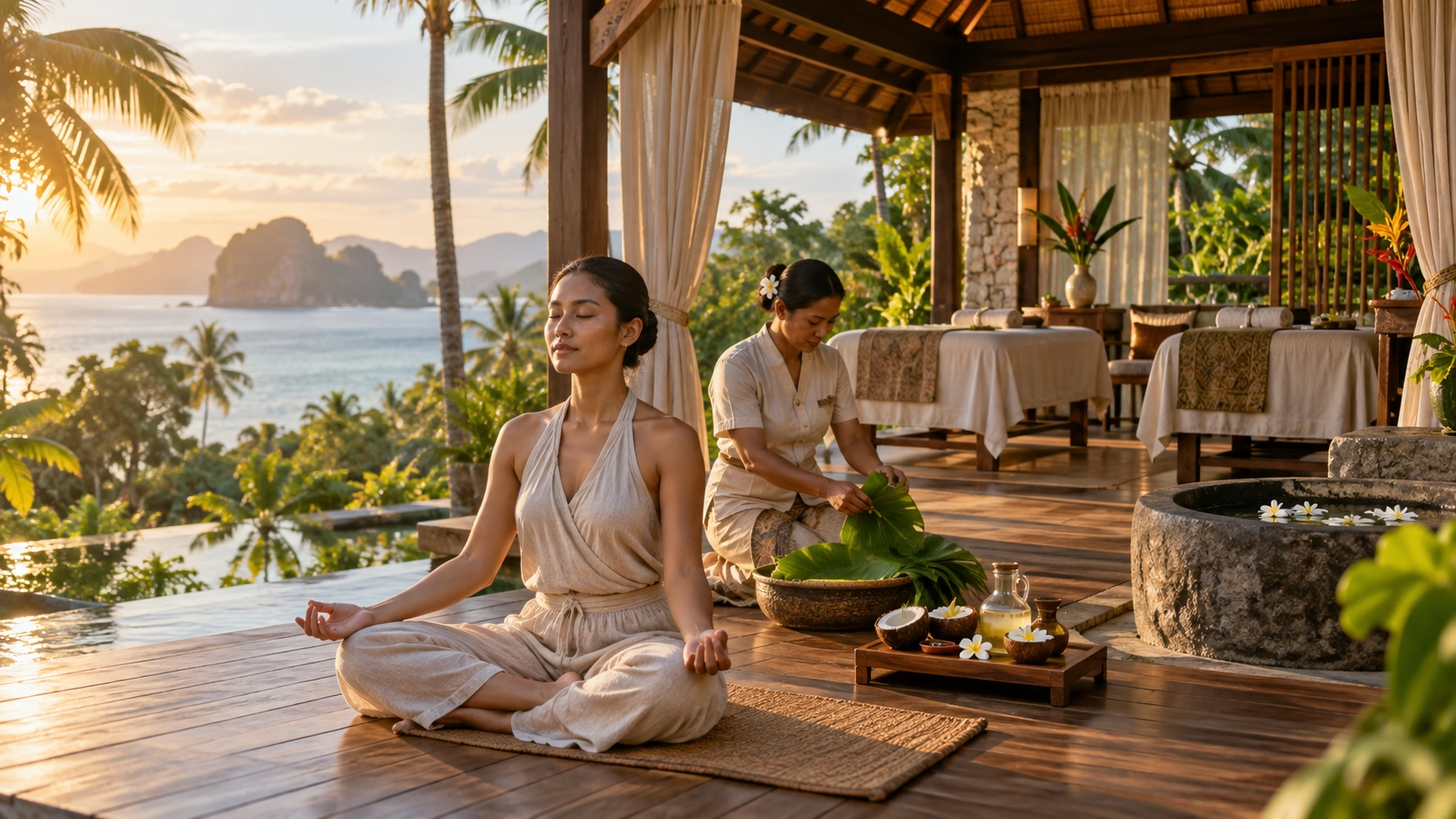
The Philippines ranked No. 1 among trending retreat destinations, with interest surging 323 percent year-on-year, according to the same report. This is not a coincidence. The country’s geography is uniquely suited to the retreat format. Island landscapes provide natural boundaries that enforce disconnection. The combination of surf, yoga, and meditation makes retreats feel immersive rather than institutional.
The Farm at San Benito, a 90-minute drive from Manila, has become a global benchmark for this model. Set across 52 hectares of Batangas greenery, the property integrates evidence-based medical programs with restorative Filipino heritage, offering organic vegan cuisine and diagnostic therapies designed for deep reconnection with nature. It is a place where the retreat format achieves its full potential: structured enough to facilitate transformation, expansive enough to allow for silence.
The “Calmcation” and the Emotional Turn in Travel
Travel + Leisure’s 2026 wellness report identifies a broader cultural shift: travelers are increasingly choosing destinations based on emotional outcomes like relaxation and presence rather than traditional sightseeing. The “calmcation”—a trip centered on slowing down—has moved from niche to mainstream.
This has implications for how Philippine resorts and spas present themselves. It is no longer sufficient to offer a beautiful beach and a competent massage. The properties attracting international attention in 2026 are those that curate an emotional arc: arrival as decompression, treatment as recalibration, departure as renewal. The Department of Tourism has recognized this, with wellness resorts, spa destinations, and nature-based hotels gaining international attention as Palawan and other regions contribute to the country’s positioning as a place for relaxation and rejuvenation.
The Economics of Stillness
The financial dimension of this shift is significant. Wellness travelers tend to spend more on accommodation, lifestyle services, recreation, and dining, while also boosting demand for wellness retreats and fitness programs. The Philippines’ wellness economy now contributes over 10 percent of national GDP, a figure that underscores the sector’s importance beyond tourism.
For travelers considering a Philippine retreat in 2026, the landscape is more diverse than ever. From the eco-luxury of San Benito to the surf-and-stillness rhythm of Siargao, the archipelago offers multiple pathways to the same destination: a restored sense of self.