
The Digital-First Parent
E-commerce has cemented its position as a major sales driver for childrenswear in the Philippines, with mobile-first platforms and digital wallets making online shopping the default for time-pressed parents. The convenience factor is transformative: a working mother in Quezon City can order school uniforms during her commute and have them delivered before dinner.
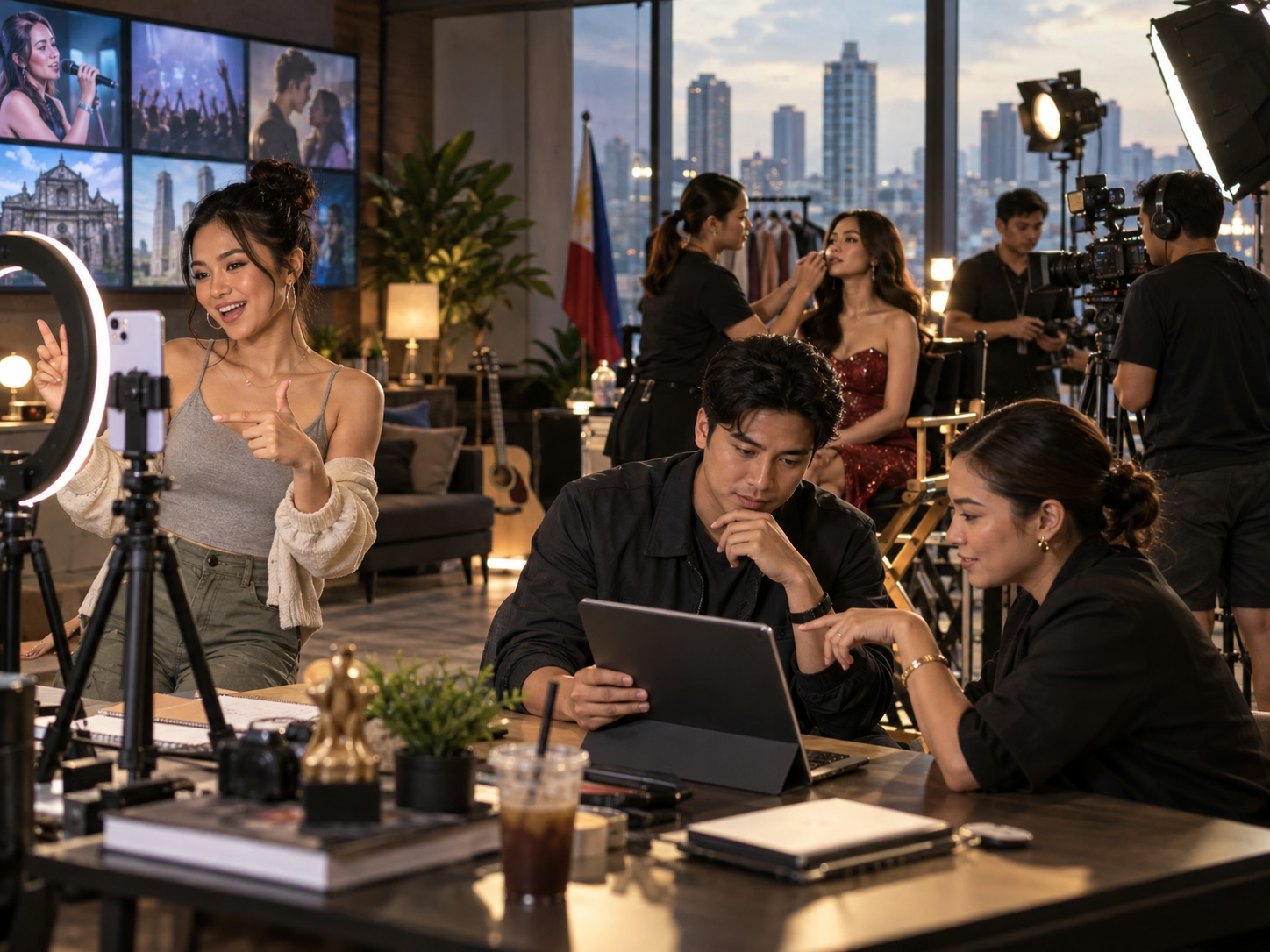
This digital shift is not merely about convenience. It represents a fundamental change in how Filipino families discover, evaluate, and purchase children’s clothing. Social media influencers, live selling events, and peer reviews now play outsized roles in shaping purchase decisions. Dentsu’s research found that 84% of Gen Z and 85% of Millennials are more likely to purchase products endorsed by celebrities they admire.
Shopee, Lazada, and the Platform Economy
Shopee and Lazada have become de facto department stores for Filipino families, offering everything from affordable school socks to branded sneakers. Shopee’s 2026 Q2 children’s fashion report indicates that the Philippines favours Western casual styles, with girls’ apparel as the core subcategory.
The platform data reveals distinct seasonal patterns. The Philippines shows the most pronounced holiday effect among Southeast Asian markets. During United Nations Day and Halloween in 2024, childrenswear sales surged 200% from August to September, then an additional 334% from September to October. Boys’ polo sets and girls’ dresses emerged as consistent bestsellers during these festive periods.
Seasonal Rhythms and Back-to-School Economics
The Back-to-School Bonanza
The back-to-school season represents a critical window for childrenswear brands. Lazada Philippines recorded strong growth during its 6.6 Super WOW Sale, driven by rising back-to-school spending. The demand for school uniforms, polo shirts, and student shoes creates a predictable surge that brands can plan around.
Penshoppe’s “Style Codes” campaign exemplifies how brands are reimagining back-to-school fashion. Rather than treating schoolwear as purely functional, the campaign positions style as personal expression through monthly drops: “The Rebels” in May, “Preppy Athletes” in June, and “Girl/Boy Next Door” in July. Tops start at P499 and bottoms at P899—a price point that balances aspiration with accessibility.
The Holiday Effect
The final quarter of the year brings another wave of purchasing activity. Filipino families prepare for Christmas gatherings, reunions, and gift-giving, creating demand for occasion-wear and matching family outfits. This is where the “mini-me” trend intersects with seasonal shopping: parents coordinating their outfits with children’s ensembles for holiday photos and celebrations.
Shopee’s report notes that the Philippines begins ramping up costume and dress-up clothing investments in September, building toward the November-December year-end shopping frenzy. Brands that synchronise their inventory planning with these seasonal pulses can capture significant market share.
The Channel Continuum
Why Offline Still Matters
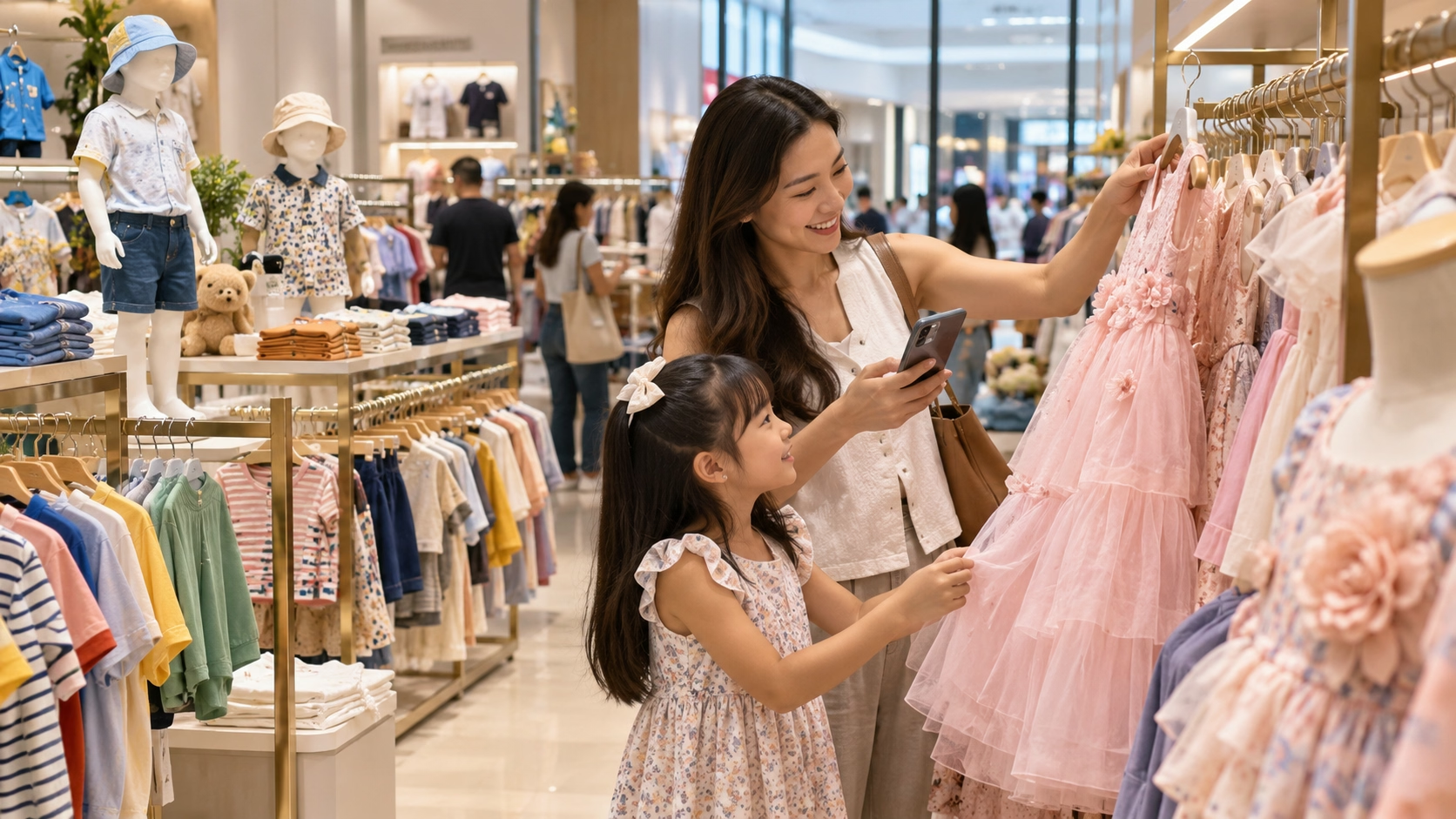
Despite the e-commerce boom, offline retail remains dominant. Department stores and specialist boutiques continue to serve as key channels, particularly for premium purchases where tactile experience matters. The opening of Kids Around at Greenbelt 5, with its Haussmann-inspired interiors featuring high ceilings, detailed wall paneling, and parquet flooring, is a testament to the enduring appeal of physical retail experiences.
Rookie PH, a multi-brand retail concept bringing together Nike Kids, Converse Kids, and Jordan, has also expanded its physical presence in Metro Manila with exclusive back-to-school deals. These specialty stores offer curated experiences that pure-play e-commerce cannot replicate: the ability to touch fabrics, try on shoes, and discover brands through serendipity rather than algorithm.
The Omnichannel Imperative
The future of Filipino childrenswear retail lies in seamless integration between digital and physical. Parents want the convenience of browsing online, the reassurance of trying items in-store, and the flexibility of returning or exchanging through either channel. Brands that can deliver this integrated experience will earn the loyalty of a generation of parents who have no patience for friction.
As the Philippine childrenswear market continues its upward trajectory, the winners will be those who understand that parents are not choosing between online and offline—they are choosing between brands that make their lives easier and those that do not.