Breaking the Conservative Mold
For much of its modern history, Filipino menswear operated within narrow boundaries. Formal meant dark suits. Casual meant polo shirts and jeans. Experimentation was rare. In 2026, those boundaries are dissolving—and the results are exhilarating.
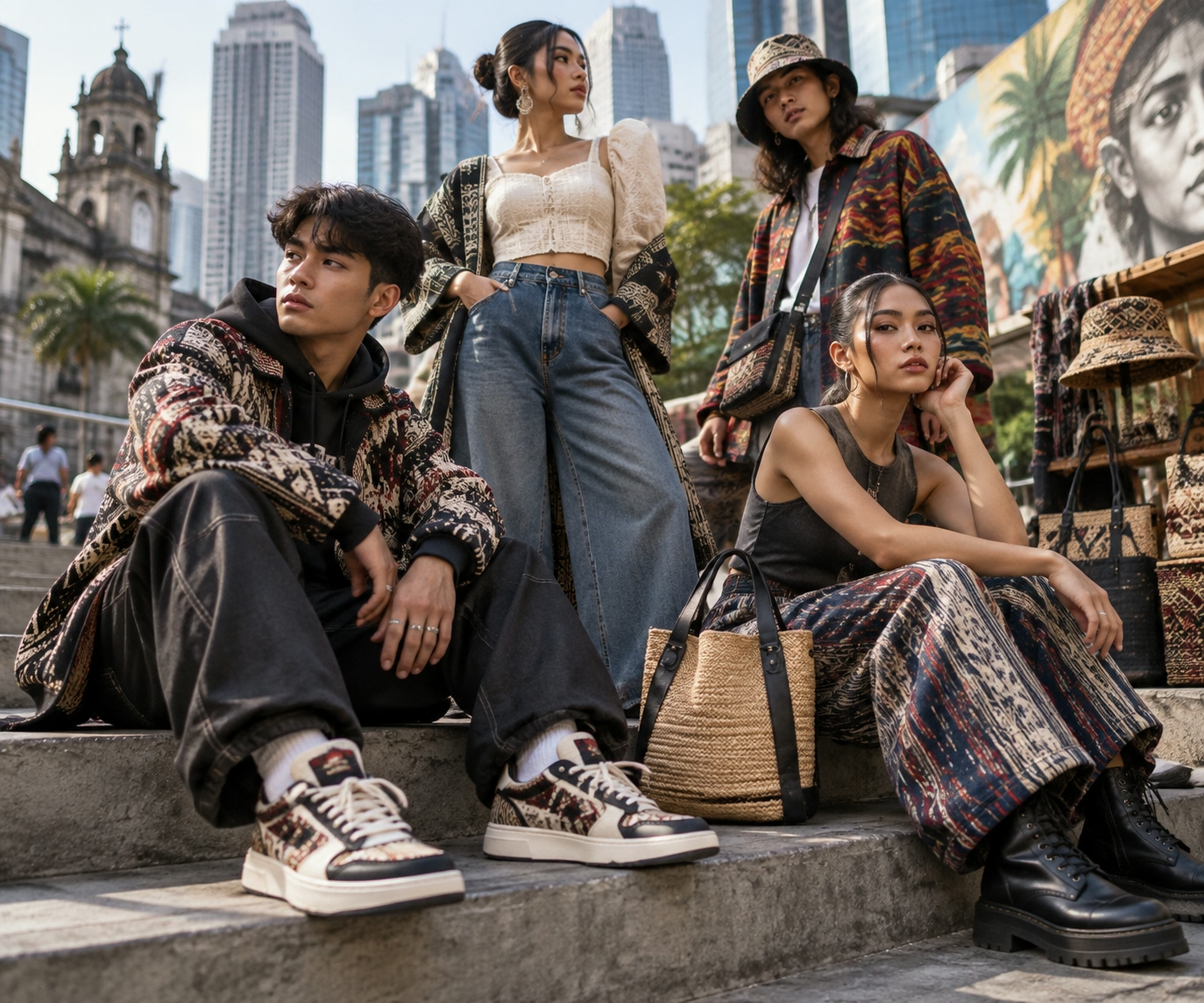
The most dramatic evidence came from Randy Ortiz, one of the Philippines’ most respected couturiers, who staged his first major standalone menswear show, Randy O. Man, on March 19, 2026, at the Peninsula Manila. The collection was described by BusinessWorld as “surprisingly youthful and fresh,” despite Ortiz’s nearly 40 years in fashion. The runway featured periwinkle tuxedos, bubblegum pink suits, and Nehru jackets in lilac brocade. Military-style jackets were paired with whimsical palm tree prints. Bellbottom trousers appeared with Cordillera fabric detailing.
Color as a Statement
The use of color in Filipino menswear has historically been restrained. Ortiz’s collection shattered that restraint. Russet reds, soft greens, and vibrant hues moved across the runway, signaling that Filipino men are ready to embrace a broader palette. Actor Dingdong Dantes closed the show in a tan double-breasted suit with peak lapels, layered under a wine-red coat—an ensemble that balanced boldness with sophistication.
This color revolution is not merely aesthetic. It reflects a deeper shift in how Filipino men understand masculinity: not as a rigid code to be followed, but as a personal identity to be expressed.
Fluidity Across Genders
Perhaps the most subversive element of Ortiz’s collection was its refusal to confine garments to specific genders. Tuxedos appeared as capes on women. Safari suits, historically associated with masculine adventure, were worn by female models. A tweed jacket with female darts was draped over a male model in a way that emphasized sensuality over structure.
This fluidity mirrors a broader cultural conversation happening in the Philippines and globally. As designers like Joseph Bagasáo and Abraham Guardian told L’Officiel Philippines in 2024, menswear has become “very androgynous,” with more men comfortable wearing oversized pieces and experimenting with details.
What Drives This Change?
Several factors converge. First, the rise of social media has exposed Filipino men to a wider range of style references—from Korean street fashion to European tailoring to Afro-Caribbean maximalism. Second, the local fashion industry is maturing, with designers confident enough to challenge conventions rather than imitate foreign trends. Third, a younger generation of consumers, raised on digital culture, sees fashion as a form of communication rather than conformity.
The economic context supports this shift. The Philippines clothing market’s projected growth to USD 17.55 billion by 2035 suggests sustained consumer interest in apparel that goes beyond basic utility. Men are increasingly willing to invest in garments that express who they are, not just what they do.
The Gentleman, Rewritten
Ortiz himself framed the collection as “a love letter to all Filipino males”. That phrase captures the spirit of this moment. The Filipino gentleman is no longer defined by inherited rules. He is defined by the choices he makes—about color, silhouette, fabric, and the story he wants to tell.